Tag: vitamin c benefits

  • How to Choose the Right Foundation Shade and Formula for Your Skin

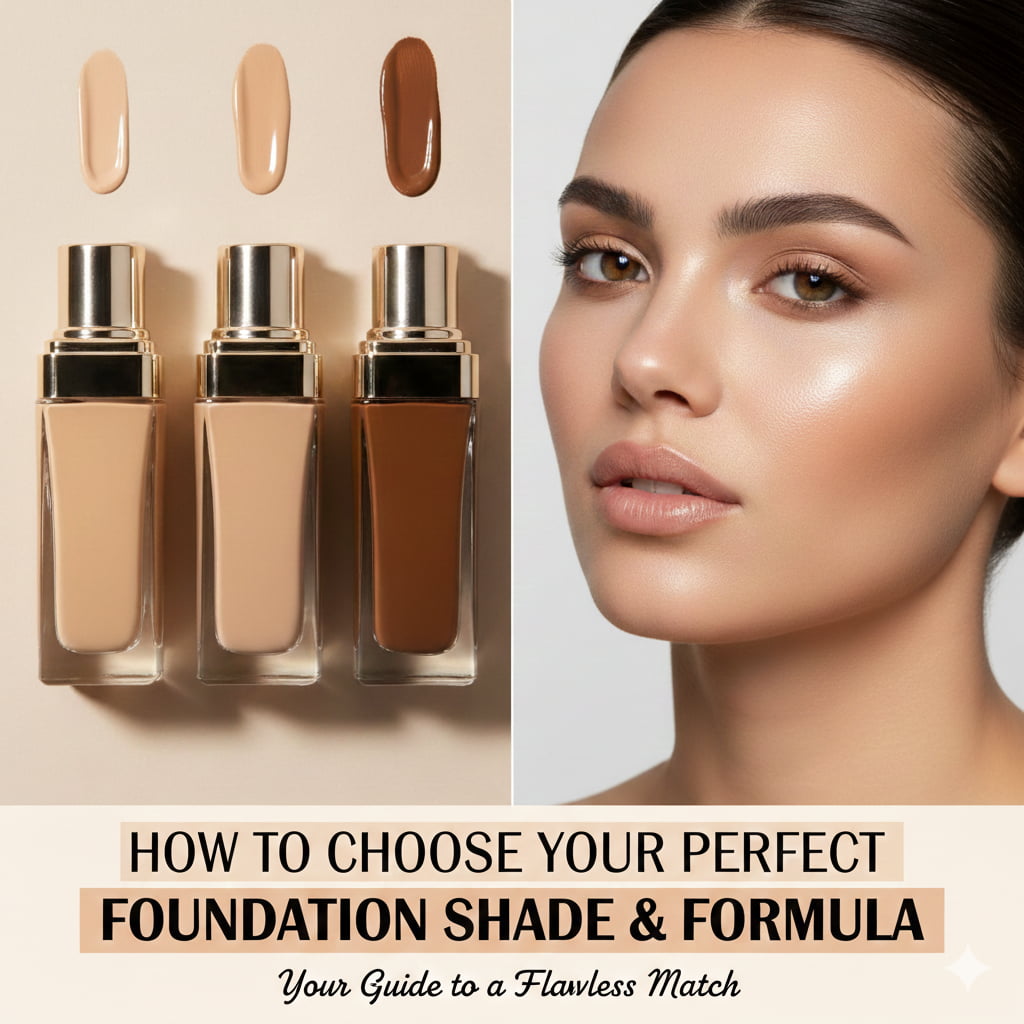
    How to Choose the Right Foundation Shade and Formula for Your Skin

    Let’s be honest: buying a foundation is probably the most stressful part of any beauty routine. We’ve all had that moment where a shade looks like a “perfect match” under the bright, fluorescent lights of a department store, only to realize it looks like a mask the second we step out into the sunlight. Or worse, the shade is right, but the formula starts cracking on your dry patches by lunchtime.

    Finding the right foundation isn’t just about the color on the bottle. It’s about understanding the unique language of your skin its texture, its undertones, and how it behaves throughout the day. If you’re ready to stop wasting money on the wrong bottles, this guide is for you. We’re going to break down everything from undertones to application tips so you can finally achieve that “your skin, but better” glow.

    1. Know Your Skin Type: The Foundation of Your Foundation

    Before you even look at a color swatch, you have to look at your skin’s behavior. The best shade in the world will still look “off” if the formula is fighting against your skin type.

    Oily Skin

    If your face starts to shine by noon, you need a formula that can handle excess sebum. Look for keywords like “matte,” “oil-free,” or “long-wear.” These foundations are designed to stay put and often contain ingredients that absorb oil.

    Dry Skin

    If your skin often feels tight or shows flaky patches, matte foundations are your enemy. You want “hydrating,” “luminous,” or “dewy” formulas. These usually contain skin-loving ingredients like Glycerin or Hyaluronic Acid to keep the moisture locked in.

    Combination Skin

    This is the trickiest one. Usually, you have an oily T-zone (forehead, nose, chin) and dry cheeks. The best approach is a “satin finish” foundation that isn’t too shiny but won’t cling to dry spots.

    Sensitive and Acne-Prone Skin

    If you break out easily, look for “non-comedogenic” on the label. This means the product is formulated not to clog your pores. Mineral foundations are also a great choice for sensitive skin as they often contain fewer irritating chemicals.


    2. The Science of Undertones

    Many people match their foundation to the surface color of their skin, but that’s only half the battle. You also have to match your undertone the subtle hue that lives just beneath the surface.

    There are three main categories:

    1. Cool: Your skin has hints of pink, red, or blue.
    2. Warm: Your skin leans towards yellow, peachy, or golden tones.
    3. Neutral: Your skin is a mix of both, or it simply matches your surface color perfectly.

    How to Find Yours:

    • The Vein Test: Look at the veins on your wrist. Blue or purple veins usually mean you are Cool. Greenish veins suggest you are Warm. If you can’t tell, you are likely Neutral.
    • The White Paper Test: Hold a piece of pure white paper next to your bare face in natural light. If your skin looks yellow next to the paper, you’re Warm. If it looks pink, you’re Cool.
    • The Jewelry Test: Does silver jewelry make your skin look more radiant? You’re Cool. Does gold look better? You’re Warm.

    3. Foundation Formula Comparison Chart

    To help you decide at a glance, use this chart to see which formula matches your lifestyle and skin needs:

    Formula TypeCoverage LevelBest For…Finish
    Liquid FoundationSheer to FullAll Skin Types (Versatile)Matte, Satin, or Dewy
    Powder FoundationLight to MediumOily & Acne-Prone SkinMatte
    Cream FoundationFullDry or Mature SkinLuminous/Natural
    Serum FoundationSheer to LightMinimalists/Dry SkinVery Dewy
    Stick FoundationMedium to FullOn-the-go / Oily SkinNatural Matte

    4. The Art of the “Jawline Match”

    Stop testing foundation on your hand! Your hand is almost always a different color than your face because it gets more sun exposure.

    The Golden Rule: Always test on your jawline. Swipe three shades that look close to your skin tone in a row. The one that disappears into both your face and your neck is your winner.

    Pro Tip: Let the foundation sit for at least 10 minutes. Many formulas “oxidize,” meaning they react with the oils on your skin and turn slightly darker or more orange after they dry. If it still looks good after 10 minutes, you’re safe to buy.

    5. Coverage: How Much Do You Really Need?

    • Sheer Coverage: If you have clear skin and just want to even out your tone slightly, go for a tinted moisturizer or a BB cream.
    • Medium Coverage: This is the most popular choice. It covers redness and minor spots but still looks like skin.
    • Full Coverage: Reserved for special events or if you have hyperpigmentation, acne scars, or redness you want to completely hide.

    According to makeup experts at Makeup.com by L’Oréal, the key to full coverage is blending otherwise, it can look like “cake” very quickly.
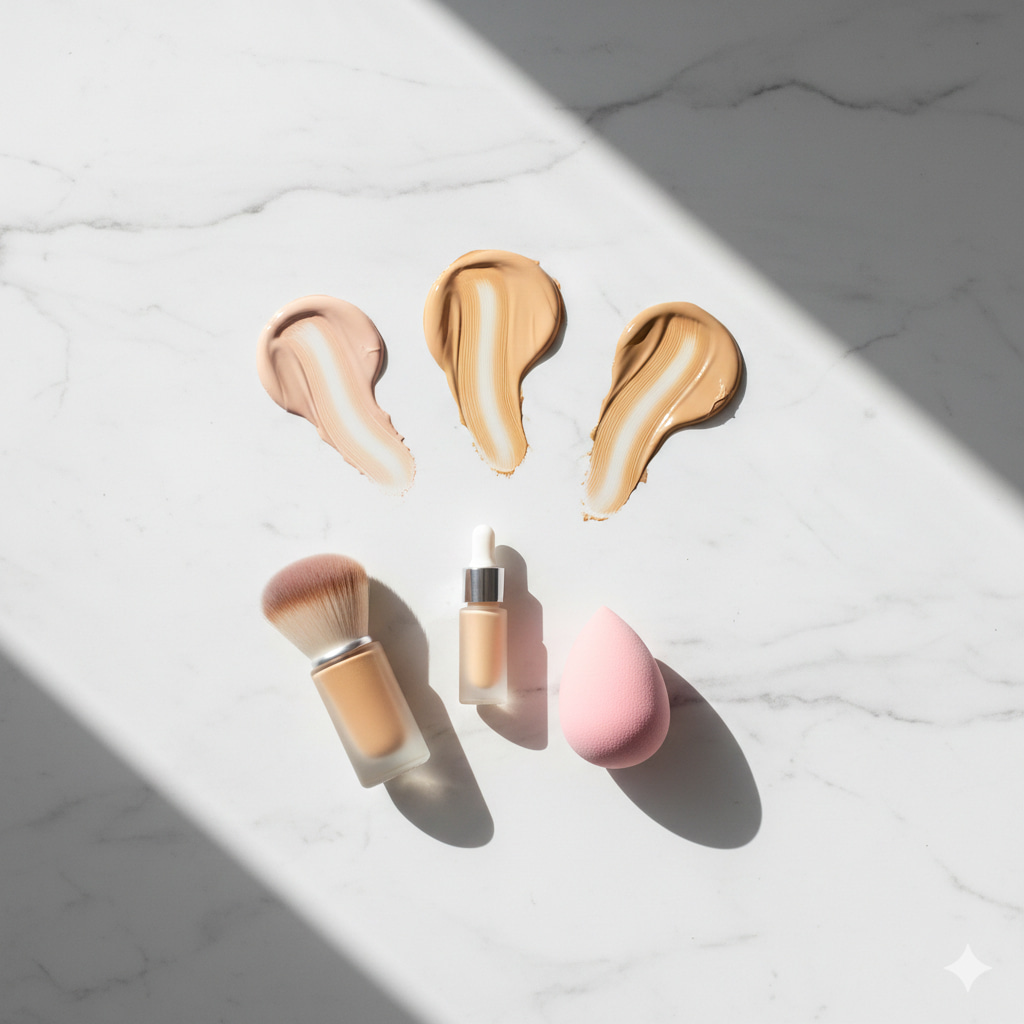
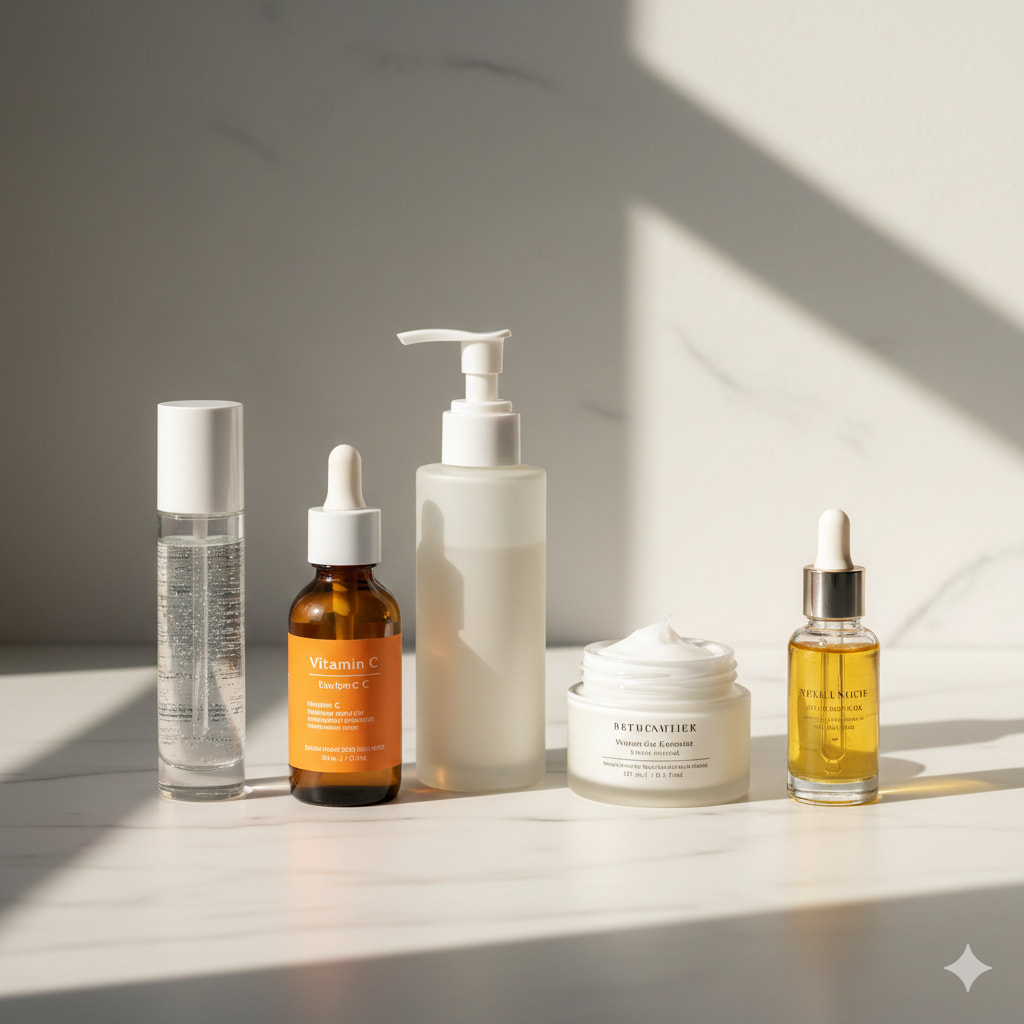
    Liquid foundation swatches on a marble surface with a makeup sponge, brush, and dropper for professional application.

    6. Prep Like a Pro

    No foundation will look good on neglected skin. For a flawless application, follow these steps:

    1. Exfoliate: Once or twice a week to remove dead skin cells.
    2. Hydrate: Apply a moisturizer at least 5 minutes before your foundation. As noted by the American Academy of Dermatology, hydrated skin is the best canvas for any cosmetic.
    3. Prime: Use a primer if you want your makeup to last more than 8 hours or if you want to blur large pores.

    7. Natural Light is Your Best Friend

    Never trust the lighting in a store. If you are at a counter, ask for a sample or apply it and then walk to the nearest window or go outside. Look at your reflection in a hand mirror in broad daylight. If you see a visible “line” where the foundation ends and your neck begins, it’s the wrong shade.

    Conclusion

    Finding the right foundation is a journey of trial and error, but once you understand your skin type and undertones, the process becomes much easier. Don’t be afraid to ask for samples and always prioritize how the product feels on your skin, not just how it looks. After all, the best foundation is the one that makes you feel confident enough to forget you’re even wearing it.
  • How to Layer Skincare Products Correctly for Better Skin Results

    How to Layer Skincare Products Correctly for Better Skin Results

    We’ve all been there standing in front of the mirror with three different serums, a moisturizer, and an eye cream, wondering, “Which one goes first?” It’s a common struggle. You’ve spent your hard-earned money on high-quality products, but if you apply them in the wrong order, you might be blocking them from ever reaching your skin.

    Think of your skincare like a recipe. If you put the frosting on the cake before it’s even baked, you’re going to have a mess. Similarly, layering skincare is all about the Thinnest to Thickest rule.

    In this guide, we’re going to simplify the science of layering so you can get the glowing results you actually paid for.


    The Golden Rule: Thin to Thick

    If you remember nothing else from this article, remember this: apply your products from the most watery consistency to the richest cream. Why? Because thick creams and oils create a seal on your skin. If you apply a thin, watery serum over a heavy oil, the serum can’t penetrate that seal. It just sits on top, doing absolutely nothing for your skin cells.


    Step 1: Cleanse (The Fresh Start)

    You can’t build a house on a muddy foundation. Before layering, you must remove the dirt, oil, and pollution from your pores.

    • Pro Tip: If it’s nighttime, consider a “Double Cleanse.” Use an oil-based cleanser first to melt makeup, then a gentle water-based wash to clean the skin itself.

    Step 2: Toner (The Prep)

    Toners aren’t the alcohol-heavy stingy liquids they used to be in the 90s. Today, they are designed to balance your skin’s pH and act like a “damp sponge.” A damp sponge absorbs water better than a bone-dry one, and your skin is exactly the same.

    Step 3: Serums (The Heavy Hitters)

    Serums are the most potent part of your routine. They are packed with active ingredients like Vitamin C, Hyaluronic Acid, or Niacinamide.

    • Note: If you use multiple serums, apply the thinnest one first. For example, a watery Hyaluronic Acid should go before a slightly thicker Vitamin C gel.
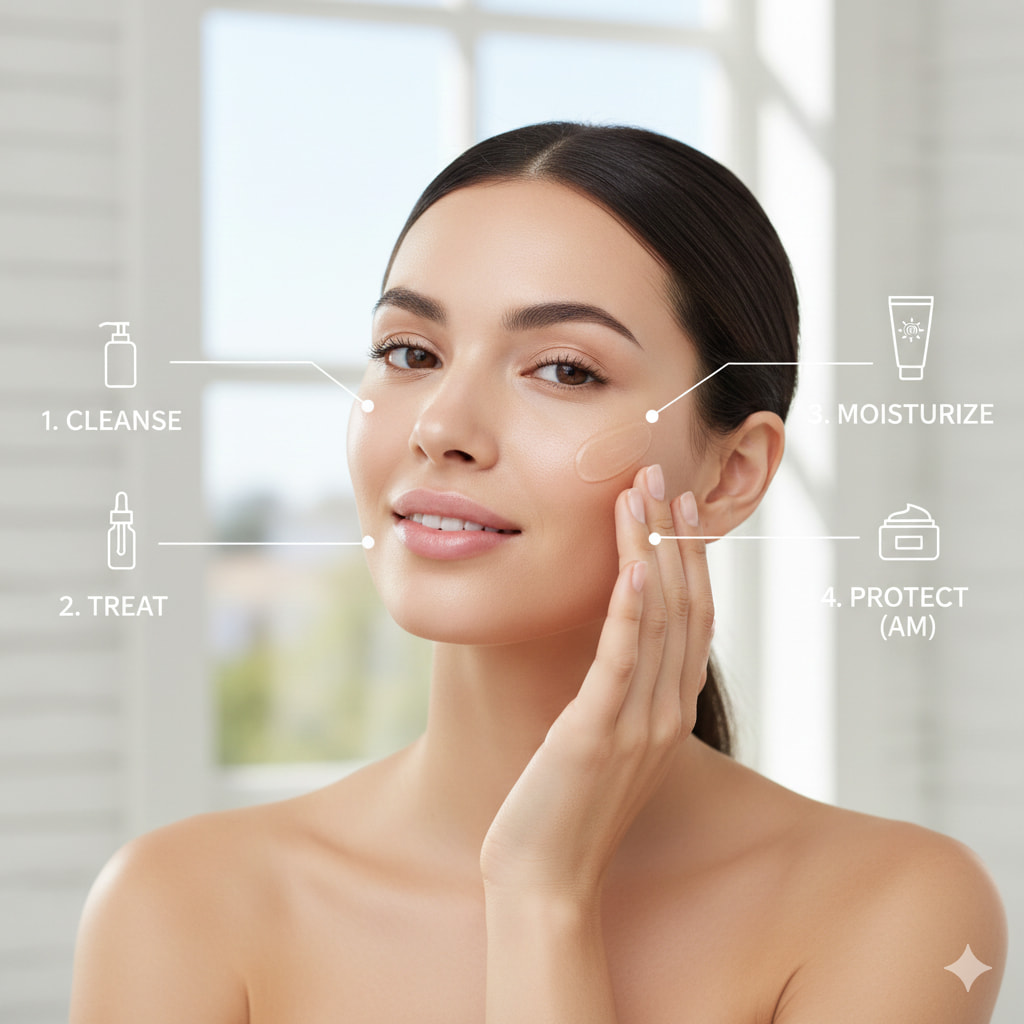
    A beautiful woman applying skincare with graphic icons showing 4 main steps: Cleanse, Treat, Moisturize, and Protect.

    Step 4: Eye Cream (The Delicate Area)

    The skin around your eyes is thinner and more sensitive than the rest of your face. According to Healthline’s skincare experts, applying eye cream before your heavier moisturizers ensures the thin skin absorbs the targeted ingredients first without a thick barrier in the way.


    Step 5: Moisturizer (The Seal)

    Moisturizer is your skin’s protector. Its main job is to hydrate the skin and lock in all the serums you just applied. Even if you have oily skin, don’t skip this. A lightweight, oil-free moisturizer is essential to keep your skin barrier healthy.

    Step 6: Facial Oils (The Final Touch)

    Many people make the mistake of putting oil under their moisturizer. But remember: oil can penetrate cream, but cream cannot penetrate oil. Oils are occlusive, meaning they seal everything in. Always pat your oil on after your moisturizer for that extra glow.

    Step 7: Sunscreen (The Morning Must-Have)

    In the morning, the very last step—always, always, always—is SPF. Sunscreen is your armor against the US sun. If you put anything on top of it (except makeup), you might dilute the formula and lose your protection.


    Why Timing Matters

    It’s not just about the order; it’s about the wait time.

    • Active Ingredients: If you are using something strong like Retinol or an AHA/BHA exfoliant, let it sit for a minute.
    • Sunscreen: Wait at least two minutes for your moisturizer to dry before applying SPF. This prevents “pilling,” which is when your products clump up into little white balls on your face.

    Common Layering Mistakes to Avoid

    1. Mixing Vitamin C and Retinol: These are both “alpha” ingredients. Using them together can cause major irritation. Use Vitamin C in the morning and Retinol at night.
    2. Using Too Many Actives: More is not always better. If you use too many acids at once, you might damage your skin barrier, leading to redness and breakouts.
    3. Rubbing instead of Patting: When applying serums and oils, try patting them into the skin. Rubbing can sometimes pull the skin and disturb the layers underneath.

    Final Thoughts

    Layering skincare doesn’t have to be a math problem. Just follow the “Thin to Thick” rule and always finish with SPF in the morning. By giving each product the space and order it needs to work, you’ll see better results in half the time.

    Be patient, stay consistent, and let your skin breathe!

  • Understanding Skincare Ingredients: What Really Matters for Healthy Skin

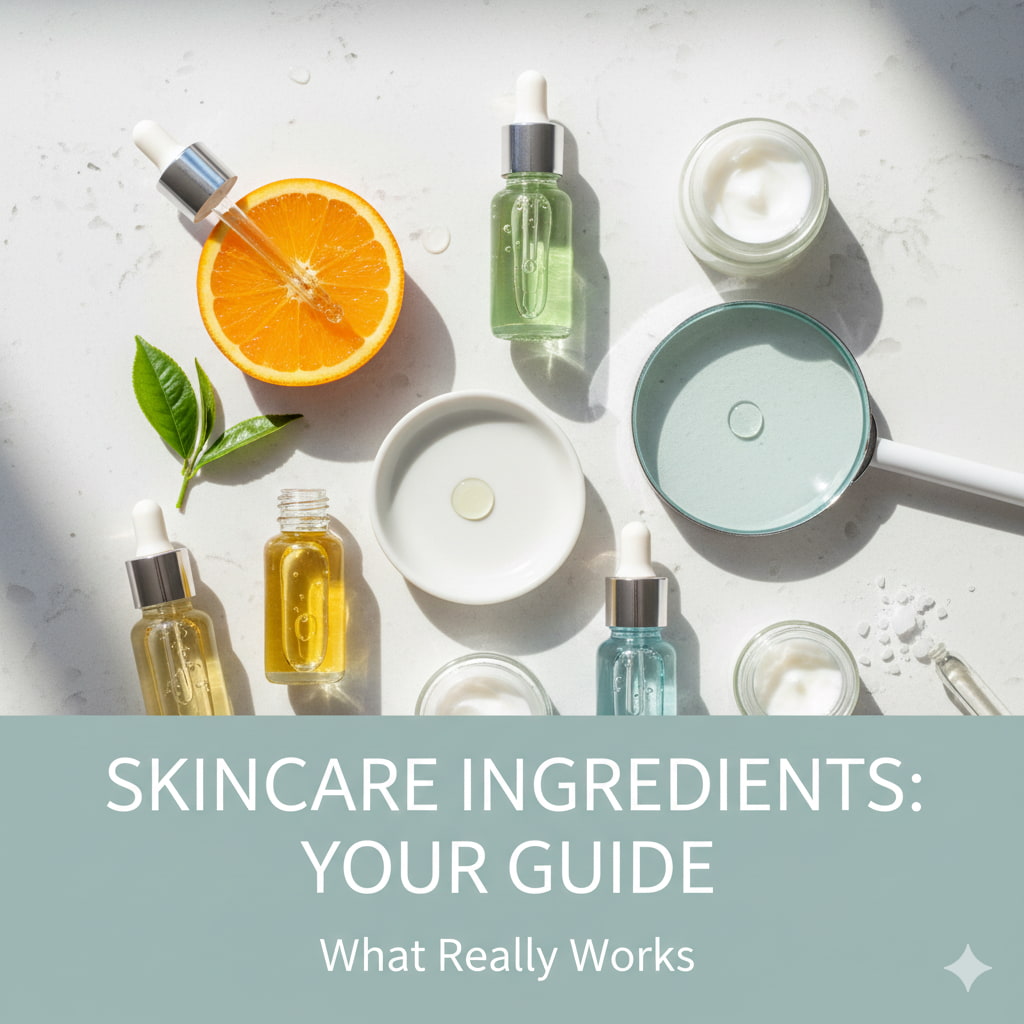
    Understanding Skincare Ingredients: What Really Matters for Healthy Skin

    Have you ever stood in the skincare aisle of a store like Sephora or Target, staring at a bottle, and felt like you needed a chemistry degree just to understand what was inside? You aren’t alone. With flashy marketing and complex names like Methylsulfonylmethane or L-Ascorbic Acid, it’s easy to feel overwhelmed.

    But here’s a secret: most of the “magic” promised by high-end brands comes down to a few key active ingredients. You don’t need a 12-step routine to get that healthy, “lit-from-within” glow. You just need to know which ingredients actually do the heavy lifting and which ones are just filler.

    In this guide, we are going to strip away the marketing fluff and look at the science-backed ingredients that truly matter for your skin’s health.


    The “Big Three”: Ingredients Every Routine Needs

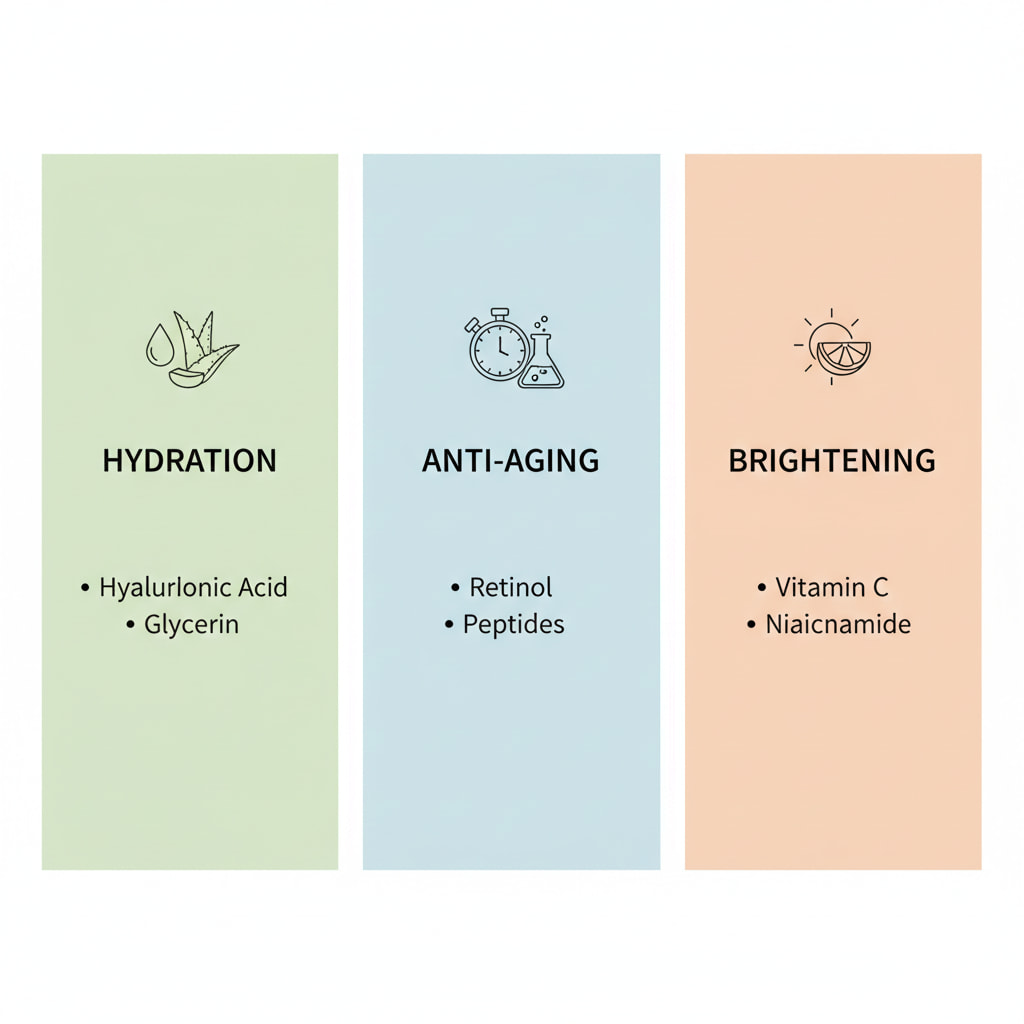
    If you’re looking to build a solid foundation, you don’t need fifty different serums. Most dermatologists agree that a few “gold standard” ingredients can handle 90% of your skin concerns.

    1. The Anti-Aging King: Retinoids (Vitamin A)

    If there was a Hall of Fame for skincare, Retinol would be the first one in. Retinoids work by communicating with your skin cells, telling them to behave like younger, healthier cells.

    • What it does: It speeds up cell turnover, boosts collagen, and clears out pores.
    • Who it’s for: Anyone looking to reduce fine lines, treat adult acne, or fade dark spots.
    • Pro Tip: Start slow. Use it twice a week at night and always—I mean always—wear sunscreen the next day, as retinol makes your skin more sensitive to the sun.

    2. The Brightener: Vitamin C

    Think of Vitamin C as your skin’s personal bodyguard. During the day, your skin is attacked by “free radicals” from pollution and UV rays.

    • What it does: It’s a powerful antioxidant that neutralizes damage, brightens dull skin, and helps fade pigmentation.
    • Look for: “L-Ascorbic Acid” on the label—it’s the most researched and effective form of Vitamin C.

    3. The Protector: Sunscreen (SPF)

    This isn’t technically an “ingredient,” but the filters inside (like Zinc Oxide or Avobenzone) are the most important things you’ll ever put on your face. According to the American Academy of Dermatology, skipping SPF 30 makes all your other expensive serums useless because the sun will destroy any progress you make.


    Hydration vs. Moisture: Knowing the Difference

    Many people use these terms interchangeably, but they are actually different. Understanding this will save you from buying the wrong products.

    The Water-Pullers: Humectants

    Ingredients like Hyaluronic Acid and Glycerin are humectants. They act like tiny sponges, pulling moisture from the air into your skin.

    • The Trick: Apply Hyaluronic Acid to damp skin. If your skin is bone-dry, it might actually pull water out of your deeper skin layers, leaving you drier than before.

    The Sealers: Emollients and Occlusives

    Once you’ve pulled water into your skin, you need to lock it in. Ingredients like Ceramides, Squalane, and Petrolatum create a seal on your skin’s surface.

    • Ceramides: These are lipids that naturally make up your skin barrier. Think of them as the “mortar” between the bricks of your skin cells.

    Solving Specific Problems: The Targeted Actives

    Once you have your basics (Cleanse, Moisturize, Protect), you can add “target” ingredients based on your specific struggles.

    For Oily and Acne-Prone Skin (BHAs)

    Salicylic Acid is the most famous BHA. Unlike AHAs, it is oil-soluble, meaning it can travel deep into your pores to dissolve the “glue” holding dead skin and oil together. It’s a game-changer for blackheads.

    For Dull and Texture Skin (AHAs)

    Glycolic Acid and Lactic Acid work on the surface. They gently unglue the dead skin cells that make your face look “gray” or flaky. Lactic acid is especially great for beginners because it’s a larger molecule and doesn’t irritate the skin as much as glycolic acid.

    For Redness and Large Pores (Niacinamide)

    Niacinamide (Vitamin B3) is the ultimate “team player.” It plays well with almost every other ingredient. It helps regulate oil, calms down redness, and strengthens the skin barrier. If you have “angry” skin, this is your best friend.


    How to Read a Skincare Label Like a Pro

    Don’t get distracted by the fancy claims on the front of the bottle. Turn it around and look at the INCI (International Nomenclature of Cosmetic Ingredients) list.

    1. The First Five: Ingredients are listed in order of concentration. The first five ingredients usually make up about 80% of the product. If your “Vitamin C Serum” has Vitamin C listed at the very bottom, it’s probably not doing much.
    2. Fragrance is Optional: In the US, many people prefer fragrance-free products because synthetic scents are a top cause of skin irritation.
    3. Alcohol Labels: Look out for “Alcohol Denat” or “Isopropyl Alcohol” high up in the list, as these can be very drying. However, “Fatty Alcohols” like Cetyl or Stearyl alcohol are actually good for your skin!

    Final Thoughts: The “Skinimalist” Approach

    You don’t need a bathroom counter full of bottles to have great skin. In fact, using too many actives at once can lead to a “damaged skin barrier,” which looks like redness, peeling, and stinging.

    Start with a gentle cleanser, a good moisturizer, and SPF. Once your skin is happy, introduce one active ingredient (like Retinol or Vitamin C) and wait at least 4 weeks to see how your skin reacts. Consistency will always beat intensity.