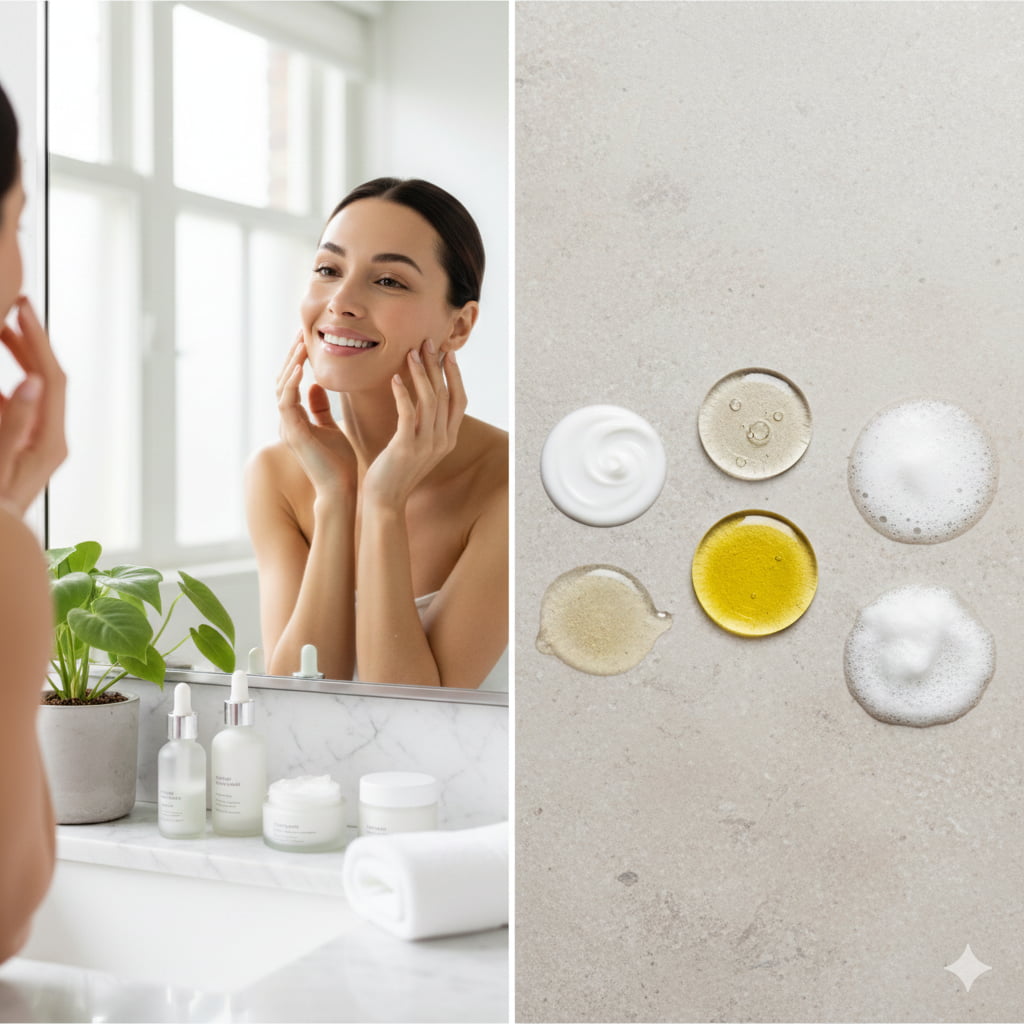
Let’s be honest for a second skincare can be incredibly overwhelming. You walk into a store like Sephora or Ulta, and you’re met with a wall of shiny bottles, clinical-sounding ingredients, and price tags that make your eyes water. We’ve all been there: buying a $60 “miracle” cream because a TikToker said it changed their life, only to have it sit in our bathroom cabinet three weeks later because it made our face feel like a grease trap.
The truth is, even the most expensive product in the world won’t do a thing for you if it isn’t meant for your specific skin. Your skin is a living, breathing organ. It’s your body’s first line of defense. But before you can protect it, you have to understand it.
In this guide, I’m going to help you stop the guessing game. We’ll look at how to identify your skin type from the comfort of your own home and, more importantly, how to pick products that actually deliver on their promises.
Why “One Size Fits All” Is a Skincare Myth
I see this all the time: people treating their skin based on what they want it to be, rather than what it actually is. If you have oily skin but you’re obsessed with the “dewy” look, you might be over-applying heavy oils that end up clogging your pores. On the flip side, if you have dry skin and you’re using harsh foaming cleansers to get that “squeaky clean” feeling, you’re likely stripping away the very moisture your skin is desperate to keep.
Your skin type is mostly determined by genetics, but it’s also influenced by your environment. If you’re living in a high-traffic US city with lots of pollution, or a dry climate like the Southwest, your skin is going to react differently. That’s why knowing your baseline is so important.
The “Bare-Faced” Home Test: Step-by-Step
You don’t need a fancy dermatologist appointment or a high-tech skin scanner to figure this out. You can do the “Bare-Faced” test tonight. It’s the easiest way to see how your skin behaves when it’s left to its own devices.
1. Start with a Blank Canvas
Wash your face with a basic, gentle, fragrance-free cleanser. You want to get rid of the day’s makeup, oil, and grime without irritating the skin. Avoid anything with “scrub” beads or strong acids for this test.
2. The Waiting Game (The Hard Part)
Gently pat your face dry with a clean towel. Now—and this is the most important part—don’t put anything on your face. No toner, no moisturizer, no spot treatments. Just leave it bare for one full hour. Go watch a show, fold some laundry, or scroll through your phone, but stay away from the mirror for 60 minutes.
3. The Mirror Reveal
After an hour has passed, find a spot with good natural lighting and take a close look. Here is how to read the results:
- Normal Skin: Your skin feels comfortable. It’s not tight, it’s not shiny, and it doesn’t feel itchy. You probably don’t even think about your skin most of the time. You’ve hit the genetic jackpot!
- Oily Skin: You’ll notice a visible shine on your forehead, nose, and cheeks. If you press a clean tissue against your face, it will likely come away with damp spots of oil. Your pores might also look a bit larger than average.
- Dry Skin: Does your face feel “small”? If you smile or move your face, does the skin feel tight? You might see some dullness or even tiny, flaky patches around your mouth or eyes.
- Combination Skin: This is the most common type. Usually, your “T-Zone” (forehead, nose, and chin) is shiny and oily, but your cheeks feel tight, dry, or just normal.
- Sensitive Skin: Your skin might look a little red or blotchy. It might feel hot to the touch or sting slightly. If you find that most “regular” soaps make your face turn red, you’re in the sensitive camp.
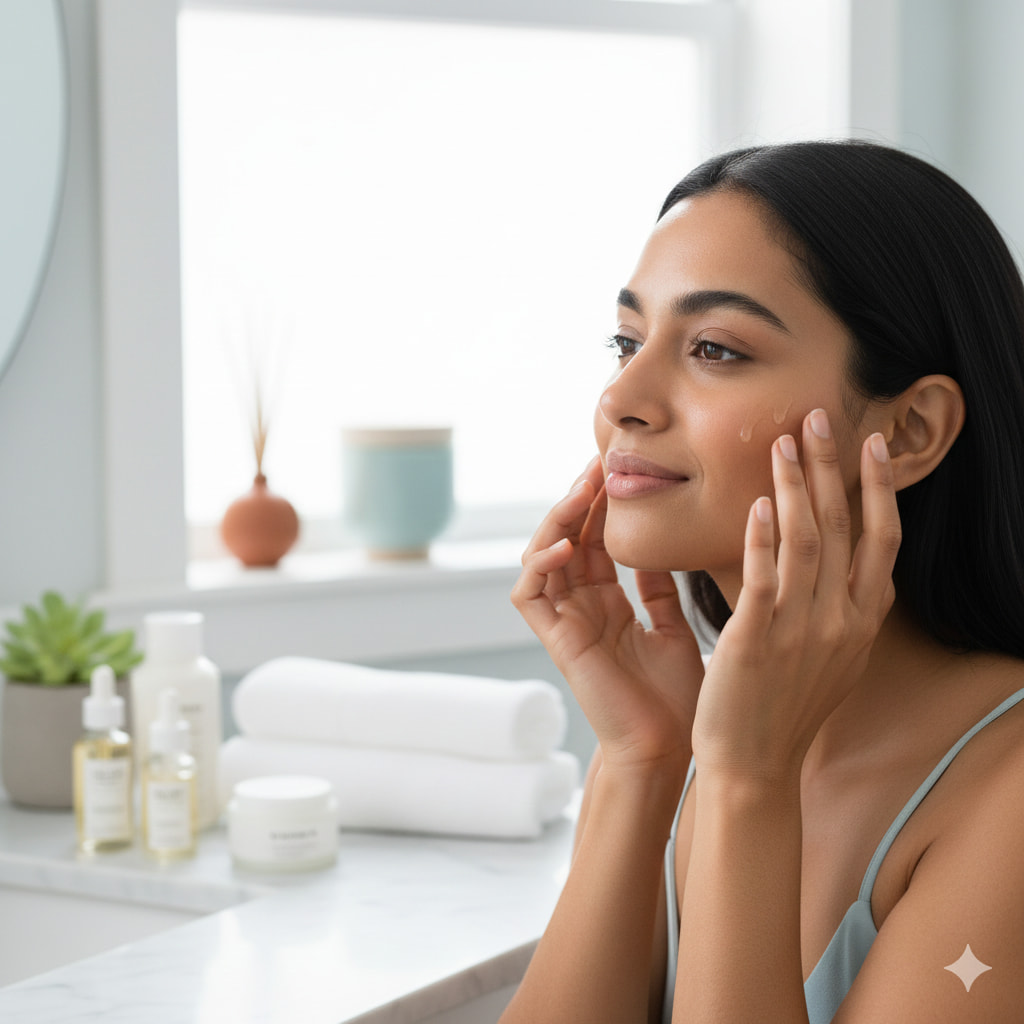
Building a Routine That Actually Sticks
Now that you know your “team,” let’s talk about the game plan. In the US, the trend is shifting away from the 10-step routines of the past and moving toward “Skinimalism”—using fewer products that are high-quality and targeted.
For the Oily & Breakout-Prone
If you’re oily, your skin is over-producing sebum. Don’t try to kill the oil with harsh alcohols; that just makes your skin panic and produce more oil.
- Look for: “Non-comedogenic” (won’t clog pores) and “Oil-free” labels.
- Key Ingredients: Salicylic Acid (to deep-clean pores) and Niacinamide (to regulate oil).
- Texture: Gel-based moisturizers and foaming cleansers are your best friends.
For the Dry & Thirsty
Your skin’s natural barrier is a bit weak, letting moisture escape. You need to “seal” the hydration in.
- Look for: Rich, creamy textures that feel luxurious.
- Key Ingredients: Hyaluronic Acid (to attract water) and Ceramides (to repair the skin’s seal).
- Texture: Cream-based cleansers and thick balms or ointments.
For the Combination Balancing Act
You’re basically managing two different “climates” on one face.
- The Hack: Use a lightweight, balancing lotion all over, but apply a thicker cream only on your dry cheeks.
- Key Ingredients: Vitamin C for overall brightness and a gentle pH-balanced cleanser.
For the Sensitive & Reactive
Less is always more. If an ingredient list is as long as a grocery receipt, put it back on the shelf.
- Look for: “Fragrance-free” (not just “unscented”) and “Hypoallergenic.”
- Key Ingredients: Aloe Vera, Colloidal Oatmeal, and Centella Asiatica (often called “Cica”).
- Texture: Milky cleansers and simple, soothing lotions.
The Non-Negotiable: Sunscreen
I cannot emphasize this enough: if you aren’t wearing sunscreen, the rest of your skincare routine is a waste of money. Whether it’s cloudy in Seattle or sunny in Miami, UV rays are hitting your skin and breaking down collagen.
According to the American Academy of Dermatology, every single person should be using a broad-spectrum SPF 30 or higher. It’s the best anti-aging product on the market, and it’s much cheaper than Botox later in life!
Give It Time (The 28-Day Rule)
One final piece of advice: be patient. Your skin cells take about 28 to 30 days to fully turnover. You can’t try a serum for three days and decide it doesn’t work. Give your new routine at least a month to show you what it can really do.
Final Thoughts
Skincare shouldn’t be a chore. It’s a few minutes of “me-time” at the beginning and end of your day. By understanding your skin type, you’re taking the first step toward a healthier, more confident version of yourself. Start simple, stay consistent, and your skin will thank you.