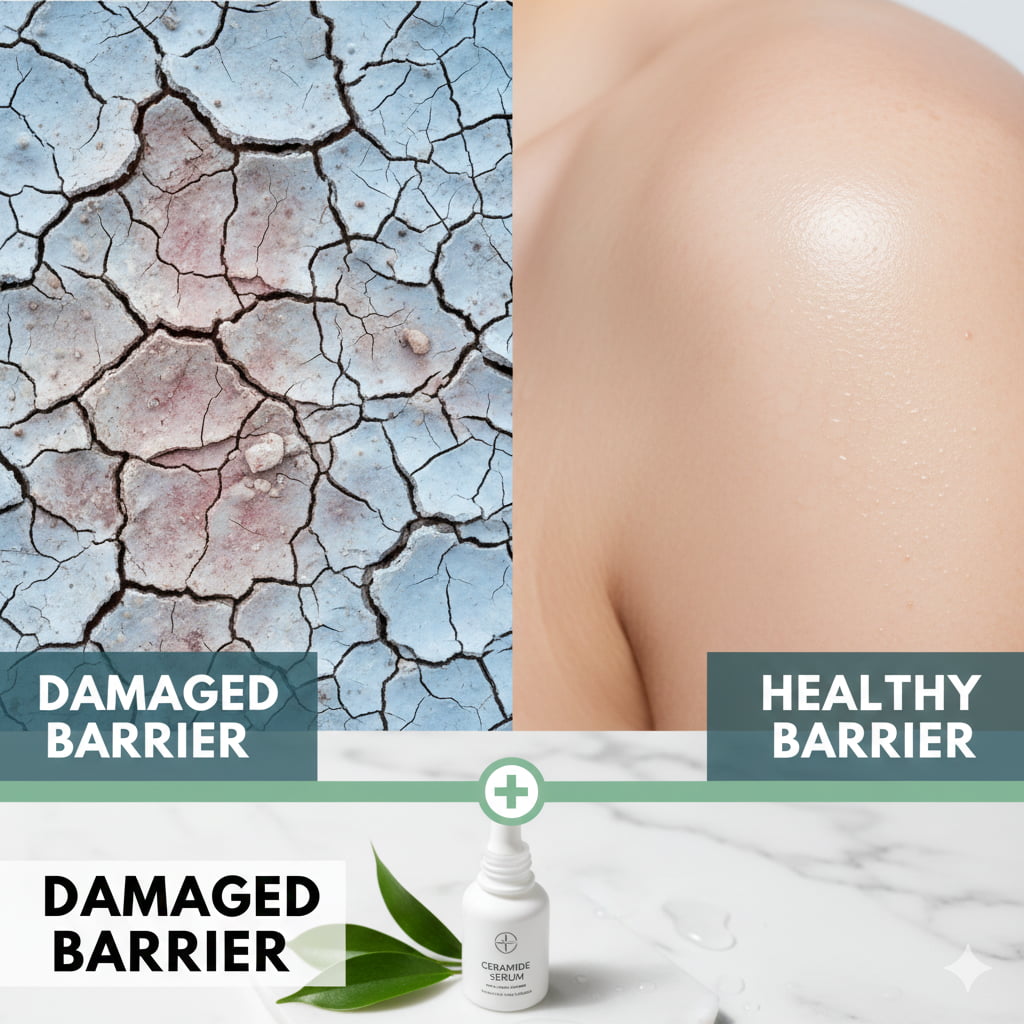
Have you ever experienced that frustrating moment when your skin suddenly feels like it’s on fire, even though you’re using “top rated” products? Or maybe you’ve noticed patches of dryness that refuse to go away, no matter how much cream you apply. If this sounds familiar, you aren’t alone. In the pursuit of flawless, “glass” skin, many of us are actually doing too much.
The truth is, your skin is a highly sophisticated organ with its own built-in security system: the Skin Barrier. When this barrier is strong, your skin looks plump, hydrated, and clear. When it’s weak? You’re left with redness, irritation, and breakouts.
For our readers in the US and beyond, navigating the endless world of beauty can be tricky. Let’s break down the most common skincare mistakes that are quietly sabotaging your skin barrier and how you can fix them for good.
1. The Over-Exfoliation Obsession
Exfoliation is great it removes dead skin cells and reveals a brighter complexion. But in the skincare world, you can definitely have too much of a good thing.
The Mistake: Using physical scrubs and high-percentage chemical acids (like Glycolic or Salicylic acid) every single day.
The Fix: Think of exfoliation as a “special treatment,” not a daily necessity. For most skin types, 2 times a week is plenty. If your skin looks shiny but feels tight and dry, that “glow” is actually a sign that you’ve stripped away your protective oils. Give your skin a week-long “exfoliation holiday” to let it recover.
2. Using Harsh, High-pH Cleansers
We’ve been conditioned to think that if our skin doesn’t feel “squeaky clean,” it’s still dirty. This is perhaps one of the most damaging myths in beauty.
The Mistake: Using harsh foaming cleansers or traditional bar soaps that have a high pH level.
The Fix: Your skin is naturally slightly acidic (around pH 5.5). Using a basic (high pH) cleanser disrupts this “acid mantle.” This leads to dryness and allows bacteria to grow. According to the American Academy of Dermatology, switching to a gentle, soap-free cleanser is the best way to preserve your skin’s natural moisture.
Quick Guide: Healthy vs. Damaged Skin Barrier
| Feature | Healthy Barrier | Damaged Barrier |
| Texture | Smooth and soft | Rough, flaky, or peeling |
| Feel | Comfortable and resilient | Tight, itchy, or stinging |
| Appearance | Even tone, natural glow | Redness and inflammation |
| Sensitivity | Low sensitivity to products | Stings even with plain water |
| Hydration | Retains moisture well | Suffers from “Trans-Epidermal Water Loss” |
3. Skipping Moisturizer When You Have Oily Skin
This is a classic mistake. Many people with oily or acne-prone skin avoid moisturizer because they think it will make them greasier or cause more pimples.
The Mistake: Neglecting hydration because of excess sebum.
The Fix: When your skin is dehydrated, it actually sends a signal to your oil glands to produce more oil to compensate for the lack of water. This creates a vicious cycle of oily yet dehydrated skin. The solution? A lightweight, oil-free, water-based moisturizer. Look for ingredients like Hyaluronic Acid and Glycerin which pull water into the skin without clogging pores.
4. “Active Ingredient” Overload
We live in the era of “skincare cocktails.” With so many affordable serums available, it’s tempting to use Vitamin C, Retinol, Niacinamide, and AHAs all in one go.
The Mistake: Mixing too many potent actives in a single routine.
The Fix: Your skin can only handle so much. Using Retinol and Vitamin C together, for example, can cause massive irritation for beginners. Try “Skin Cycling” use your active ingredient one night, and focus purely on recovery and hydration the next two nights. This allows your barrier to stay intact while still getting the benefits of the treatment.
5. Washing with Hot Water
There is nothing more relaxing than a steaming hot shower, but your face hates it.
The Mistake: Using hot water to rinse your face.
The Fix: Hot water strips away the natural lipids (fats) that act as the “glue” holding your skin cells together. Once these fats are gone, moisture escapes easily. Always use lukewarm water. It’s just as effective at cleaning but much kinder to your barrier.
6. Ignoring the Importance of Sunscreen
You might think sunscreen is just for preventing sunburn, but it’s actually a vital part of barrier health.
The Mistake: Only wearing SPF when it’s sunny or when going to the beach.
The Fix: UV rays are present all year round, even through clouds and windows. UV damage weakens the proteins in your skin and makes the barrier more permeable to irritants. Apply a broad-spectrum SPF 30 every single morning as the final step of your skincare.
7. Over-Washing Your Face
Washing your face too often even with a gentle cleanser can be a problem.
The Mistake: Washing 3 or more times a day.
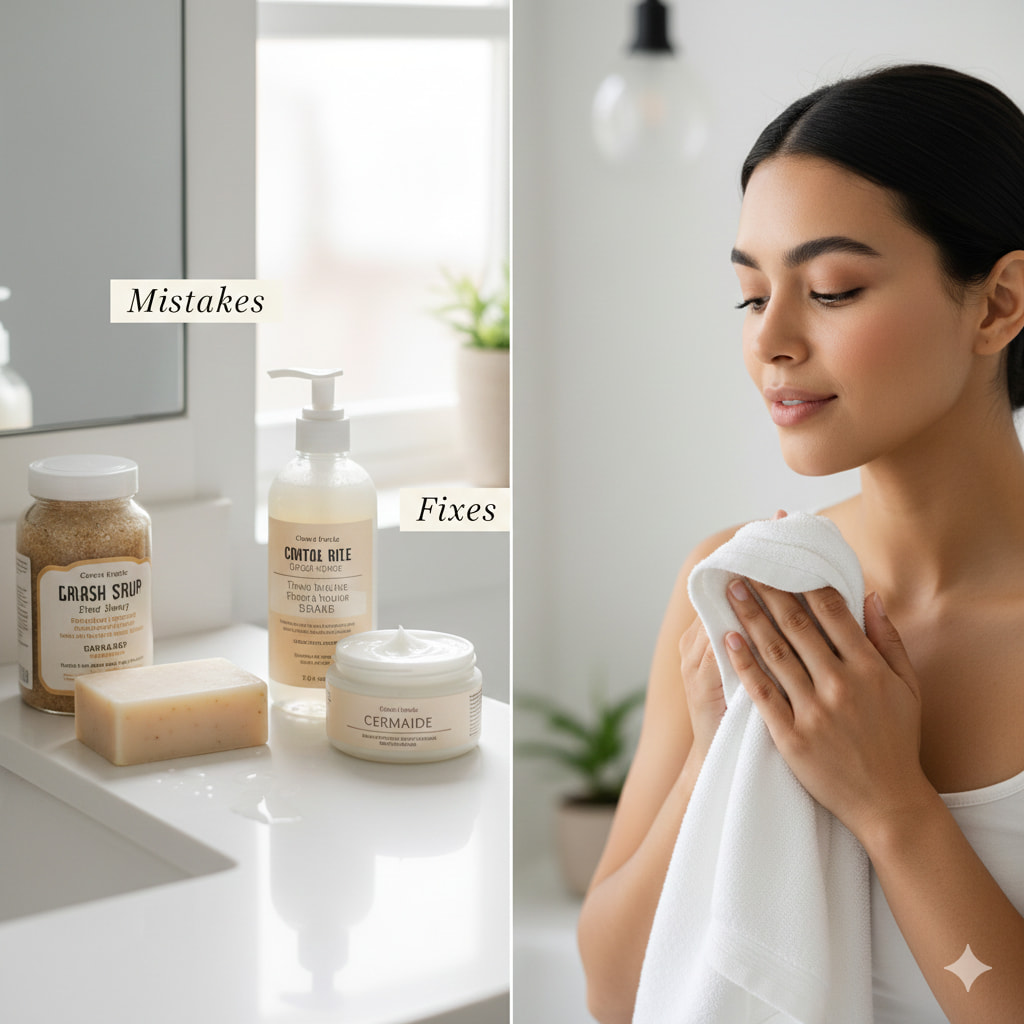
The Fix: For most people, twice a day (morning and night) is the limit. If you have very dry skin, you might even find that just rinsing with water in the morning and using a cleanser at night is enough.
Frequently Asked Questions (FAQs)
Q1: How long does it take to repair a damaged skin barrier?
A: It usually takes about 28 days, which is the time it takes for a new cycle of skin cells to regenerate. However, you will start feeling relief within 3-7 days of starting a “barrier-repair” routine.
Q2: Should I stop all my skincare if my barrier is stinging?
A: Not all of it, but definitely stop the “actives.” Stick to a simple “Cleanser – Moisturizer – SPF” routine until the stinging stops.
Q3: Are “natural” products better for the skin barrier?
A: Not necessarily. Some natural ingredients, like lemon juice or essential oils (lavender, peppermint), can be very irritating and actually damage the barrier further. “Fragrance-free” is usually a safer bet.
Q4: Can diet affect my skin barrier?
A: Yes. Healthy fats like Omega-3s (found in salmon, walnuts, and flaxseeds) help your body produce the lipids that keep your skin barrier strong.
Q5: What is the best ingredient for a quick barrier fix?
A: Ceramides are the gold standard. They make up about 50% of your skin barrier. Applying a ceramide-rich cream is like giving your skin the exact building blocks it needs to heal.
Conclusion
Your skin barrier is your best friend it protects you from the environment, keeps you looking young, and ensures your skin stays hydrated. By avoiding these common skincare mistakes, you are giving your skin the space it needs to thrive. Remember, skincare is a marathon, not a sprint. Be gentle, be consistent, and listen to what your skin is telling you.