Tag: healthyskin

  • How Climate and Weather Affect Your Skin and What to Change in Your Routine

    How Climate and Weather Affect Your Skin and What to Change in Your Routine

    Have you ever noticed that your favorite moisturizer, which worked wonders in the summer, suddenly feels “not enough” when winter arrives? Or why your skin becomes an oil slick the moment you step into a humid city?

    It’s not just in your head. Your skin is your body’s largest organ and its primary job is to act as a barrier between you and the environment. When the environment changes whether it’s a sudden cold snap or a tropical heatwave your skin has to work overtime to stay balanced.

    In this guide, we’ll look at how different climates impact your complexion and exactly how you should tweak your routine to stay glowing all year round.

    1. Why Does the Weather Care About Your Skin?

    The air around us has a direct relationship with the moisture in our skin. This is mostly due to humidity.

    • Low Humidity: When the air is dry (like in winter or desert climates), it literally sucks the water out of your skin through a process called Transepidermal Water Loss (TEWL).
    • High Humidity: When the air is wet, your skin’s sweat and oil glands go into overdrive, which can lead to clogged pores and a “greasy” feeling.

    2. Seasonal Skincare Swap: The Cheat Sheet

    To make it easy, here is a quick chart to help you decide which products to “level up” or “lighten up” based on the weather outside:

    Weather ConditionWhat Happens to Your SkinWhat to Change in Your Routine
    Cold & Dry (Winter)Tightness, flaking, redness.Swap gel to cream cleanser; use thick moisturizers with ceramides.
    Hot & Humid (Summer)Excess oil, breakouts, sweat.Use lightweight water-gels; increase exfoliation with Salicylic acid.
    Arid/Desert HeatSevere dehydration, fine lines.Use Hyaluronic acid on damp skin; seal with a face oil.
    High WindChapped lips, windburn.Use occlusive balms (like Petrolatum) to create a physical shield.

    3. Adapting to the Cold: The “Cozy” Routine

    When the temperature drops, the humidity usually goes with it. Plus, indoor heating acts like a giant hair dryer for your face.

    The Fix:

    • Ditch the Foam: Switch to a creamy, non-foaming cleanser. Foaming agents can strip away the few natural oils your skin has left in winter.
    • Layer Your Hydration: Think of your skincare like your clothes. Start with a hydrating toner, add a serum, and finish with a thick cream.
    • Don’t Forget SPF: This is a big one. UV rays are still there in winter, and snow can reflect up to 80% of UV radiation back onto your face! According to the Skin Cancer Foundation, sun damage is a 365-day-a-year threat.

    4. Surviving Humidity: The “Lightweight” Approach

    In tropical or humid weather, your skin can feel heavy and “clogged.” The goal here is to hydrate without suffocating your pores.

    The Fix:

    • Switch to Gels: Replace heavy oil-based creams with water-based gel moisturizers. They provide water to the skin without the extra oil.
    • Salicylic Acid is Your Friend: A gentle BHA (Salicylic acid) toner a few times a week will help keep your pores clear of the sweat and oil buildup that causes summer breakouts.
    • Antioxidants: High heat and sun exposure lead to free radical damage. A Vitamin C serum in the morning acts like an internal shield for your skin cells.
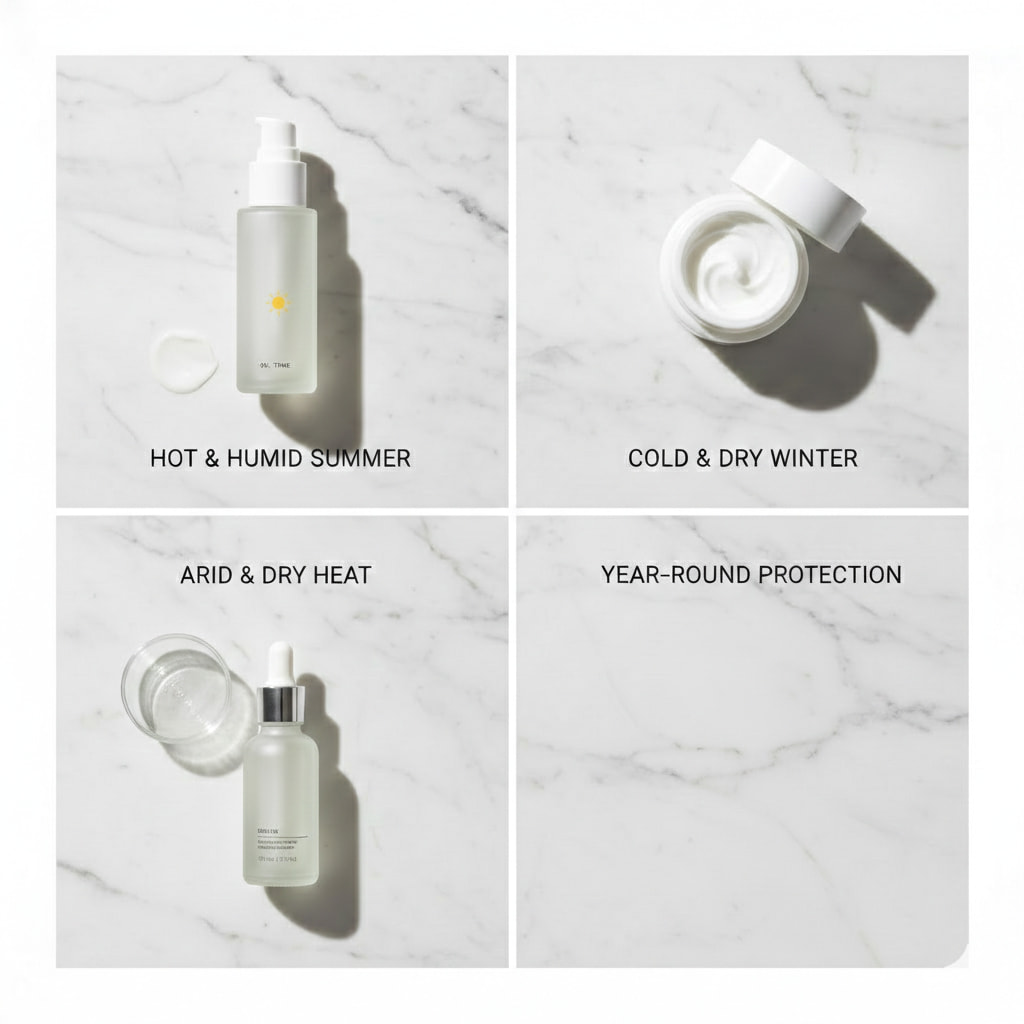
    Professional flat-lay showing specific skincare products for cold dry winter and year-round sun protection on a marble background.
    AI-generated image showcasing a clean, natural beauty and skincare routine that highlights healthy, glowing skin.

    5. Travel and Sudden Climate Shifts

    If you’re traveling from a humid place to a dry one (or vice versa), your skin might “purge” or become extremely sensitive for a few days.

    Pro Tip: Always carry a small bottle of Niacinamide. It’s a versatile ingredient that helps regulate oil in humidity and strengthens the skin barrier in dry air. It’s the ultimate “climate-control” ingredient.

    6. Real Info: The Role of the Skin Barrier

    Regardless of the weather, your main goal should be protecting your skin barrier. If your skin feels stinging or looks constantly red, your barrier might be compromised. When this happens, stop all actives (like Retinol or Vitamin C) and stick to the basics: a gentle cleanser and a ceramide-rich moisturizer until your skin feels “calm” again.

    For more expert advice on maintaining skin health in different environments, the American Academy of Dermatology offers great resources for every season.

    Conclusion

    Your skin is constantly talking to you—you just have to listen. If it feels tight, it’s thirsty for water. If it looks shiny, it’s trying to tell you the humidity is too high. By making small, smart adjustments to your routine as the seasons change, you can maintain a healthy glow whether it’s 100 degrees or below freezing.

    Frequently Asked Questions (FAQs)

    1. Do I really need to change my entire skincare routine every season? Not necessarily. You don’t need a total overhaul. Most people only need to swap one or two “hero” products. For example, switching a lightweight lotion for a richer cream in the winter, or adding a stronger exfoliant in the humid summer months, is usually enough to keep your skin balanced.

    2. Can I skip moisturizer if I live in a very humid climate? Absolutely not! Humidity makes your skin feel oily, but oil is not the same as water. Even in 90% humidity, your skin needs hydration to keep the barrier healthy. The trick is to switch to a water-based gel or a lightweight serum that won’t feel heavy or clog your pores.

    3. Why does my skin break out more when the weather gets hot? Heat and humidity increase sweat and sebum (oil) production. When these mix with dead skin cells and environmental pollution, they create the perfect storm for clogged pores and “maskne” or heat rashes. Increasing your gentle exfoliation during summer can help prevent this.

    4. Is sunscreen necessary on cloudy or rainy days? Yes, 100%. Up to 80% of the sun’s harmful UV rays can pass through clouds. Even if you don’t feel the “heat” of the sun, the UVA rays (which cause aging and skin cancer) are still reaching your skin. Sun protection is a year-round commitment, regardless of the forecast.

    5. How can I protect my skin from “Windburn” in cold climates? Windburn is essentially extreme dryness and irritation caused by the wind stripping your skin’s natural oils. To prevent this, apply an occlusive balm or a product containing petrolatum or dimethicone before heading out. This creates a physical shield that the wind cannot penetrate.
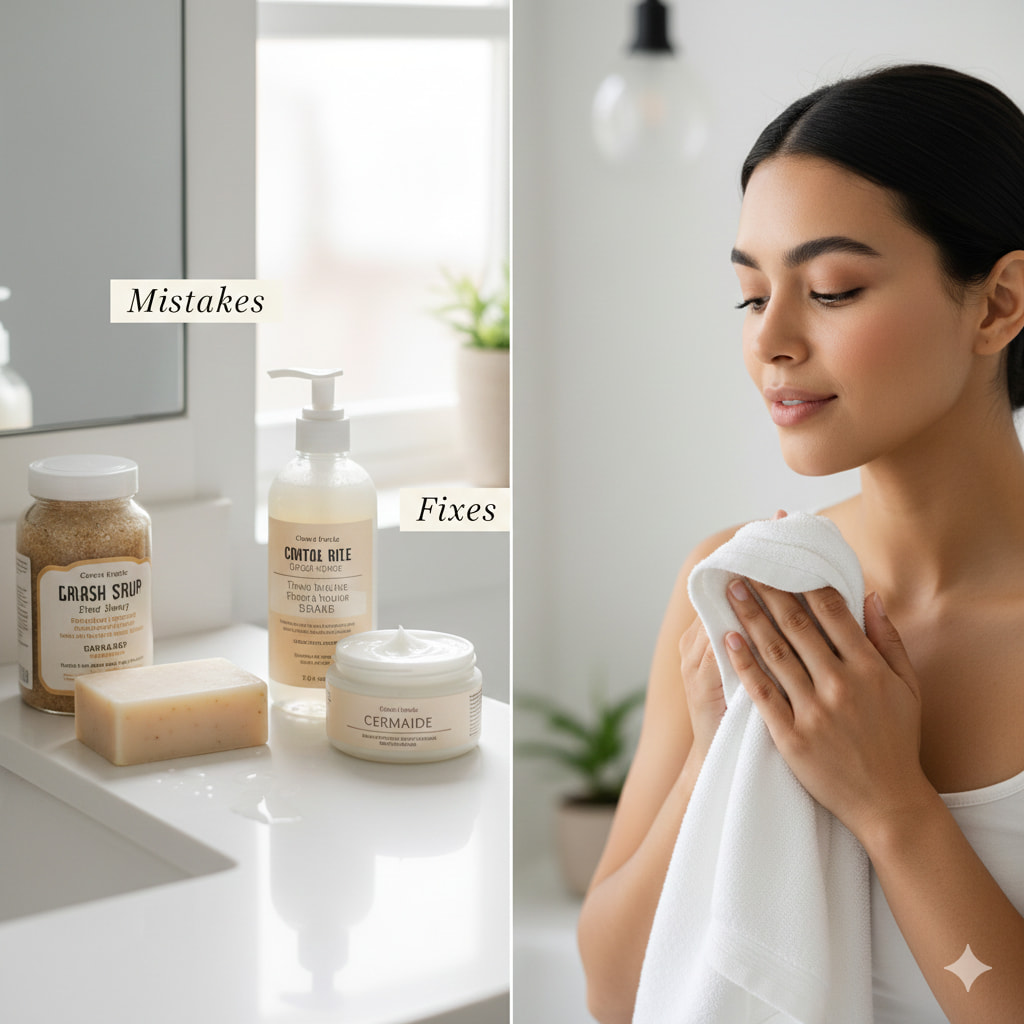
  • Common Skincare Mistakes That Can Weaken Your Skin Barrier: How to Fix Them

    Common Skincare Mistakes That Can Weaken Your Skin Barrier: How to Fix Them

    Have you ever experienced that frustrating moment when your skin suddenly feels like it’s on fire, even though you’re using “top rated” products? Or maybe you’ve noticed patches of dryness that refuse to go away, no matter how much cream you apply. If this sounds familiar, you aren’t alone. In the pursuit of flawless, “glass” skin, many of us are actually doing too much.

    The truth is, your skin is a highly sophisticated organ with its own built-in security system: the Skin Barrier. When this barrier is strong, your skin looks plump, hydrated, and clear. When it’s weak? You’re left with redness, irritation, and breakouts.

    For our readers in the US and beyond, navigating the endless world of beauty can be tricky. Let’s break down the most common skincare mistakes that are quietly sabotaging your skin barrier and how you can fix them for good.


    1. The Over-Exfoliation Obsession

    Exfoliation is great it removes dead skin cells and reveals a brighter complexion. But in the skincare world, you can definitely have too much of a good thing.

    The Mistake: Using physical scrubs and high-percentage chemical acids (like Glycolic or Salicylic acid) every single day.

    The Fix: Think of exfoliation as a “special treatment,” not a daily necessity. For most skin types, 2 times a week is plenty. If your skin looks shiny but feels tight and dry, that “glow” is actually a sign that you’ve stripped away your protective oils. Give your skin a week-long “exfoliation holiday” to let it recover.

    2. Using Harsh, High-pH Cleansers

    We’ve been conditioned to think that if our skin doesn’t feel “squeaky clean,” it’s still dirty. This is perhaps one of the most damaging myths in beauty.

    The Mistake: Using harsh foaming cleansers or traditional bar soaps that have a high pH level.

    The Fix: Your skin is naturally slightly acidic (around pH 5.5). Using a basic (high pH) cleanser disrupts this “acid mantle.” This leads to dryness and allows bacteria to grow. According to the American Academy of Dermatology, switching to a gentle, soap-free cleanser is the best way to preserve your skin’s natural moisture.

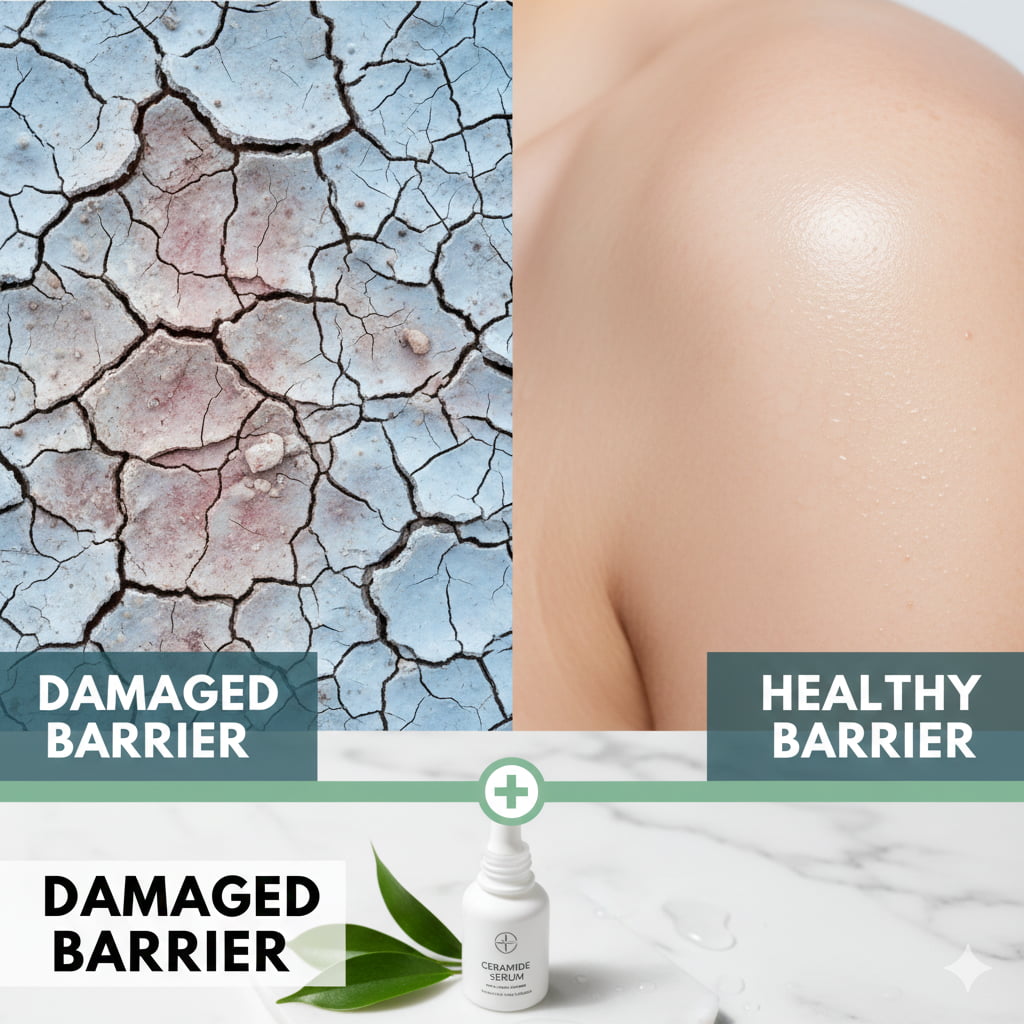
    Quick Guide: Healthy vs. Damaged Skin Barrier

    FeatureHealthy BarrierDamaged Barrier
    TextureSmooth and softRough, flaky, or peeling
    FeelComfortable and resilientTight, itchy, or stinging
    AppearanceEven tone, natural glowRedness and inflammation
    SensitivityLow sensitivity to productsStings even with plain water
    HydrationRetains moisture wellSuffers from “Trans-Epidermal Water Loss”

    3. Skipping Moisturizer When You Have Oily Skin

    This is a classic mistake. Many people with oily or acne-prone skin avoid moisturizer because they think it will make them greasier or cause more pimples.

    The Mistake: Neglecting hydration because of excess sebum.

    The Fix: When your skin is dehydrated, it actually sends a signal to your oil glands to produce more oil to compensate for the lack of water. This creates a vicious cycle of oily yet dehydrated skin. The solution? A lightweight, oil-free, water-based moisturizer. Look for ingredients like Hyaluronic Acid and Glycerin which pull water into the skin without clogging pores.

    4. “Active Ingredient” Overload

    We live in the era of “skincare cocktails.” With so many affordable serums available, it’s tempting to use Vitamin C, Retinol, Niacinamide, and AHAs all in one go.

    The Mistake: Mixing too many potent actives in a single routine.

    The Fix: Your skin can only handle so much. Using Retinol and Vitamin C together, for example, can cause massive irritation for beginners. Try “Skin Cycling” use your active ingredient one night, and focus purely on recovery and hydration the next two nights. This allows your barrier to stay intact while still getting the benefits of the treatment.

    5. Washing with Hot Water

    There is nothing more relaxing than a steaming hot shower, but your face hates it.

    The Mistake: Using hot water to rinse your face.

    The Fix: Hot water strips away the natural lipids (fats) that act as the “glue” holding your skin cells together. Once these fats are gone, moisture escapes easily. Always use lukewarm water. It’s just as effective at cleaning but much kinder to your barrier.

    6. Ignoring the Importance of Sunscreen

    You might think sunscreen is just for preventing sunburn, but it’s actually a vital part of barrier health.

    The Mistake: Only wearing SPF when it’s sunny or when going to the beach.

    The Fix: UV rays are present all year round, even through clouds and windows. UV damage weakens the proteins in your skin and makes the barrier more permeable to irritants. Apply a broad-spectrum SPF 30 every single morning as the final step of your skincare.

    7. Over-Washing Your Face

    Washing your face too often even with a gentle cleanser can be a problem.

    The Mistake: Washing 3 or more times a day.

    The Fix: For most people, twice a day (morning and night) is the limit. If you have very dry skin, you might even find that just rinsing with water in the morning and using a cleanser at night is enough.


    Frequently Asked Questions (FAQs)

    Q1: How long does it take to repair a damaged skin barrier?

    A: It usually takes about 28 days, which is the time it takes for a new cycle of skin cells to regenerate. However, you will start feeling relief within 3-7 days of starting a “barrier-repair” routine.

    Q2: Should I stop all my skincare if my barrier is stinging?

    A: Not all of it, but definitely stop the “actives.” Stick to a simple “Cleanser – Moisturizer – SPF” routine until the stinging stops.

    Q3: Are “natural” products better for the skin barrier?

    A: Not necessarily. Some natural ingredients, like lemon juice or essential oils (lavender, peppermint), can be very irritating and actually damage the barrier further. “Fragrance-free” is usually a safer bet.

    Q4: Can diet affect my skin barrier?

    A: Yes. Healthy fats like Omega-3s (found in salmon, walnuts, and flaxseeds) help your body produce the lipids that keep your skin barrier strong.

    Q5: What is the best ingredient for a quick barrier fix?

    A: Ceramides are the gold standard. They make up about 50% of your skin barrier. Applying a ceramide-rich cream is like giving your skin the exact building blocks it needs to heal.


    Conclusion

    Your skin barrier is your best friend it protects you from the environment, keeps you looking young, and ensures your skin stays hydrated. By avoiding these common skincare mistakes, you are giving your skin the space it needs to thrive. Remember, skincare is a marathon, not a sprint. Be gentle, be consistent, and listen to what your skin is telling you.

  • Common Makeup Mistakes and How to Avoid Them: Your Guide to a Flawless Glow

    Common Makeup Mistakes and How to Avoid Them: Your Guide to a Flawless Glow

    We’ve all been there you spend 40 minutes in front of the mirror, blending and contouring, only to step outside and realize your face looks a bit… off. Maybe the foundation looks like a mask, or your concealer is settling into lines you didn’t even know you had.

    Makeup is supposed to be fun and empowering, but small errors in technique or product choice can actually make us look tired, aged, or even damage our skin. If you are aiming for that “effortless” US-style glow, it’s time to audit your routine.

    Here is a deep dive into the most common makeup mistakes and the simple, human-friendly fixes to get you back on track.

    1. The “Sandpaper” Mistake: Skipping Prep

    Imagine painting a wall that is cracked and peeling. The paint won’t look good, right? Your skin is exactly the same. The biggest mistake isn’t the makeup itself; it’s what you do (or don’t do) before the makeup.

    The Mistake: Applying foundation directly onto dry or unwashed skin.

    The Fix: You need a solid base. Start with a gentle cleanser, followed by a lightweight moisturizer. Give it 2-3 minutes to sink in before applying a primer. A primer acts as a bridge between your skin and makeup, filling in pores and smoothing out texture.

    2. The “Mask” Effect: Wrong Foundation Shade

    We often test foundation on our hands, but our hands are exposed to much more sun than our faces. This leads to the “floating head” look where your face is orange and your neck is pale.

    The Mistake: Choosing a shade that doesn’t match your undertone.

    The Fix: Always swatch foundation on your jawline. Check it in natural light. If it disappears into both your cheek and your neck, you’ve found “the one.” Also, remember that skin tones change with seasons—you might need a slightly darker shade in the summer.

    3. Over-Concealing Under the Eyes

    We all want to hide dark circles, but more product doesn’t mean more coverage. Thick layers of concealer will inevitably “crease” (settle into fine lines), making you look older than you are.

    The Fix: Use the “less is more” rule. Apply a tiny amount of color corrector (peach for dark circles) first, then a thin layer of hydrating concealer only on the inner corners. Use a damp beauty sponge to bounce the product into the skin rather than rubbing it.


    Quick Comparison: Doing it Right vs. Wrong

    FeatureThe Mistake (Avoid This)The Solution (Do This)Result
    Skin PrepApplying on dry skinMoisturizer + PrimerSmooth, glowing base
    FoundationPiling it on thickLight layers / Sheer tintNatural, skin-like finish
    EyebrowsBoxy, dark startGradient, hair-like strokesSoft, youthful look
    BlushToo low on the cheeksHigh on the cheekbonesInstant face lift effect
    MascaraPumping the wandTwisting the wandNo clumps, longer life

    4. The “Powder Trap”: Using Too Much Setting Powder

    In the quest for a matte look, many people go overboard with translucent powder. This can lead to “cakey” skin that looks dry and lifeless under bright lights.

    The Fix: Only powder the areas that get oily—usually the T-zone (forehead, nose, and chin). Use a small, fluffy brush instead of a large puff to maintain control. If you feel you’ve used too much, a quick spritz of setting spray will melt the powder back into the skin for a natural finish.

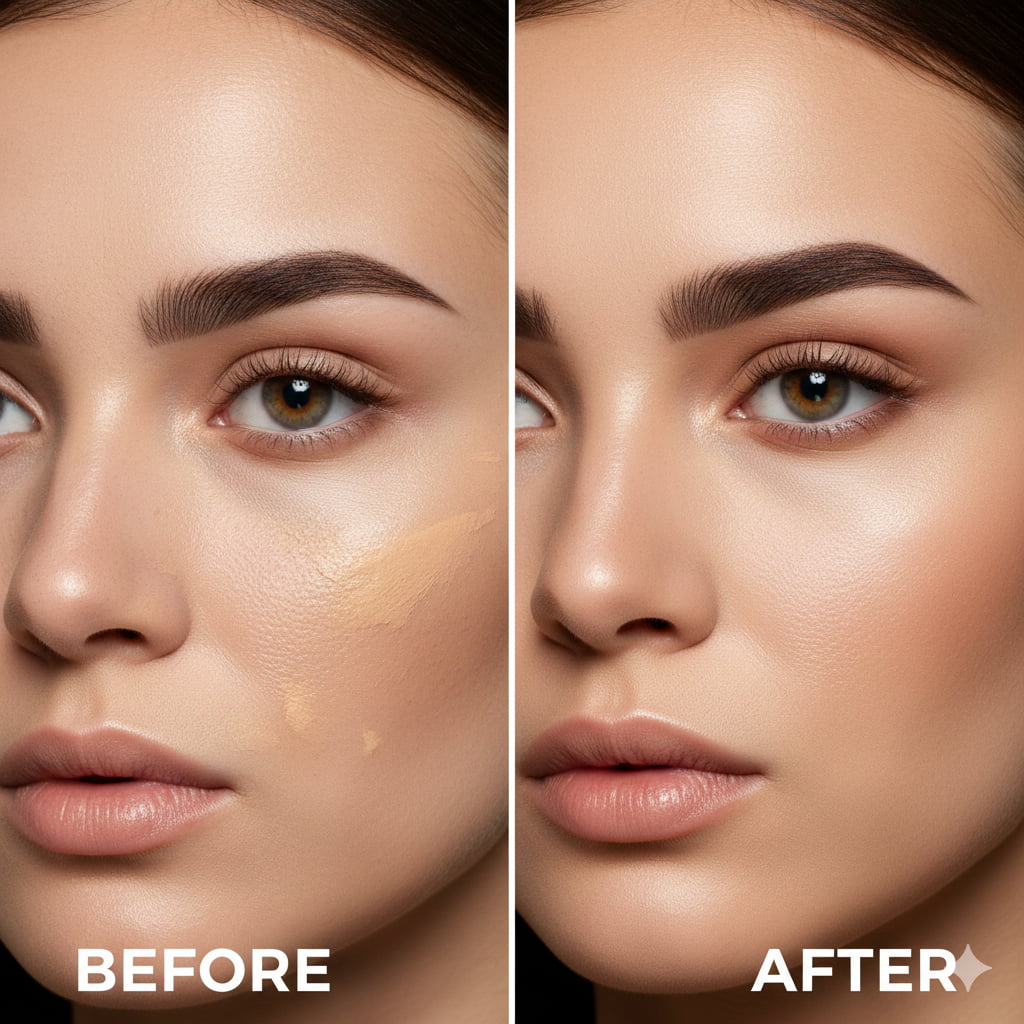
    Comparison of cakey foundation versus smooth flawless makeup application on a woman's face
    This AI-generated image serves as a perfect visual example of how a well-blended, natural everyday makeup look should appear in bright, natural lighting.

    5. Using Dirty Tools (A Skincare Nightmare)

    This is the mistake that hurts your skin the most. Brushes and sponges soak up oil, dead skin cells, and bacteria. Using them daily without cleaning them is a fast track to breakouts and irritation.

    The Fix: Wash your beauty sponge after every use, and deep-clean your brushes at least once a week. According to the American Academy of Dermatology, maintaining clean tools is essential for preventing acne and infections.

    6. Harsh Eyebrow Lines

    Social media trends often show “Instagram Brows”—very dark and very sharp. In real life, these can look quite harsh and artificial.

    The Fix: Follow your natural shape. Use a pencil or powder that is one shade lighter than your hair color. Focus the pigment on the arch and tail, leaving the inner part of the brow very light. Use a spoolie (the little brush at the end of the pencil) to blend everything out.

    7. Forgetting the “Double Cleanse”

    The biggest makeup mistake happens at night. Taking off makeup with just a wipe isn’t enough. Wipes often just move the dirt around rather than removing it.

    The Fix: Use the double-cleansing method. First, use a cleansing balm or oil to break down the makeup and sunscreen. Second, use your regular water-based cleanser to actually clean the skin. Your pores will thank you!

    8. Neglecting Sunscreen

    Many people think the SPF 15 in their foundation is enough. It’s not. You would need to apply a massive amount of foundation to get the protection listed on the bottle.

    The Fix: Always apply a dedicated SPF 30 or higher before your primer. This prevents sunspots and premature wrinkles, ensuring your “natural” skin looks great even without makeup.


    Final Thoughts for a Better Routine

    The secret to great makeup is realizing it’s an extension of your skincare. When you treat your skin with respect—by cleaning your brushes, moisturizing properly, and choosing the right shades—the makeup will naturally look 100% better.

    Don’t be afraid to experiment, but always remember that “less is usually more.” Start with light layers and build up only where you need it. Your skin’s health should always come first!