Tag: healthy skin guide

  • Makeup for Sensitive Skin: How to Avoid Irritation and Breakouts

    Makeup for Sensitive Skin: How to Avoid Irritation and Breakouts

    Let’s be real having sensitive skin can feel like walking on eggshells. You see a beautiful new foundation, you try it, and by lunchtime, your face is either itching, turning bright red, or preparing for a breakout. It’s frustrating, expensive, and honestly, a bit exhausting. If you have ever felt like your skin is “allergic to everything,” you are not alone.

    But here’s the truth: your skin isn’t “bad.” It’s just picky. It has a delicate protective barrier that reacts quickly to certain chemicals. The secret to wearing makeup with sensitive skin is not about finding “more” products, but finding the right ones.

    In this comprehensive guide, we’ll walk through how you can achieve a flawless look without the post-makeup regret.

    1. Why Does Your Skin React? (The Science Part)

    Sensitive skin usually means your skin barrier (the stratum corneum) is compromised. Think of your skin barrier as a brick wall. In healthy skin, the bricks are tight, keeping moisture in and irritants out. In sensitive skin, there are cracks in that wall.

    When you apply makeup with harsh fragrances or alcohols, those chemicals seep through the cracks, triggering an immune response. This leads to what dermatologists call Contact Dermatitis. To fix this, you don’t just need better makeup; you need to protect that “wall” first.

    2. Start with the “Shield” (Skincare Prep)

    If you have sensitive skin, your makeup is only as good as the skin underneath. Think of skincare as a protective shield between your reactive pores and the pigments.

    • The Hydration Rule: A dry face is more prone to irritation. Use a moisturizer with Ceramides. These are natural lipids that help repair your skin barrier.
    • The Mineral SPF Rule: For sensitive folks, mineral sunscreens (containing Zinc Oxide or Titanium Dioxide) are much better than chemical ones. Chemical sunscreens absorb UV rays and turn them into heat, which can trigger redness (Rosacea). Mineral ones sit on top and reflect rays like a mirror.

    Expert Insight: According to theAmerican Academy of Dermatology, people with sensitive skin should look for products with fewer than 10 ingredients to minimize the chance of a reaction.

    3. Ingredients: The “Good” vs. The “Ugly”

    Before you “add to cart,” turn the bottle around. It’s a bit like detective work, but it saves your skin in the long run.

    Avoid these Triggers:

    1. Fragrance (Parfum): Even if it’s “natural” lavender or rose, fragrance is the #1 cause of skin reactions.
    2. Alcohol Denat: This strips your skin’s natural oils, leaving it tight and stinging.
    3. Bismuth Oxychloride: Often found in mineral makeup to add “shimmer,” but its crystalline structure can cause intense itching for many.
    4. Talc: While controversial, for many, it can be an irritant or too drying for sensitive patches.

    Look for these Heroes:

    • Non-Comedogenic: This is a fancy way of saying “it won’t clog your pores.”
    • Hypoallergenic: Formulated specifically to lower the risk of allergic reactions.
    • Aloe & Chamomile: These are natural anti-inflammatories that keep the skin calm under makeup.

    4. The Sensitive Skin Makeup Selection Chart

    Use this quick guide to swap out harsh products for safer alternatives:

    Product CategoryInstead of…Try…The “Human” Reason Why
    FoundationLong-wear Matte FoundationTinted Moisturizer or BB CreamHeavy mattes can “suffocate” and dry out reactive skin.
    MascaraWaterproof MascaraTubing MascaraWaterproof formulas require harsh rubbing to remove, damaging lashes.
    BlushPowder BlushCream or Liquid BlushPowders can be abrasive; creams melt in gently without friction.
    EyeshadowGlitter/Shimmer ShadowsSatin or Matte PigmentsGlitter particles can scratch the delicate eyelid skin.
    Setting SprayAlcohol-based SprayAlcohol-free Facial MistAlcohol sprays cause instant redness and tightness.

    5. Application: The “Pat, Don’t Rub” Method

    How you put your makeup on is just as important as what’s in the bottle. Friction is the enemy.

    • Use Your Fingers (Clean ones!): Sometimes, brushes can be too scratchy. The warmth of your fingers helps the product blend without much pressure.
    • Damp Sponge: If you use a sponge (like a Beautyblender), make sure it’s damp. This prevents the sponge from soaking up the product and makes the application feel cooling and soft.
    • The Weekly Wash: If you haven’t washed your brushes in two weeks, you’re basically applying old bacteria to your face. Wash them weekly with a fragrance-free baby shampoo.

    6. Real Info: The Patch Test is Non-Negotiable

    I know, you want to try your new lipstick now. But for sensitive skin, a 24-hour patch test is a lifesaver. Apply a small amount on your jawline or behind your ear. If you don’t see redness or feel a “tingle” by the next day, you’re safe to go.

    If a product ever “stings,” that isn’t it “working” that is your skin screaming for help. Wash it off immediately.
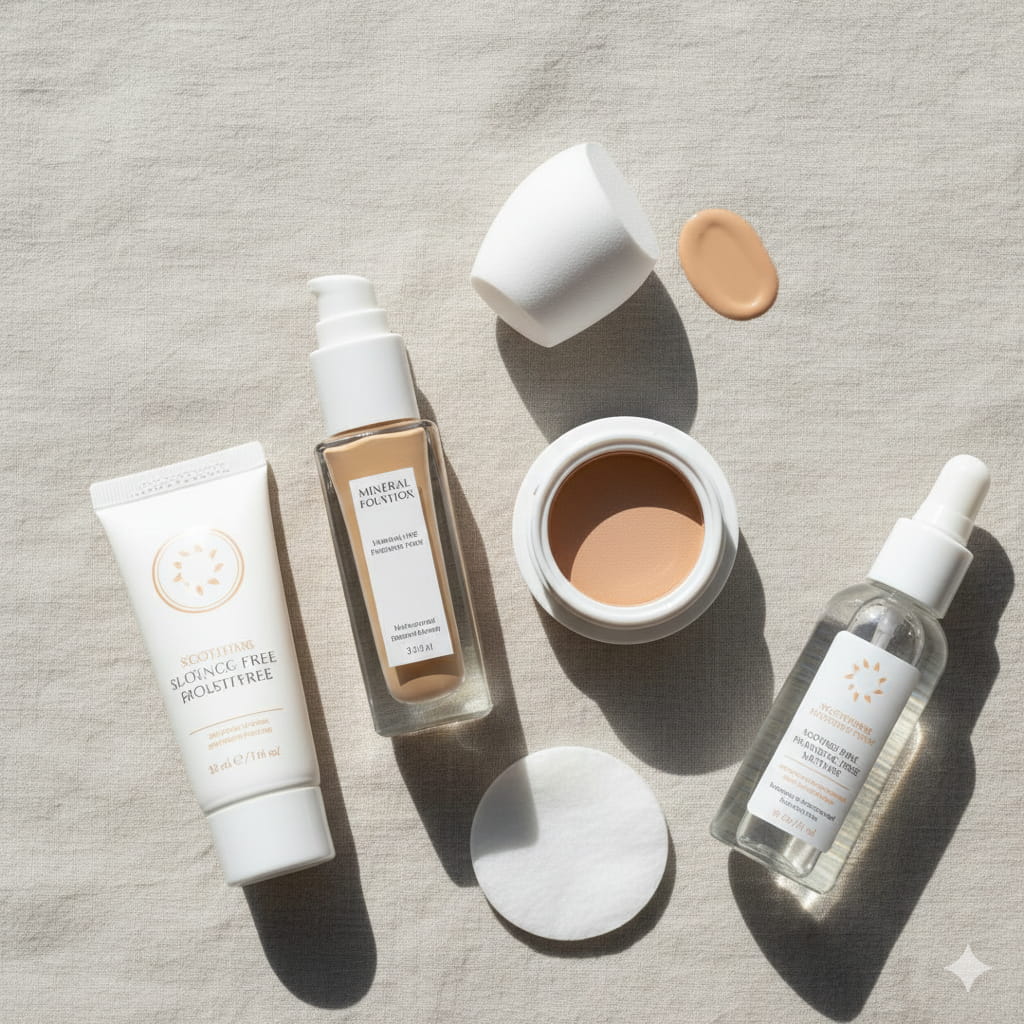
    A flat lay of fragrance-free and mineral-based makeup products for sensitive skin on a clean background.

    7. The End-of-Day Ritual: Gentle Removal

    Going to sleep with makeup is a crime for sensitive skin, but removing it harshly is even worse.

    Instead of scrubbing with makeup wipes (which are often full of preservatives and alcohol), try Micellar Water. It acts like a magnet for dirt without you having to tug at your skin. For a deeper dive into safe cleansing habits, the Mayo Clinic has great advice on maintaining a healthy skin balance.

    Conclusion

    At the end of the day, your skin is unique. What works for a TikTok influencer might not work for you, and that’s okay. The goal of makeup is to make you feel confident, not to cause you pain. By sticking to fragrance-free formulas, leaning towards cream textures, and being gentle with your application, you can enjoy beauty without the “burn.”

    Listen to your skin it always tells you what it likes. Treat it with kindness, and it will give you that natural glow back!
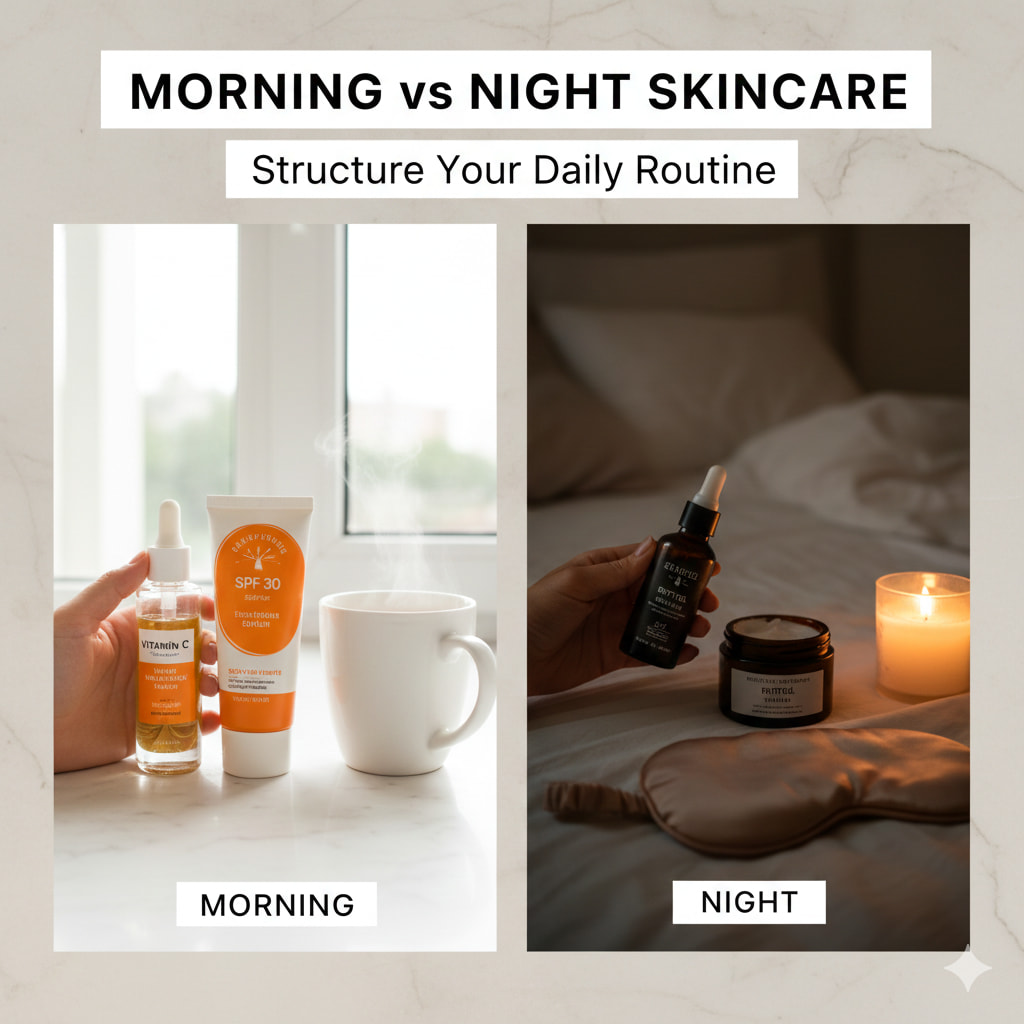
  • Morning vs Night Skincare Routine: How to Structure Your Daily Skincare Properly

    Morning vs Night Skincare Routine: How to Structure Your Daily Skincare Properly

    Have you ever looked at your bathroom shelf and wondered why you have so many bottles? Or better yet, wondered if it actually matters when you apply them? You aren’t alone. One of the most common questions in the beauty world is: “Does the time of day really change how my skincare works?”

    The short answer is: Yes, absolutely.

    Think of your skin like a house. During the day, it needs “shields” to protect it from the sun and pollution. At night, it needs “tools” to repair the damage and rebuild. If you mix up these roles, you might not just be wasting money you could be irritating your skin.

    In this guide, we’re going to break down exactly how to structure your morning and night routines so you can get the best results without the confusion.


    The Morning Philosophy: Protection is Key

    When you wake up, your skin is about to head into a “battle.” It’s going to face UV rays, dirt, and blue light from your screens. Your morning routine should be all about defense.

    1. Gentle Cleansing

    You don’t need a harsh scrub in the morning. Since you only slept on your pillow, a gentle water-based cleanser or even just a splash of lukewarm water is enough to refresh your face without stripping its natural oils.

    2. Antioxidants (Vitamin C)

    This is where you apply your “shield.” Vitamin C is the gold standard for morning skincare. It helps neutralize free radicals caused by the sun. If you want to prevent dark spots and keep your skin bright, this is a must-have step.

    3. Lightweight Hydration

    Daytime moisturizers should be light. You want something that sinks in quickly so it doesn’t feel greasy under your makeup or throughout a busy day. Look for ingredients like Hyaluronic Acid.

    4. The Non-Negotiable: SPF

    If you skip every other step, do not skip this one. According to the Skin Cancer Foundation, daily use of SPF 15 or higher reduces the risk of skin aging by 24%. In the US, dermatologists recommend at least SPF 30 for daily wear.

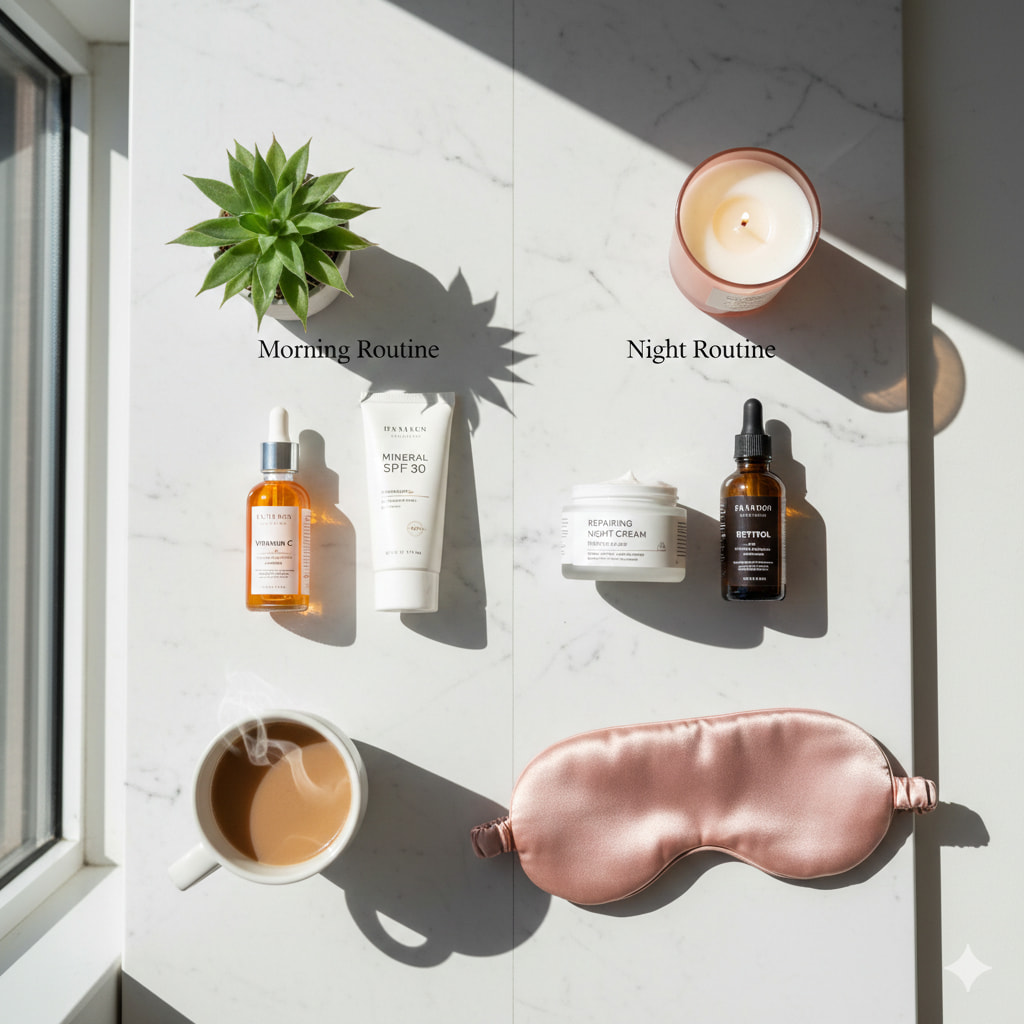
    A high-quality flatlay of skincare bottles, a cup of coffee, and a scented candle on a white marble surface, labeled Morning and Night Routine.

    The Night Philosophy: Repair and Rebuild

    While you sleep, your skin’s blood flow increases, and it works hard to fix the damage from the day. This is the time to use your “heavy hitters”—the ingredients that are too strong or sensitive for daylight.

    1. The Double Cleanse

    By the end of the day, your face is covered in sweat, makeup, and layers of sunscreen. A single wash often isn’t enough. Use an oil-based cleanser first to melt away the gunk, followed by your regular cleanser to actually clean the skin.

    2. Treatment (The Actives)

    Nighttime is the best time for Retinol or chemical exfoliants (like Glycolic Acid). Retinol is a powerhouse for anti-aging and acne, but it breaks down in sunlight and makes your skin sensitive. Using it at night allows it to work its magic while you rest.

    3. Repairing Barriers

    Night creams are usually thicker and richer than day creams. Look for Ceramides or Fatty Acids. These ingredients help repair your skin’s natural barrier so you wake up with soft, bouncy skin.

    4. Eye Cream

    The skin around your eyes is the thinnest on your body. A nourishing eye cream at night can help with hydration and prevent fine lines over time.+1


    Morning vs. Night: At a Glance

    StepMorning (Protection)Night (Repair)
    CleanserGentle / Water-basedDouble Cleanse (Oil + Water)
    SerumVitamin C / AntioxidantsRetinol / Exfoliants
    MoisturizerLightweight / BreathableRich / Nourishing
    SpecialtySunscreen (SPF 30+)Eye Cream / Face Oils

    Common Mistakes to Avoid

    Using Retinol in the Sun

    Using Retinol in the morning is a big no-no for beginners. It loses its power in the sun and can cause your skin to burn much faster. Keep the “strong stuff” for your bedtime ritual.

    Skipping Moisturizer Because of Oily Skin

    If you skip moisturizer, your skin might actually produce more oil to compensate for the dryness. Whether it’s 8 AM or 10 PM, hydration is always necessary.

    Over-Exfoliating

    You don’t need to exfoliate every night. Twice a week is usually plenty for most skin types. If your skin feels stinging or looks red, you’re likely overdoing it.


    How to Stay Consistent

    The best routine is the one you actually do. If 10 steps feel like too much, start with three:

    1. Cleanse
    2. Treat (Vitamin C in AM / Retinol in PM)
    3. Moisturize/Protect

    As you get comfortable, you can add more targeted products. But remember, healthy skin is a marathon, not a sprint. Give your products at least 4 to 6 weeks to show real results.

    Final Thoughts

    Structuring your skincare properly doesn’t have to be a headache. Just remember: Protect in the morning, Repair at night. By following this simple logic, you ensure your skin gets exactly what it needs, exactly when it needs it. Your future, glowing self will thank you!

  • Understanding Skincare Ingredients: What Really Matters for Healthy Skin

    Understanding Skincare Ingredients: What Really Matters for Healthy Skin

    Have you ever stood in the skincare aisle of a store like Sephora or Target, staring at a bottle, and felt like you needed a chemistry degree just to understand what was inside? You aren’t alone. With flashy marketing and complex names like Methylsulfonylmethane or L-Ascorbic Acid, it’s easy to feel overwhelmed.

    But here’s a secret: most of the “magic” promised by high-end brands comes down to a few key active ingredients. You don’t need a 12-step routine to get that healthy, “lit-from-within” glow. You just need to know which ingredients actually do the heavy lifting and which ones are just filler.

    In this guide, we are going to strip away the marketing fluff and look at the science-backed ingredients that truly matter for your skin’s health.


    The “Big Three”: Ingredients Every Routine Needs

    If you’re looking to build a solid foundation, you don’t need fifty different serums. Most dermatologists agree that a few “gold standard” ingredients can handle 90% of your skin concerns.

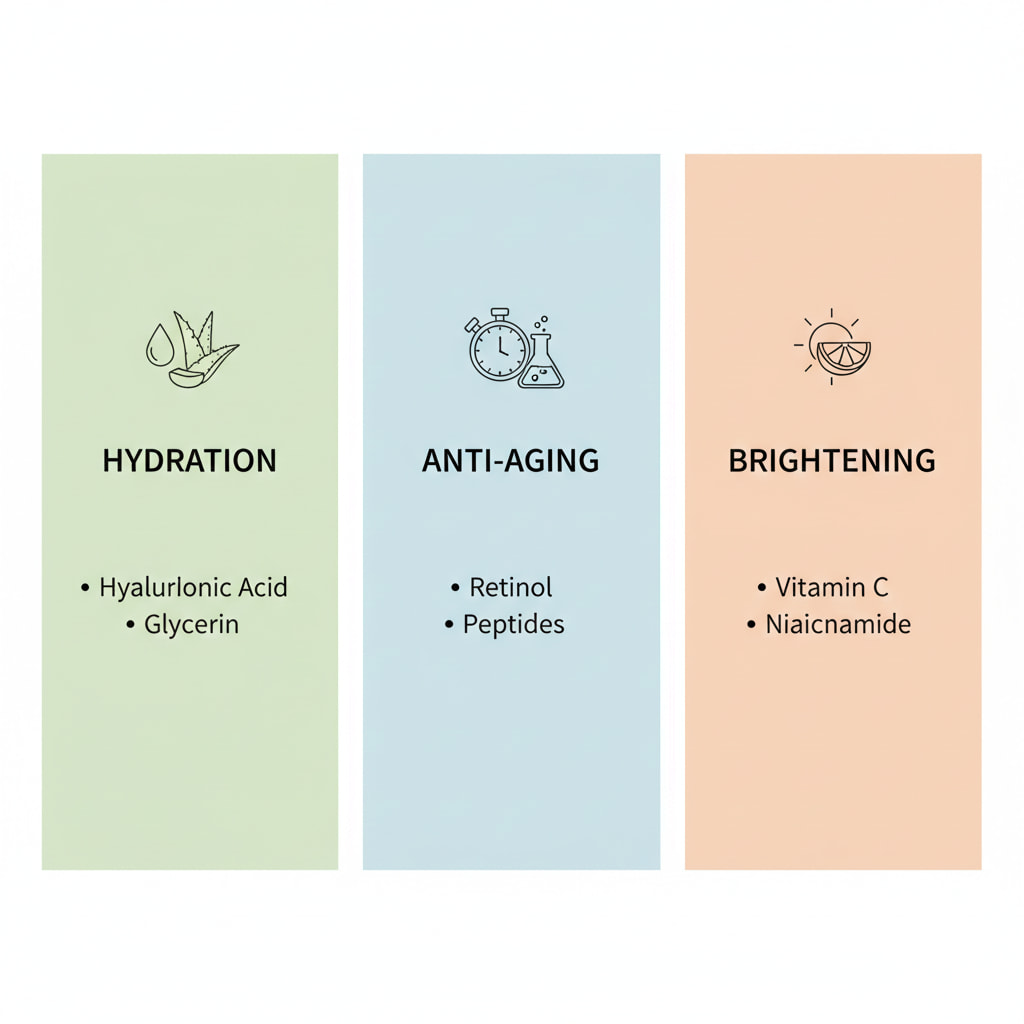
    1. The Anti-Aging King: Retinoids (Vitamin A)

    If there was a Hall of Fame for skincare, Retinol would be the first one in. Retinoids work by communicating with your skin cells, telling them to behave like younger, healthier cells.

    • What it does: It speeds up cell turnover, boosts collagen, and clears out pores.
    • Who it’s for: Anyone looking to reduce fine lines, treat adult acne, or fade dark spots.
    • Pro Tip: Start slow. Use it twice a week at night and always—I mean always—wear sunscreen the next day, as retinol makes your skin more sensitive to the sun.

    2. The Brightener: Vitamin C

    Think of Vitamin C as your skin’s personal bodyguard. During the day, your skin is attacked by “free radicals” from pollution and UV rays.

    • What it does: It’s a powerful antioxidant that neutralizes damage, brightens dull skin, and helps fade pigmentation.
    • Look for: “L-Ascorbic Acid” on the label—it’s the most researched and effective form of Vitamin C.

    3. The Protector: Sunscreen (SPF)

    This isn’t technically an “ingredient,” but the filters inside (like Zinc Oxide or Avobenzone) are the most important things you’ll ever put on your face. According to the American Academy of Dermatology, skipping SPF 30 makes all your other expensive serums useless because the sun will destroy any progress you make.


    Hydration vs. Moisture: Knowing the Difference

    Many people use these terms interchangeably, but they are actually different. Understanding this will save you from buying the wrong products.

    The Water-Pullers: Humectants

    Ingredients like Hyaluronic Acid and Glycerin are humectants. They act like tiny sponges, pulling moisture from the air into your skin.

    • The Trick: Apply Hyaluronic Acid to damp skin. If your skin is bone-dry, it might actually pull water out of your deeper skin layers, leaving you drier than before.

    The Sealers: Emollients and Occlusives

    Once you’ve pulled water into your skin, you need to lock it in. Ingredients like Ceramides, Squalane, and Petrolatum create a seal on your skin’s surface.

    • Ceramides: These are lipids that naturally make up your skin barrier. Think of them as the “mortar” between the bricks of your skin cells.

    Solving Specific Problems: The Targeted Actives

    Once you have your basics (Cleanse, Moisturize, Protect), you can add “target” ingredients based on your specific struggles.

    For Oily and Acne-Prone Skin (BHAs)

    Salicylic Acid is the most famous BHA. Unlike AHAs, it is oil-soluble, meaning it can travel deep into your pores to dissolve the “glue” holding dead skin and oil together. It’s a game-changer for blackheads.

    For Dull and Texture Skin (AHAs)

    Glycolic Acid and Lactic Acid work on the surface. They gently unglue the dead skin cells that make your face look “gray” or flaky. Lactic acid is especially great for beginners because it’s a larger molecule and doesn’t irritate the skin as much as glycolic acid.

    For Redness and Large Pores (Niacinamide)

    Niacinamide (Vitamin B3) is the ultimate “team player.” It plays well with almost every other ingredient. It helps regulate oil, calms down redness, and strengthens the skin barrier. If you have “angry” skin, this is your best friend.


    How to Read a Skincare Label Like a Pro

    Don’t get distracted by the fancy claims on the front of the bottle. Turn it around and look at the INCI (International Nomenclature of Cosmetic Ingredients) list.

    1. The First Five: Ingredients are listed in order of concentration. The first five ingredients usually make up about 80% of the product. If your “Vitamin C Serum” has Vitamin C listed at the very bottom, it’s probably not doing much.
    2. Fragrance is Optional: In the US, many people prefer fragrance-free products because synthetic scents are a top cause of skin irritation.
    3. Alcohol Labels: Look out for “Alcohol Denat” or “Isopropyl Alcohol” high up in the list, as these can be very drying. However, “Fatty Alcohols” like Cetyl or Stearyl alcohol are actually good for your skin!

    Final Thoughts: The “Skinimalist” Approach

    You don’t need a bathroom counter full of bottles to have great skin. In fact, using too many actives at once can lead to a “damaged skin barrier,” which looks like redness, peeling, and stinging.

    Start with a gentle cleanser, a good moisturizer, and SPF. Once your skin is happy, introduce one active ingredient (like Retinol or Vitamin C) and wait at least 4 weeks to see how your skin reacts. Consistency will always beat intensity.