Tag: daily skincare steps

  • How to Choose the Right Foundation Shade and Formula for Your Skin

    How to Choose the Right Foundation Shade and Formula for Your Skin

    Let’s be honest: buying a foundation is probably the most stressful part of any beauty routine. We’ve all had that moment where a shade looks like a “perfect match” under the bright, fluorescent lights of a department store, only to realize it looks like a mask the second we step out into the sunlight. Or worse, the shade is right, but the formula starts cracking on your dry patches by lunchtime.

    Finding the right foundation isn’t just about the color on the bottle. It’s about understanding the unique language of your skin its texture, its undertones, and how it behaves throughout the day. If you’re ready to stop wasting money on the wrong bottles, this guide is for you. We’re going to break down everything from undertones to application tips so you can finally achieve that “your skin, but better” glow.

    1. Know Your Skin Type: The Foundation of Your Foundation

    Before you even look at a color swatch, you have to look at your skin’s behavior. The best shade in the world will still look “off” if the formula is fighting against your skin type.

    Oily Skin

    If your face starts to shine by noon, you need a formula that can handle excess sebum. Look for keywords like “matte,” “oil-free,” or “long-wear.” These foundations are designed to stay put and often contain ingredients that absorb oil.

    Dry Skin

    If your skin often feels tight or shows flaky patches, matte foundations are your enemy. You want “hydrating,” “luminous,” or “dewy” formulas. These usually contain skin-loving ingredients like Glycerin or Hyaluronic Acid to keep the moisture locked in.

    Combination Skin

    This is the trickiest one. Usually, you have an oily T-zone (forehead, nose, chin) and dry cheeks. The best approach is a “satin finish” foundation that isn’t too shiny but won’t cling to dry spots.

    Sensitive and Acne-Prone Skin

    If you break out easily, look for “non-comedogenic” on the label. This means the product is formulated not to clog your pores. Mineral foundations are also a great choice for sensitive skin as they often contain fewer irritating chemicals.


    2. The Science of Undertones

    Many people match their foundation to the surface color of their skin, but that’s only half the battle. You also have to match your undertone the subtle hue that lives just beneath the surface.

    There are three main categories:

    1. Cool: Your skin has hints of pink, red, or blue.
    2. Warm: Your skin leans towards yellow, peachy, or golden tones.
    3. Neutral: Your skin is a mix of both, or it simply matches your surface color perfectly.

    How to Find Yours:

    • The Vein Test: Look at the veins on your wrist. Blue or purple veins usually mean you are Cool. Greenish veins suggest you are Warm. If you can’t tell, you are likely Neutral.
    • The White Paper Test: Hold a piece of pure white paper next to your bare face in natural light. If your skin looks yellow next to the paper, you’re Warm. If it looks pink, you’re Cool.
    • The Jewelry Test: Does silver jewelry make your skin look more radiant? You’re Cool. Does gold look better? You’re Warm.

    3. Foundation Formula Comparison Chart

    To help you decide at a glance, use this chart to see which formula matches your lifestyle and skin needs:

    Formula TypeCoverage LevelBest For…Finish
    Liquid FoundationSheer to FullAll Skin Types (Versatile)Matte, Satin, or Dewy
    Powder FoundationLight to MediumOily & Acne-Prone SkinMatte
    Cream FoundationFullDry or Mature SkinLuminous/Natural
    Serum FoundationSheer to LightMinimalists/Dry SkinVery Dewy
    Stick FoundationMedium to FullOn-the-go / Oily SkinNatural Matte

    4. The Art of the “Jawline Match”

    Stop testing foundation on your hand! Your hand is almost always a different color than your face because it gets more sun exposure.

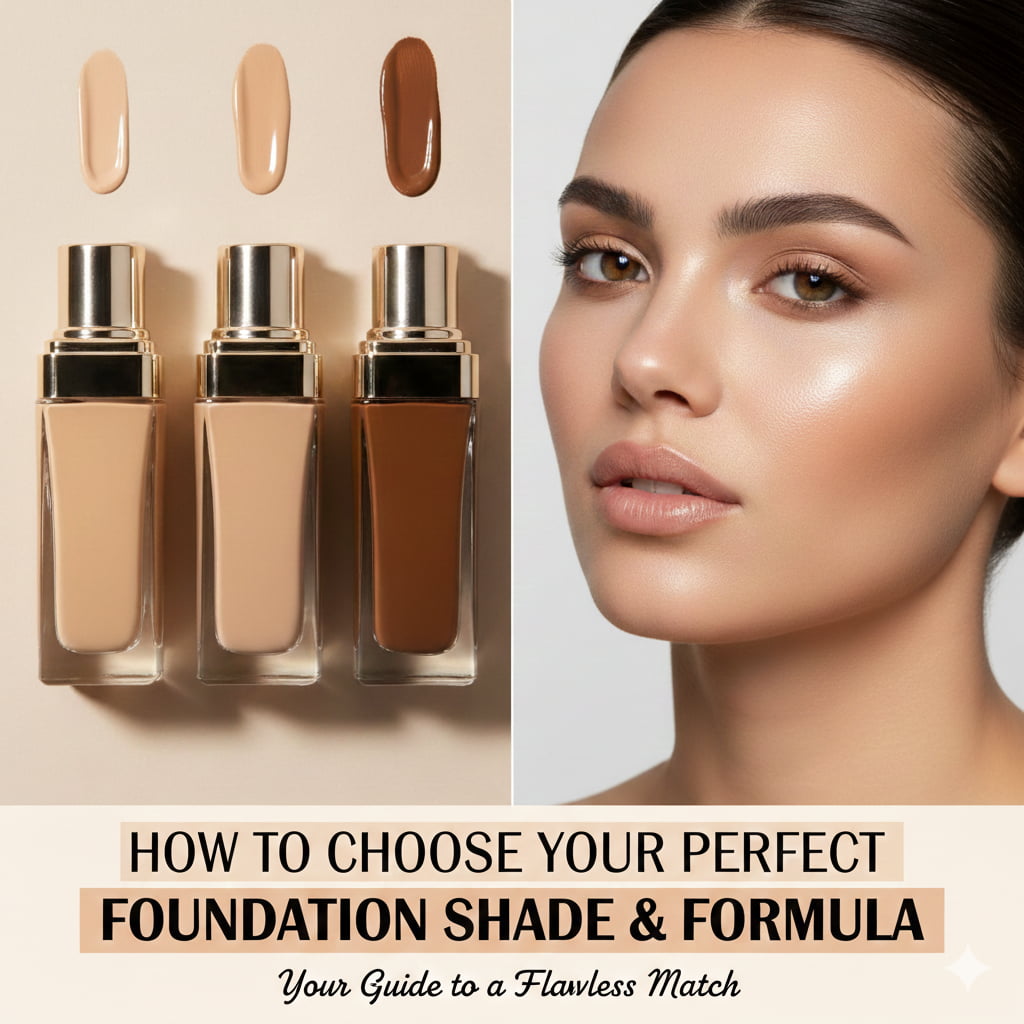
    The Golden Rule: Always test on your jawline. Swipe three shades that look close to your skin tone in a row. The one that disappears into both your face and your neck is your winner.

    Pro Tip: Let the foundation sit for at least 10 minutes. Many formulas “oxidize,” meaning they react with the oils on your skin and turn slightly darker or more orange after they dry. If it still looks good after 10 minutes, you’re safe to buy.

    5. Coverage: How Much Do You Really Need?

    • Sheer Coverage: If you have clear skin and just want to even out your tone slightly, go for a tinted moisturizer or a BB cream.
    • Medium Coverage: This is the most popular choice. It covers redness and minor spots but still looks like skin.
    • Full Coverage: Reserved for special events or if you have hyperpigmentation, acne scars, or redness you want to completely hide.

    According to makeup experts at Makeup.com by L’Oréal, the key to full coverage is blending otherwise, it can look like “cake” very quickly.
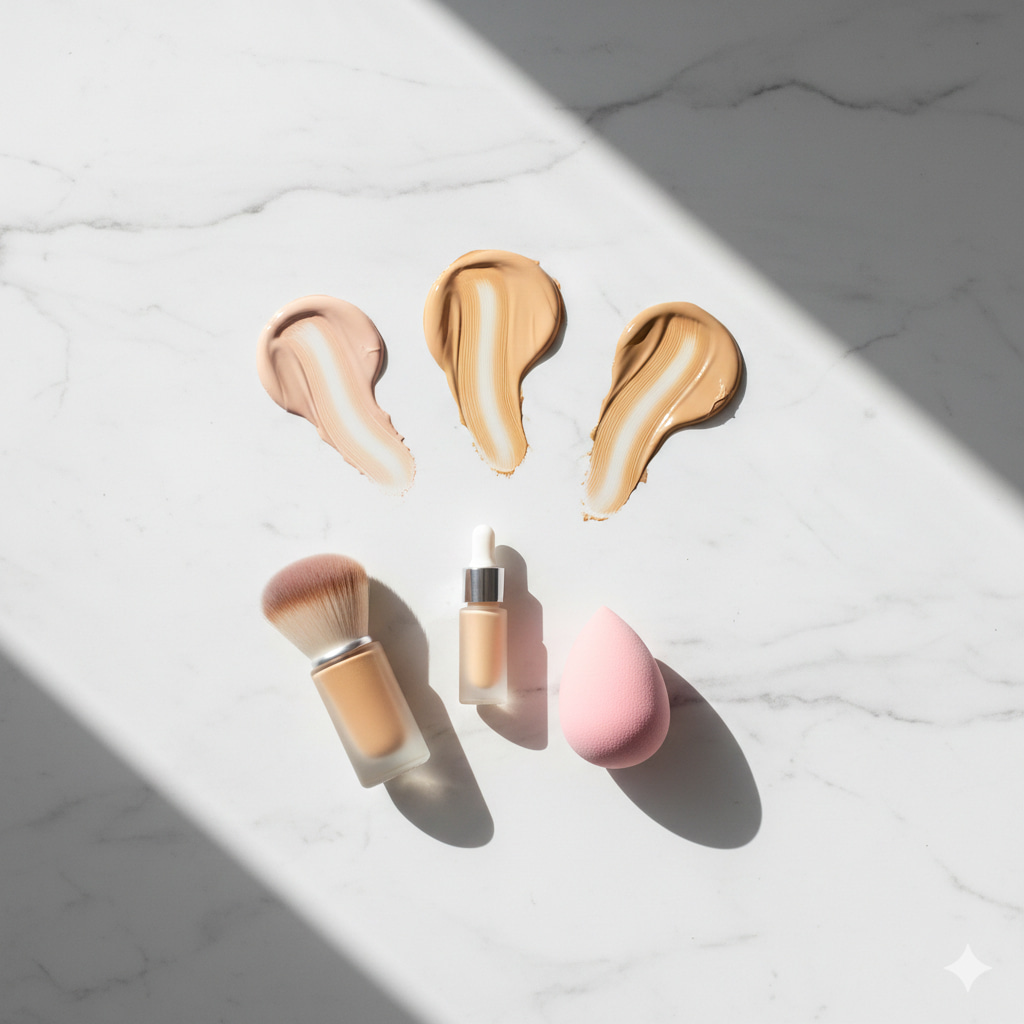
    Liquid foundation swatches on a marble surface with a makeup sponge, brush, and dropper for professional application.

    6. Prep Like a Pro

    No foundation will look good on neglected skin. For a flawless application, follow these steps:

    1. Exfoliate: Once or twice a week to remove dead skin cells.
    2. Hydrate: Apply a moisturizer at least 5 minutes before your foundation. As noted by the American Academy of Dermatology, hydrated skin is the best canvas for any cosmetic.
    3. Prime: Use a primer if you want your makeup to last more than 8 hours or if you want to blur large pores.

    7. Natural Light is Your Best Friend

    Never trust the lighting in a store. If you are at a counter, ask for a sample or apply it and then walk to the nearest window or go outside. Look at your reflection in a hand mirror in broad daylight. If you see a visible “line” where the foundation ends and your neck begins, it’s the wrong shade.

    Conclusion

    Finding the right foundation is a journey of trial and error, but once you understand your skin type and undertones, the process becomes much easier. Don’t be afraid to ask for samples and always prioritize how the product feels on your skin, not just how it looks. After all, the best foundation is the one that makes you feel confident enough to forget you’re even wearing it.

  • How Climate and Weather Affect Your Skin and What to Change in Your Routine

    How Climate and Weather Affect Your Skin and What to Change in Your Routine

    Have you ever noticed that your favorite moisturizer, which worked wonders in the summer, suddenly feels “not enough” when winter arrives? Or why your skin becomes an oil slick the moment you step into a humid city?

    It’s not just in your head. Your skin is your body’s largest organ and its primary job is to act as a barrier between you and the environment. When the environment changes whether it’s a sudden cold snap or a tropical heatwave your skin has to work overtime to stay balanced.

    In this guide, we’ll look at how different climates impact your complexion and exactly how you should tweak your routine to stay glowing all year round.

    1. Why Does the Weather Care About Your Skin?

    The air around us has a direct relationship with the moisture in our skin. This is mostly due to humidity.

    • Low Humidity: When the air is dry (like in winter or desert climates), it literally sucks the water out of your skin through a process called Transepidermal Water Loss (TEWL).
    • High Humidity: When the air is wet, your skin’s sweat and oil glands go into overdrive, which can lead to clogged pores and a “greasy” feeling.

    2. Seasonal Skincare Swap: The Cheat Sheet

    To make it easy, here is a quick chart to help you decide which products to “level up” or “lighten up” based on the weather outside:

    Weather ConditionWhat Happens to Your SkinWhat to Change in Your Routine
    Cold & Dry (Winter)Tightness, flaking, redness.Swap gel to cream cleanser; use thick moisturizers with ceramides.
    Hot & Humid (Summer)Excess oil, breakouts, sweat.Use lightweight water-gels; increase exfoliation with Salicylic acid.
    Arid/Desert HeatSevere dehydration, fine lines.Use Hyaluronic acid on damp skin; seal with a face oil.
    High WindChapped lips, windburn.Use occlusive balms (like Petrolatum) to create a physical shield.

    3. Adapting to the Cold: The “Cozy” Routine

    When the temperature drops, the humidity usually goes with it. Plus, indoor heating acts like a giant hair dryer for your face.

    The Fix:

    • Ditch the Foam: Switch to a creamy, non-foaming cleanser. Foaming agents can strip away the few natural oils your skin has left in winter.
    • Layer Your Hydration: Think of your skincare like your clothes. Start with a hydrating toner, add a serum, and finish with a thick cream.
    • Don’t Forget SPF: This is a big one. UV rays are still there in winter, and snow can reflect up to 80% of UV radiation back onto your face! According to the Skin Cancer Foundation, sun damage is a 365-day-a-year threat.

    4. Surviving Humidity: The “Lightweight” Approach

    In tropical or humid weather, your skin can feel heavy and “clogged.” The goal here is to hydrate without suffocating your pores.

    The Fix:

    • Switch to Gels: Replace heavy oil-based creams with water-based gel moisturizers. They provide water to the skin without the extra oil.
    • Salicylic Acid is Your Friend: A gentle BHA (Salicylic acid) toner a few times a week will help keep your pores clear of the sweat and oil buildup that causes summer breakouts.
    • Antioxidants: High heat and sun exposure lead to free radical damage. A Vitamin C serum in the morning acts like an internal shield for your skin cells.
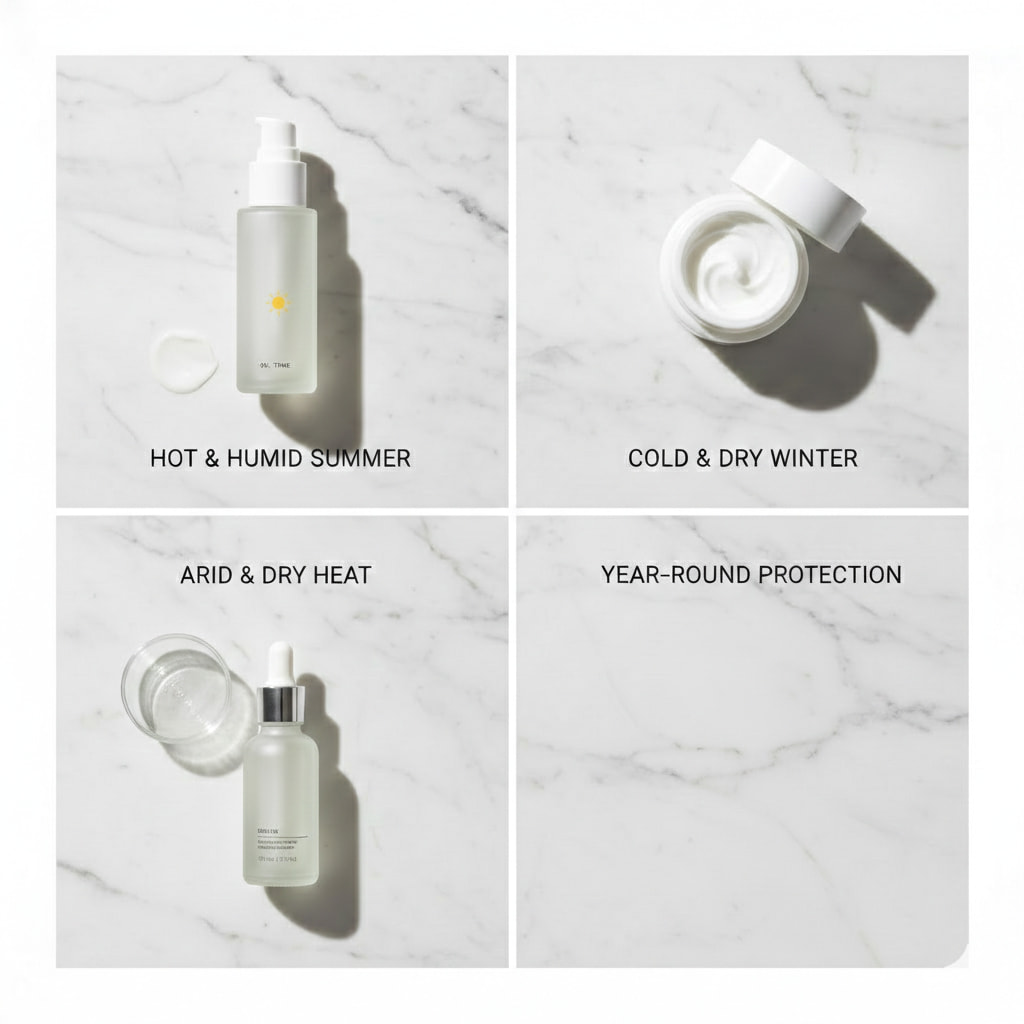
    Professional flat-lay showing specific skincare products for cold dry winter and year-round sun protection on a marble background.
    AI-generated image showcasing a clean, natural beauty and skincare routine that highlights healthy, glowing skin.

    5. Travel and Sudden Climate Shifts

    If you’re traveling from a humid place to a dry one (or vice versa), your skin might “purge” or become extremely sensitive for a few days.

    Pro Tip: Always carry a small bottle of Niacinamide. It’s a versatile ingredient that helps regulate oil in humidity and strengthens the skin barrier in dry air. It’s the ultimate “climate-control” ingredient.

    6. Real Info: The Role of the Skin Barrier

    Regardless of the weather, your main goal should be protecting your skin barrier. If your skin feels stinging or looks constantly red, your barrier might be compromised. When this happens, stop all actives (like Retinol or Vitamin C) and stick to the basics: a gentle cleanser and a ceramide-rich moisturizer until your skin feels “calm” again.

    For more expert advice on maintaining skin health in different environments, the American Academy of Dermatology offers great resources for every season.

    Conclusion

    Your skin is constantly talking to you—you just have to listen. If it feels tight, it’s thirsty for water. If it looks shiny, it’s trying to tell you the humidity is too high. By making small, smart adjustments to your routine as the seasons change, you can maintain a healthy glow whether it’s 100 degrees or below freezing.

    Frequently Asked Questions (FAQs)

    1. Do I really need to change my entire skincare routine every season? Not necessarily. You don’t need a total overhaul. Most people only need to swap one or two “hero” products. For example, switching a lightweight lotion for a richer cream in the winter, or adding a stronger exfoliant in the humid summer months, is usually enough to keep your skin balanced.

    2. Can I skip moisturizer if I live in a very humid climate? Absolutely not! Humidity makes your skin feel oily, but oil is not the same as water. Even in 90% humidity, your skin needs hydration to keep the barrier healthy. The trick is to switch to a water-based gel or a lightweight serum that won’t feel heavy or clog your pores.

    3. Why does my skin break out more when the weather gets hot? Heat and humidity increase sweat and sebum (oil) production. When these mix with dead skin cells and environmental pollution, they create the perfect storm for clogged pores and “maskne” or heat rashes. Increasing your gentle exfoliation during summer can help prevent this.

    4. Is sunscreen necessary on cloudy or rainy days? Yes, 100%. Up to 80% of the sun’s harmful UV rays can pass through clouds. Even if you don’t feel the “heat” of the sun, the UVA rays (which cause aging and skin cancer) are still reaching your skin. Sun protection is a year-round commitment, regardless of the forecast.

    5. How can I protect my skin from “Windburn” in cold climates? Windburn is essentially extreme dryness and irritation caused by the wind stripping your skin’s natural oils. To prevent this, apply an occlusive balm or a product containing petrolatum or dimethicone before heading out. This creates a physical shield that the wind cannot penetrate.

  • Beauty Tools and Hygiene: How to Use and Clean Your Makeup Tools Safely

    Beauty Tools and Hygiene: How to Use and Clean Your Makeup Tools Safely

    We often spend a fortune on the latest “holy grail” foundations and high-end serums, but we tend to ignore the very things that touch our faces every single day: our beauty tools. Whether it’s that fluffy brush you use for bronzer or the damp sponge you use to blend your concealer, these tools are the bridge between your products and your skin.

    If you’ve been struggling with mysterious breakouts, skin irritation, or “patchy” makeup that just won’t blend, the problem might not be your skin or your products. It might be the invisible bacteria living inside your brushes.

    In this comprehensive guide, we’re diving deep into the world of beauty hygiene. We’ll cover why it matters, how often you should be cleaning your kit, and the safest way to do it without damaging your expensive tools.


    Why Hygiene Isn’t Just “Optional”

    Think about it: every time you swirl a brush onto your face, it picks up oil, sweat, dead skin cells, and dust from the air. When you dip that same brush back into your makeup, you’re transferring that cocktail of “gunk” into your products.

    Over time, this becomes a literal breeding ground for bacteria. According to research cited by the American Academy of Dermatology (AAD), dirty makeup tools can cause:

    • Acne Breakouts: Clogged pores from old oil and bacteria.
    • Fungal Infections: Especially in damp beauty sponges.
    • Staph Infections: Serious skin issues that require medical help.
    • Premature Aging: Bacteria can cause oxidative stress on the skin.

    The Ultimate Cleaning Schedule

    Not every tool needs to be washed every day, but staying on top of a schedule is the only way to protect your skin. Use this chart as your weekly hygiene checklist:

    Makeup Tool Maintenance Chart

    Tool TypeCleaning FrequencyWhy?
    Beauty SpongesAfter Every UseBeing damp makes them a magnet for mold and yeast.
    Foundation/Concealer BrushesOnce a WeekLiquid products get “sticky” and harbor bacteria fast.
    Powder & Blush BrushesEvery 1-2 WeeksDry powders are slightly less prone to bacterial growth.
    Eyelash CurlersOnce a WeekPrevents eye infections and lash breakage from buildup.
    Tweezers & Metal ToolsAfter Every UseThese touch open pores; sanitize with 70% alcohol.
    Makeup BagsOnce a MonthDust and spilled product can contaminate your clean tools.

    How to Deep Clean Your Brushes (Step-by-Step)

    You don’t need to buy the most expensive “brush shampoo” on the market. A gentle, sulfate-free baby shampoo or a solid soap bar (like Dr. Bronner’s) works wonders.

    Step 1: The Rinse

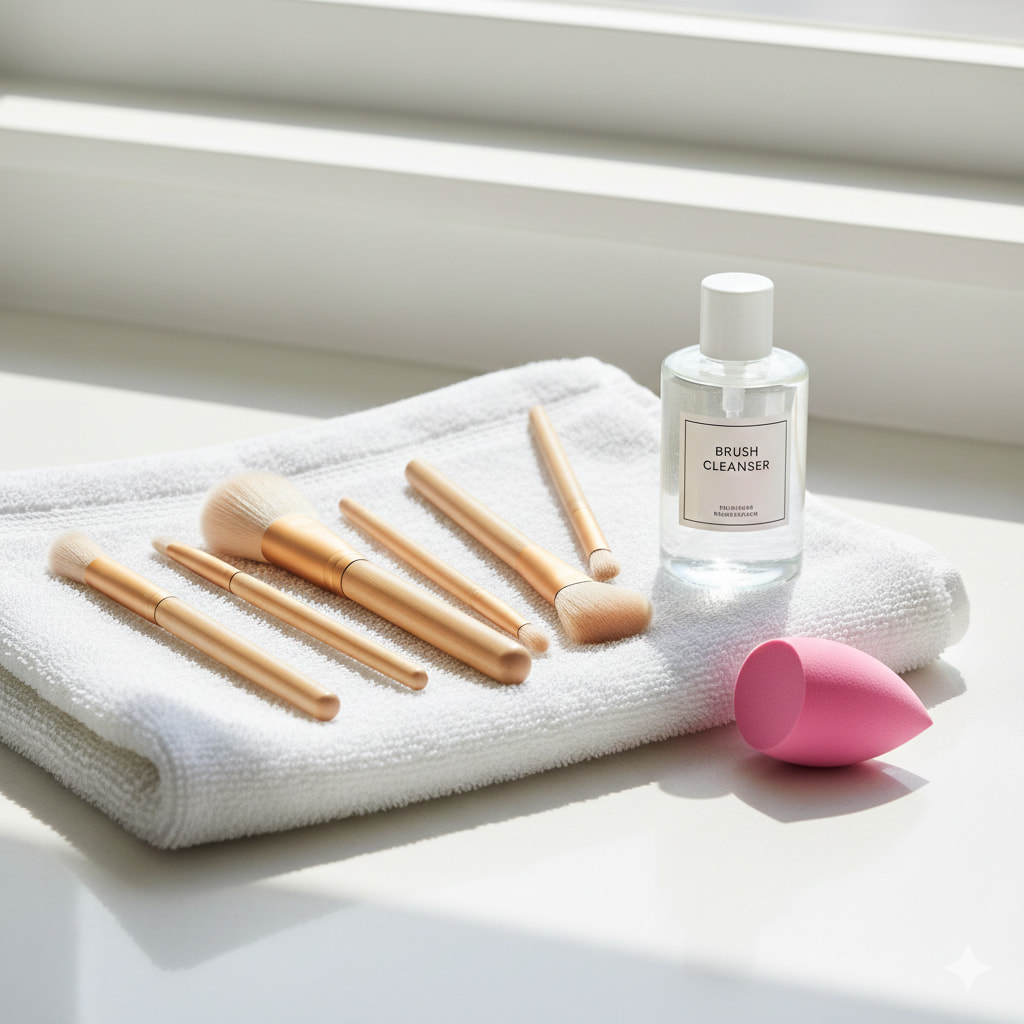
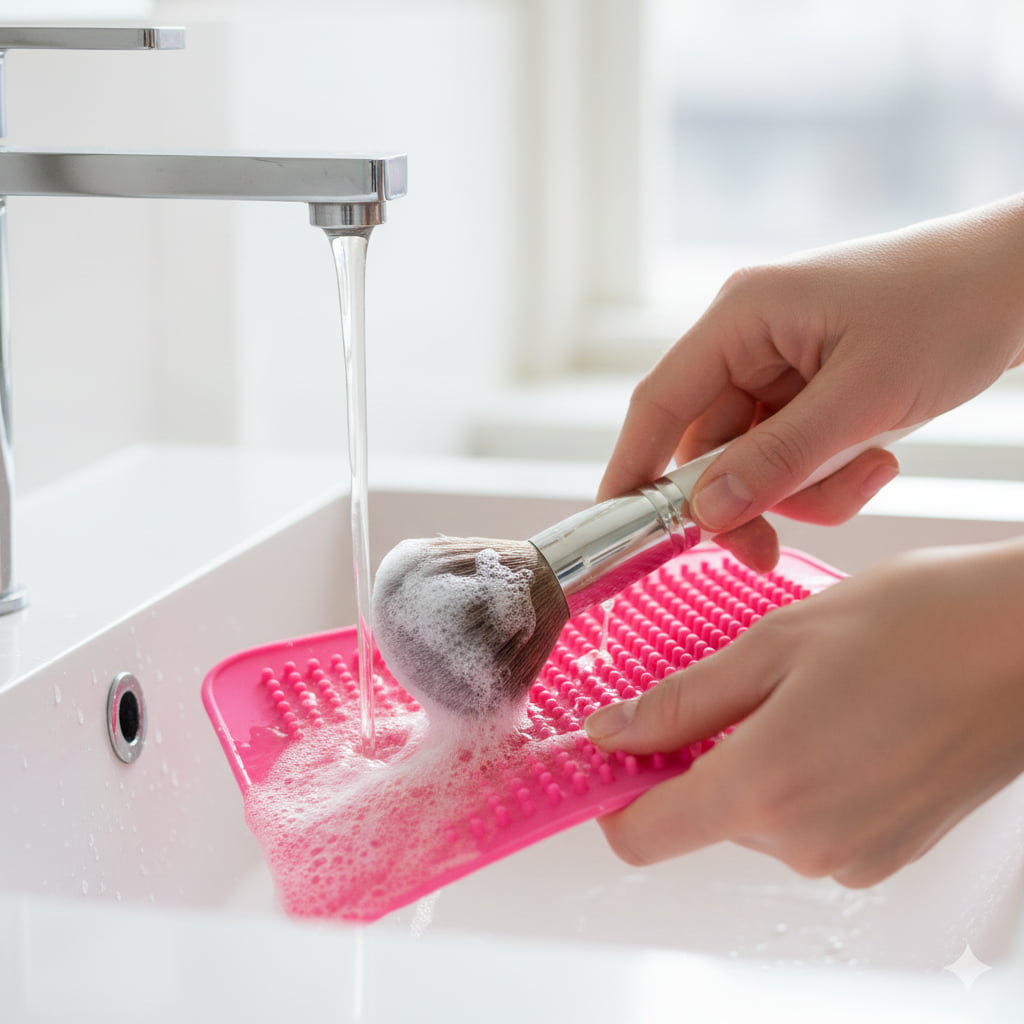
    Hold your brush under lukewarm running water. Crucial Rule: Always point the bristles down. If water gets into the “ferrule” (the metal part holding the hair), it will rot the wood and dissolve the glue, causing your brush to shed.

    Step 2: The Soap

    Apply a small amount of cleanser to your palm or a silicone cleaning mat. Swirl the brush in circular motions. You’ll see the old foundation and pigment start to melt away.

    Step 3: The Rinse (Again)

    Rinse the bristles thoroughly until the water runs completely clear. If it’s still cloudy, repeat Step 2.

    Step 4: Reshape and Dry

    Squeeze out excess water gently with a clean towel. Reshape the bristles with your fingers so they don’t dry “frizzy.”

    The Drying Secret: Never dry brushes standing up. Always lay them flat on a towel over the edge of a counter. This allows air to circulate around the bristles while preventing water from seeping into the handle.

    The Danger of the Beauty Sponge

    The beauty sponge (or “blender”) is a staple in most US households, but it is the most unhygienic tool if not cared for. Because it is porous and used damp, it stays wet inside for hours.

    • Avoid the Microwave: You may have seen “hacks” to microwave your sponge in water. This is risky and can damage the sponge’s material.
    • Air it Out: Never store a damp sponge in a closed makeup bag or drawer. It will grow mold. Keep it in a mesh bag or an open-air stand.
    • The 3-Month Rule: Even if you wash it daily, a beauty sponge should be replaced every 3 months. The internal structure breaks down over time.

    Proper Storage: The Forgotten Step

    Where you keep your tools is just as important as how you wash them.

    Most of us keep our brushes in the bathroom. However, every time you flush the toilet, tiny particles (aerosols) are released into the air. If your brushes are sitting out on the counter, they are catching those particles.

    • Store in Drawers: Keep your tools in a closed drawer or a lidded container.
    • Separate Clean from Dirty: Don’t throw your dirty sponges in the same pouch as your clean brushes.

    When to Throw a Tool Away

    Sometimes, no amount of cleaning can save a tool. You should toss it if:

    1. The Smell: It has a musty or “sour” odor.
    2. The Texture: The bristles feel crunchy or stiff even after washing.
    3. The Shedding: It’s losing clumps of hair every time you use it.

    Final Thoughts

    Good hygiene is the most “affordable” skincare tip you will ever receive. By spending just 15-20 minutes every Sunday night on a “Deep Clean Ritual,” you are essentially giving yourself a clearer, smoother complexion.

    Your makeup will apply more evenly, your tools will last for years, and most importantly, your skin will thank you. Treat your tools with respect, and they’ll do the same for your face!

  • A Complete Beginner’s Guide to Building an Effective Skincare Routine

    A Complete Beginner’s Guide to Building an Effective Skincare Routine

    In today’s world, skincare has become more than just a beauty trend; it is a vital part of overall health and self-care. However, for a beginner, the sheer number of serums, acids, and moisturizers available on the shelves can be overwhelming. You might find yourself asking: Do I really need a 10-step routine? Which ingredients actually work?

    The good news is that achieving healthy, radiant skin does not require a complex or expensive regimen. In fact, most dermatologists agree that a simple, consistent routine is far more effective than an inconsistent, complicated one. This guide will walk you through everything you need to know to build a high-quality skincare routine from scratch, specifically tailored for long-term results.


    Step 1: Understanding Your Skin Type

    Before you spend a single dollar on products, you must identify your skin type. Using a product designed for oily skin on a dry complexion can cause irritation, while using heavy creams on oily skin can lead to breakouts.

    The Four Main Skin Types

    1. Oily Skin: If your face looks shiny by midday and you have visible pores, you likely have oily skin. This is caused by overactive oil glands.
    2. Dry Skin: If your skin feels tight, looks flaky, or has a dull appearance, it lacks natural oils. You may notice more fine lines when your skin is not properly hydrated.
    3. Combination Skin: This is the most common type. Your “T-zone” (forehead, nose, and chin) is oily, but your cheeks are dry or normal.
    4. Sensitive Skin: If your skin frequently turns red, stings, or reacts poorly to fragrances and new products, you have sensitive skin.

    The “Bare-Faced” Test: Wash your face with a gentle cleanser, pat it dry, and wait 30 minutes. If it feels tight, you are dry. If it looks shiny on the forehead and nose, you are combination. If it’s shiny all over, you are oily.

    Woman with clear skin applying face cream

    Step 2: The Essential Three-Step Core Routine

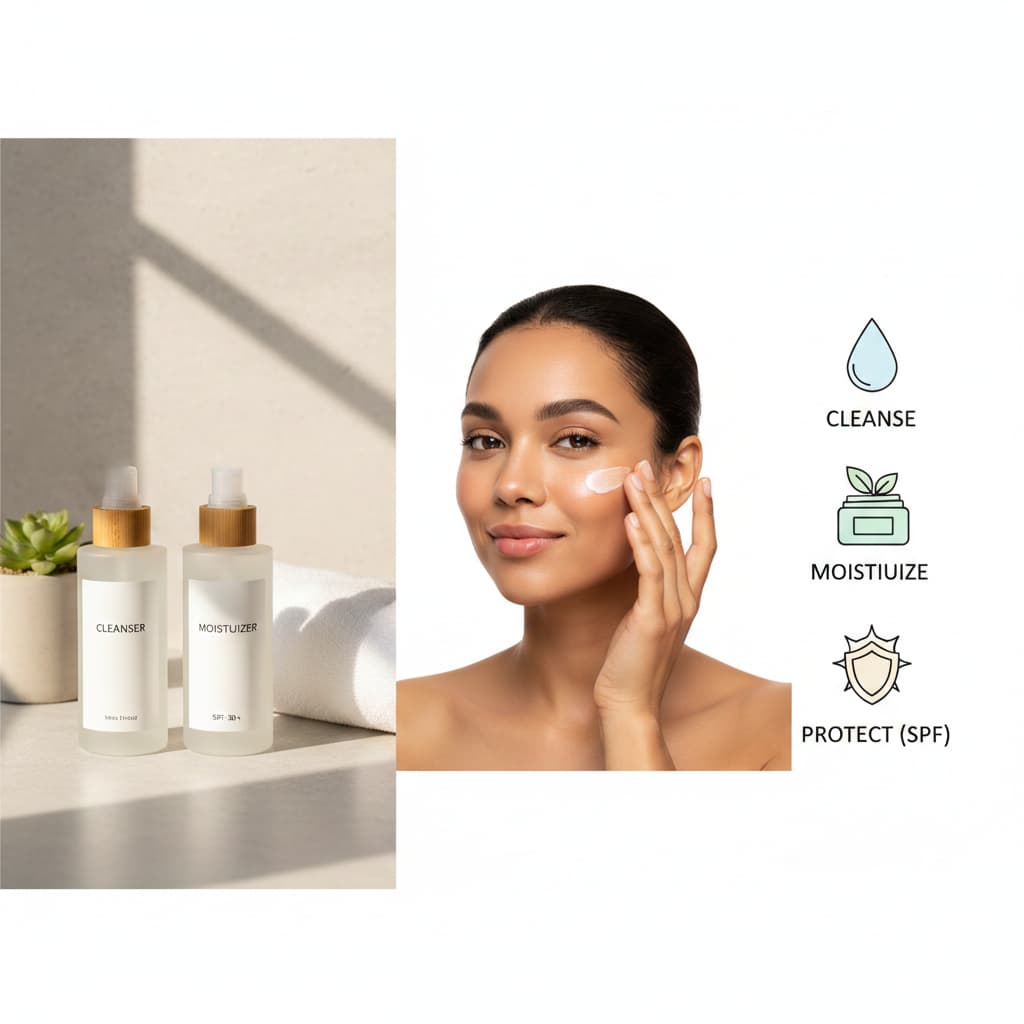
    For any routine to work, it must be sustainable. A beginner should start with three fundamental steps: Cleansing, Moisturizing, and Protecting.

    I. Cleanser: The Clean Slate

    Cleansing is the foundation of your routine. Throughout the day, your skin accumulates dirt, oil, bacteria, and pollutants. If you don’t wash these away, they clog your pores and cause dullness.

    • Morning: A quick wash with water or a very gentle cleanser is usually enough to remove any sweat or oils from your pillow.
    • Night: This is the most important time to wash your face. You must remove the day’s buildup. If you wear makeup or heavy sunscreen, consider a “double cleanse”—using a micellar water or oil cleanser first, followed by your regular face wash.

    II. Moisturizer: The Hydration Guard

    A common myth is that oily skin doesn’t need moisturizer. In reality, all skin types need hydration. A moisturizer acts as a barrier, trapping water inside the skin and protecting it from environmental damage.

    • For Oily/Acne-Prone Skin: Look for “non-comedogenic” (won’t clog pores) gel-based moisturizers.
    • For Dry Skin: Look for thicker creams containing ceramides or shea butter to deeply nourish the skin barrier.

    III. Sunscreen: The Ultimate Anti-Aging Tool

    If you only do one thing for your skin, let it be sunscreen. Over 80% of skin aging—including wrinkles and dark spots—is caused by UV rays. According to the American Academy of Dermatology, you should wear a broad-spectrum SPF 30 or higher every single day, even when it is cloudy.


    Step 3: Introducing Targeted Treatments (The “Actives”)

    Once you have mastered the basic three steps, you can add “active” ingredients to target specific concerns like dark spots, acne, or aging.

    Vitamin C (Brightening and Protection)

    Vitamin C is a powerful antioxidant. When applied in the morning, it helps protect your skin from pollution and brightens your complexion by fading dark spots over time.

    Retinol (The Gold Standard for Aging)

    Retinol (Vitamin A) is one of the most researched ingredients in skincare. It speeds up cell turnover, helps clear acne, and builds collagen. However, it can be irritating. Start by using it only twice a week at night and always follow with moisturizer.

    Chemical Exfoliants (Smoothing Texture)

    Forget harsh face scrubs with walnut shells; they can cause micro-tears in your skin. Instead, use liquid exfoliants like AHAs (for dry skin/surface glow) or BHAs (for oily skin/clogged pores) once or twice a week.


    Step 4: Creating a Morning vs. Night Schedule

    To make it easy, here is how your daily schedule should look:

    Morning Routine:

    1. Cleanse: Gently wash with water or cleanser.
    2. Treat: Apply Vitamin C serum (optional).
    3. Moisturize: Apply a lightweight lotion.
    4. Protect: Apply SPF 30 or higher.

    Night Routine:

    1. Cleanse: Thoroughly wash away the day’s dirt and makeup.
    2. Treat: Apply Retinol or an exfoliating acid (not on the same night!).
    3. Moisturize: Apply a slightly heavier cream to help your skin repair while you sleep.

    Step 5: Common Mistakes to Avoid

    Many beginners get excited and end up damaging their skin barrier. Keep these tips in mind:

    • Don’t over-exfoliate: Using acids every day will make your skin red and sensitive. Less is more.
    • Patience is key: It takes about 28 to 40 days for your skin cells to renew. Give a product at least a month before deciding if it works.
    • Don’t skip the neck: Your neck and chest show signs of aging just as much as your face. Apply your products there too!
    • Avoid Fragrance if possible: If you have sensitive skin, synthetic fragrances can cause long-term irritation.

    Conclusion: Skincare is a Journey

    Building an effective skincare routine is an investment in your future self. You don’t need a shelf full of luxury products to see results. By identifying your skin type, sticking to the core steps of cleansing, moisturizing, and sun protection, and being patient, you will achieve the healthy, glowing skin you’ve always wanted.

    Start simple today, and your skin will thank you years from now.