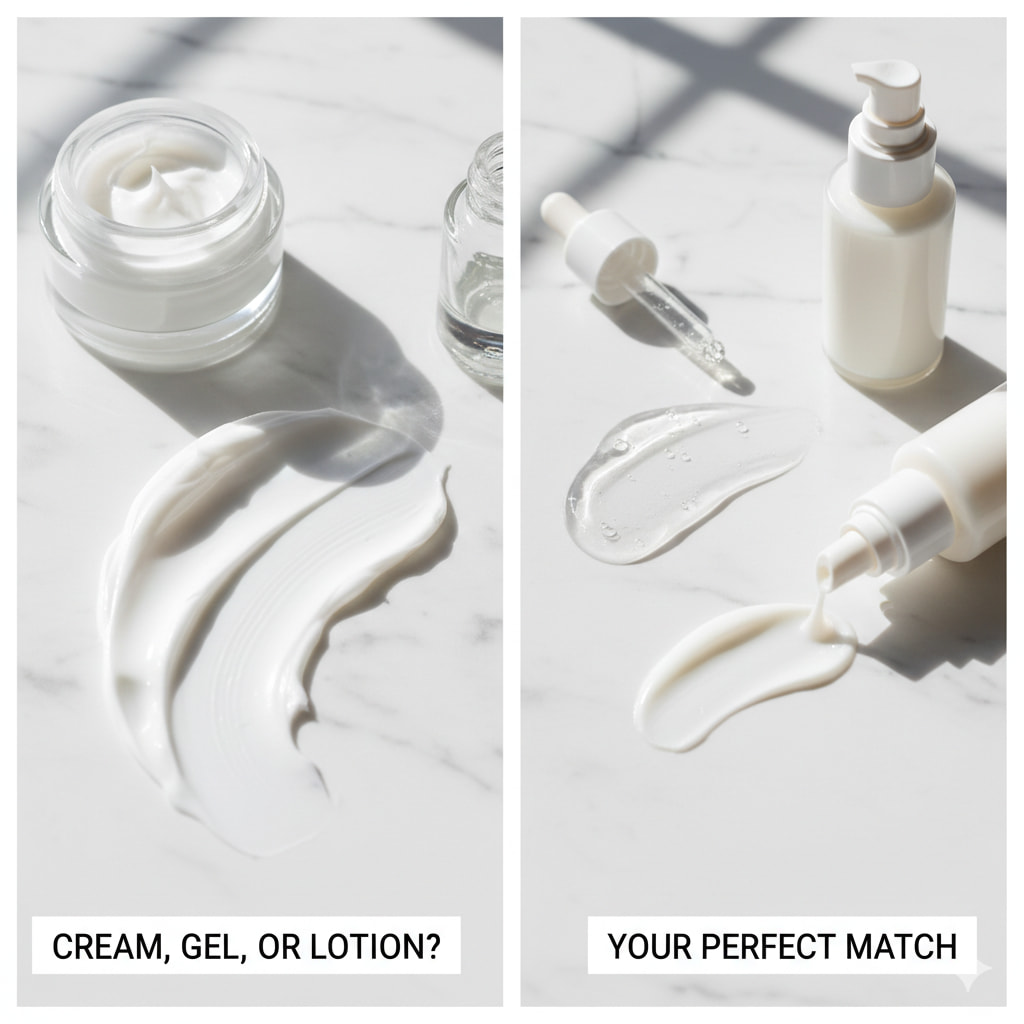
If you have ever stood in the skincare aisle of a store like Target or Sephora, you know the feeling of pure confusion. There are rows upon rows of jars, bottles, and tubes, all promising to give you “the best skin of your life.” Some cost $10, others cost $100. Some are thick like butter, while others are clear like water.
How do you even begin to choose?
Choosing the right moisturizer is arguably the most important decision in your skincare journey. It is the product that stays on your skin the longest and does the heavy lifting of protecting your skin barrier. But if you pick the wrong one, you might end up with clogged pores or skin that still feels as dry as a desert.
In this guide, we’re going to cut through the marketing fluff and help you find exactly what your skin needs.
Step 1: Get to Know Your Skin (The “Wash and Wait” Test)
Before you can choose a product, you have to understand the “canvas” you are working with. Your skin type isn’t just a label; it’s a roadmap.
The easiest way to find your skin type is the Wash and Wait method. Simply wash your face with a basic, gentle cleanser and pat it dry. Don’t apply any serums or creams. Wait for about 45 minutes and then look in the mirror:
- Dry Skin: Does your face feel tight when you smile? Do you see any flaky patches? If yes, your skin lacks oil.
- Oily Skin: Does your forehead, nose, and chin look shiny? Does it feel greasy to the touch? Your skin produces excess sebum.
- Combination Skin: Is your nose shiny but your cheeks feel tight or dry? This is the most common skin type.
- Sensitive Skin: Does your skin look red or feel itchy after washing? You likely have a reactive skin barrier.
Step 2: Understanding the Three Main Types of Moisturizers
Not all moisturizers are created equal. They generally fall into three categories based on how they interact with your skin.
1. Humectants (The Water-Seekers)
These are lightweight ingredients that act like tiny magnets. They pull moisture from the air and into the top layer of your skin.
- Best for: Everyone, especially oily and dehydrated skin.
- Ingredients to look for: Hyaluronic Acid, Glycerin, Aloe Vera.
2. Emollients (The Smoothers)
These fill in the tiny cracks and gaps in your skin cells, making your face feel soft and smooth to the touch.
- Best for: Dry and aging skin.
- Ingredients to look for: Squalane, Jojoba Oil, Ceramides.
3. Occlusives (The Sealants)
These are heavy hitters. They create a physical barrier on top of your skin to stop water from evaporating.
- Best for: Very dry skin or cold US winters.
- Ingredients to look for: Shea Butter, Petrolatum, Beeswax.
Skincare Quick-Reference Chart
| Skin Type | Best Texture | Key Ingredients | Avoid These |
| Dry | Rich Cream | Ceramides, Shea Butter | High Alcohol content |
| Oily | Water-based Gel | Niacinamide, Hyaluronic Acid | Cocoa Butter, Coconut Oil |
| Combination | Lightweight Lotion | Squalane, Glycerin | Heavy waxes on oily areas |
| Sensitive | Fragrance-free Cream | Colloidal Oatmeal, Centella | Fragrance, Parabens, Dyes |
Step 3: Matching the Product to Your Lifestyle
In the US, weather plays a huge role in how your skin behaves. A moisturizer that works perfectly in the humid summers of Florida might fail you in a freezing New York winter.
- For Daytime: Look for a “Day Cream” that is lightweight and wears well under makeup. Most importantly, it should ideally have SPF 30. According to the Mayo Clinic, a moisturizer with sun protection is the best way to prevent premature aging and skin damage.
- For Nighttime: Your skin does its heavy repair work while you sleep. This is the time to use “Night Creams” that are a bit richer and contain “actives” like Peptides or Retinol.
- The Climate Factor: If you live in a dry climate, you need more occlusives to keep moisture in. If you live in a humid area, humectants will be your best friend.
Step 4: Decoding the Label (What Really Matters)
Don’t let the fancy gold packaging fool you. The most effective moisturizers are often the simplest ones. Dermatologists in the US frequently recommend brands like CeraVe, La Roche-Posay, or Neutrogena because they focus on barrier-health rather than luxury scents.
A note on Fragrance: Even if you love the smell of roses or citrus, try to keep it away from your face. Fragrance is the #1 cause of skin irritation and contact dermatitis. If you have sensitive skin, always look for the word “Fragrance-Free” not just “Unscented” (which can still contain masking scents).
Step 5: The Correct Way to Apply
Believe it or not, how you apply your moisturizer is just as important as what you apply.
The best time to moisturize is when your skin is still slightly damp. After your shower or face wash, gently pat your face with a towel so it’s not dripping, then apply your cream immediately. This traps the water on your skin surface and pushes it deeper into the pores.
Frequently Asked Questions (FAQs)
Q1: Can I use the same moisturizer for my face and body?
A: No. The skin on your face is much thinner and has more oil glands than the skin on your body. Body lotions are often too thick and can cause “Milia” (tiny white bumps) or acne on the face.
Q2: How often should I change my moisturizer?
A: You should re-evaluate your skincare every season. Generally, you need a heavier cream in the winter and a lighter gel or lotion in the summer.
Q3: My skin is oily; do I really need a moisturizer?
A: Yes! If you skip moisturizer, your skin thinks it is dry and starts producing even more oil to compensate. Using a light gel can actually help balance oil production over time.
Q4: Is “Natural” always better?
A: Not necessarily. Some “natural” ingredients like essential oils or lemon juice can be very irritating. Lab-tested, synthetic ingredients like Hyaluronic Acid are often much safer and more effective.
Q5: What is a “Non-Comedogenic” product?
A: This is a fancy way of saying the product is formulated specifically not to clog your pores. If you are prone to blackheads or acne, always look for this label.
Final Thoughts
Choosing the right moisturizer doesn’t have to be a stressful or expensive experience. Once you know your skin type and understand a few basic ingredients, you can find a product that makes you feel confident and glowing. Start with the basics, listen to your skin, and remember—consistency is much more important than a high price tag.