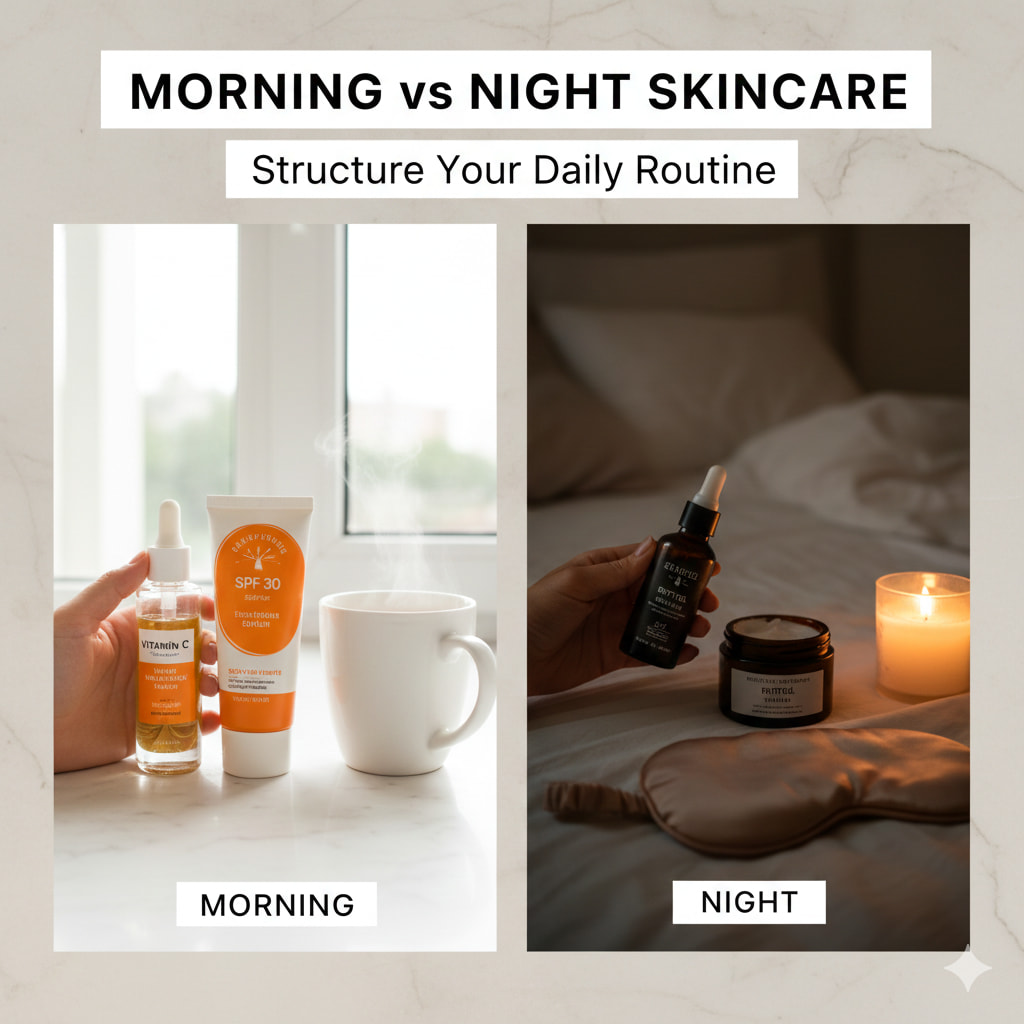
Have you ever looked at your bathroom shelf and wondered why you have so many bottles? Or better yet, wondered if it actually matters when you apply them? You aren’t alone. One of the most common questions in the beauty world is: “Does the time of day really change how my skincare works?”
The short answer is: Yes, absolutely.
Think of your skin like a house. During the day, it needs “shields” to protect it from the sun and pollution. At night, it needs “tools” to repair the damage and rebuild. If you mix up these roles, you might not just be wasting money you could be irritating your skin.
In this guide, we’re going to break down exactly how to structure your morning and night routines so you can get the best results without the confusion.
The Morning Philosophy: Protection is Key
When you wake up, your skin is about to head into a “battle.” It’s going to face UV rays, dirt, and blue light from your screens. Your morning routine should be all about defense.
1. Gentle Cleansing
You don’t need a harsh scrub in the morning. Since you only slept on your pillow, a gentle water-based cleanser or even just a splash of lukewarm water is enough to refresh your face without stripping its natural oils.
2. Antioxidants (Vitamin C)
This is where you apply your “shield.” Vitamin C is the gold standard for morning skincare. It helps neutralize free radicals caused by the sun. If you want to prevent dark spots and keep your skin bright, this is a must-have step.
3. Lightweight Hydration
Daytime moisturizers should be light. You want something that sinks in quickly so it doesn’t feel greasy under your makeup or throughout a busy day. Look for ingredients like Hyaluronic Acid.
4. The Non-Negotiable: SPF
If you skip every other step, do not skip this one. According to the Skin Cancer Foundation, daily use of SPF 15 or higher reduces the risk of skin aging by 24%. In the US, dermatologists recommend at least SPF 30 for daily wear.
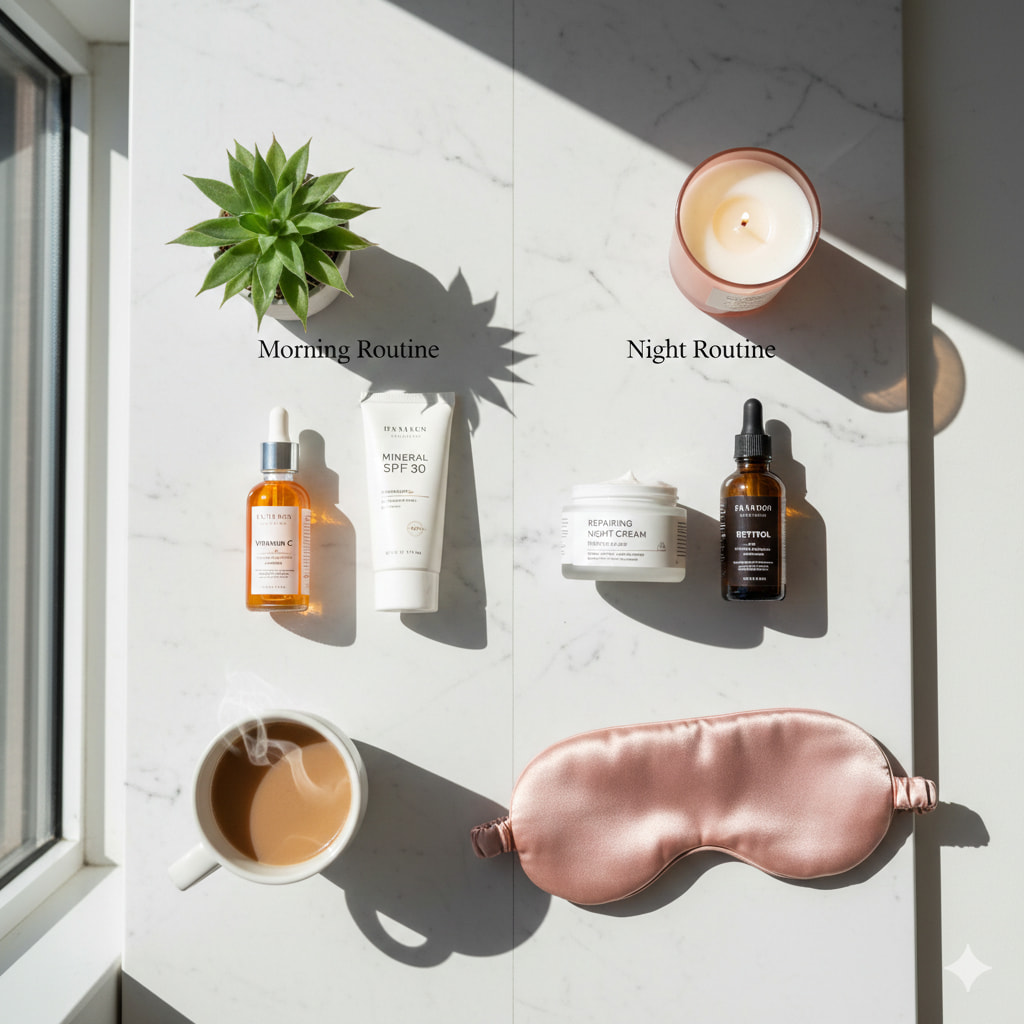
The Night Philosophy: Repair and Rebuild
While you sleep, your skin’s blood flow increases, and it works hard to fix the damage from the day. This is the time to use your “heavy hitters”—the ingredients that are too strong or sensitive for daylight.
1. The Double Cleanse
By the end of the day, your face is covered in sweat, makeup, and layers of sunscreen. A single wash often isn’t enough. Use an oil-based cleanser first to melt away the gunk, followed by your regular cleanser to actually clean the skin.
2. Treatment (The Actives)
Nighttime is the best time for Retinol or chemical exfoliants (like Glycolic Acid). Retinol is a powerhouse for anti-aging and acne, but it breaks down in sunlight and makes your skin sensitive. Using it at night allows it to work its magic while you rest.
3. Repairing Barriers
Night creams are usually thicker and richer than day creams. Look for Ceramides or Fatty Acids. These ingredients help repair your skin’s natural barrier so you wake up with soft, bouncy skin.
4. Eye Cream
The skin around your eyes is the thinnest on your body. A nourishing eye cream at night can help with hydration and prevent fine lines over time.+1
Morning vs. Night: At a Glance
| Step | Morning (Protection) | Night (Repair) |
| Cleanser | Gentle / Water-based | Double Cleanse (Oil + Water) |
| Serum | Vitamin C / Antioxidants | Retinol / Exfoliants |
| Moisturizer | Lightweight / Breathable | Rich / Nourishing |
| Specialty | Sunscreen (SPF 30+) | Eye Cream / Face Oils |
Common Mistakes to Avoid
Using Retinol in the Sun
Using Retinol in the morning is a big no-no for beginners. It loses its power in the sun and can cause your skin to burn much faster. Keep the “strong stuff” for your bedtime ritual.
Skipping Moisturizer Because of Oily Skin
If you skip moisturizer, your skin might actually produce more oil to compensate for the dryness. Whether it’s 8 AM or 10 PM, hydration is always necessary.
Over-Exfoliating
You don’t need to exfoliate every night. Twice a week is usually plenty for most skin types. If your skin feels stinging or looks red, you’re likely overdoing it.
How to Stay Consistent
The best routine is the one you actually do. If 10 steps feel like too much, start with three:
- Cleanse
- Treat (Vitamin C in AM / Retinol in PM)
- Moisturize/Protect
As you get comfortable, you can add more targeted products. But remember, healthy skin is a marathon, not a sprint. Give your products at least 4 to 6 weeks to show real results.
Final Thoughts
Structuring your skincare properly doesn’t have to be a headache. Just remember: Protect in the morning, Repair at night. By following this simple logic, you ensure your skin gets exactly what it needs, exactly when it needs it. Your future, glowing self will thank you!
Leave a Reply