Let’s be real having sensitive skin can feel like walking on eggshells. You see a beautiful new foundation, you try it, and by lunchtime, your face is either itching, turning bright red, or preparing for a breakout. It’s frustrating, expensive, and honestly, a bit exhausting. If you have ever felt like your skin is “allergic to everything,” you are not alone.
But here’s the truth: your skin isn’t “bad.” It’s just picky. It has a delicate protective barrier that reacts quickly to certain chemicals. The secret to wearing makeup with sensitive skin is not about finding “more” products, but finding the right ones.
In this comprehensive guide, we’ll walk through how you can achieve a flawless look without the post-makeup regret.
1. Why Does Your Skin React? (The Science Part)
Sensitive skin usually means your skin barrier (the stratum corneum) is compromised. Think of your skin barrier as a brick wall. In healthy skin, the bricks are tight, keeping moisture in and irritants out. In sensitive skin, there are cracks in that wall.
When you apply makeup with harsh fragrances or alcohols, those chemicals seep through the cracks, triggering an immune response. This leads to what dermatologists call Contact Dermatitis. To fix this, you don’t just need better makeup; you need to protect that “wall” first.
2. Start with the “Shield” (Skincare Prep)
If you have sensitive skin, your makeup is only as good as the skin underneath. Think of skincare as a protective shield between your reactive pores and the pigments.
- The Hydration Rule: A dry face is more prone to irritation. Use a moisturizer with Ceramides. These are natural lipids that help repair your skin barrier.
- The Mineral SPF Rule: For sensitive folks, mineral sunscreens (containing Zinc Oxide or Titanium Dioxide) are much better than chemical ones. Chemical sunscreens absorb UV rays and turn them into heat, which can trigger redness (Rosacea). Mineral ones sit on top and reflect rays like a mirror.
Expert Insight: According to theAmerican Academy of Dermatology, people with sensitive skin should look for products with fewer than 10 ingredients to minimize the chance of a reaction.
3. Ingredients: The “Good” vs. The “Ugly”
Before you “add to cart,” turn the bottle around. It’s a bit like detective work, but it saves your skin in the long run.
Avoid these Triggers:
- Fragrance (Parfum): Even if it’s “natural” lavender or rose, fragrance is the #1 cause of skin reactions.
- Alcohol Denat: This strips your skin’s natural oils, leaving it tight and stinging.
- Bismuth Oxychloride: Often found in mineral makeup to add “shimmer,” but its crystalline structure can cause intense itching for many.
- Talc: While controversial, for many, it can be an irritant or too drying for sensitive patches.
Look for these Heroes:
- Non-Comedogenic: This is a fancy way of saying “it won’t clog your pores.”
- Hypoallergenic: Formulated specifically to lower the risk of allergic reactions.
- Aloe & Chamomile: These are natural anti-inflammatories that keep the skin calm under makeup.
4. The Sensitive Skin Makeup Selection Chart
Use this quick guide to swap out harsh products for safer alternatives:
| Product Category | Instead of… | Try… | The “Human” Reason Why |
| Foundation | Long-wear Matte Foundation | Tinted Moisturizer or BB Cream | Heavy mattes can “suffocate” and dry out reactive skin. |
| Mascara | Waterproof Mascara | Tubing Mascara | Waterproof formulas require harsh rubbing to remove, damaging lashes. |
| Blush | Powder Blush | Cream or Liquid Blush | Powders can be abrasive; creams melt in gently without friction. |
| Eyeshadow | Glitter/Shimmer Shadows | Satin or Matte Pigments | Glitter particles can scratch the delicate eyelid skin. |
| Setting Spray | Alcohol-based Spray | Alcohol-free Facial Mist | Alcohol sprays cause instant redness and tightness. |
5. Application: The “Pat, Don’t Rub” Method
How you put your makeup on is just as important as what’s in the bottle. Friction is the enemy.
- Use Your Fingers (Clean ones!): Sometimes, brushes can be too scratchy. The warmth of your fingers helps the product blend without much pressure.
- Damp Sponge: If you use a sponge (like a Beautyblender), make sure it’s damp. This prevents the sponge from soaking up the product and makes the application feel cooling and soft.
- The Weekly Wash: If you haven’t washed your brushes in two weeks, you’re basically applying old bacteria to your face. Wash them weekly with a fragrance-free baby shampoo.
6. Real Info: The Patch Test is Non-Negotiable
I know, you want to try your new lipstick now. But for sensitive skin, a 24-hour patch test is a lifesaver. Apply a small amount on your jawline or behind your ear. If you don’t see redness or feel a “tingle” by the next day, you’re safe to go.
If a product ever “stings,” that isn’t it “working” that is your skin screaming for help. Wash it off immediately.
7. The End-of-Day Ritual: Gentle Removal
Going to sleep with makeup is a crime for sensitive skin, but removing it harshly is even worse.
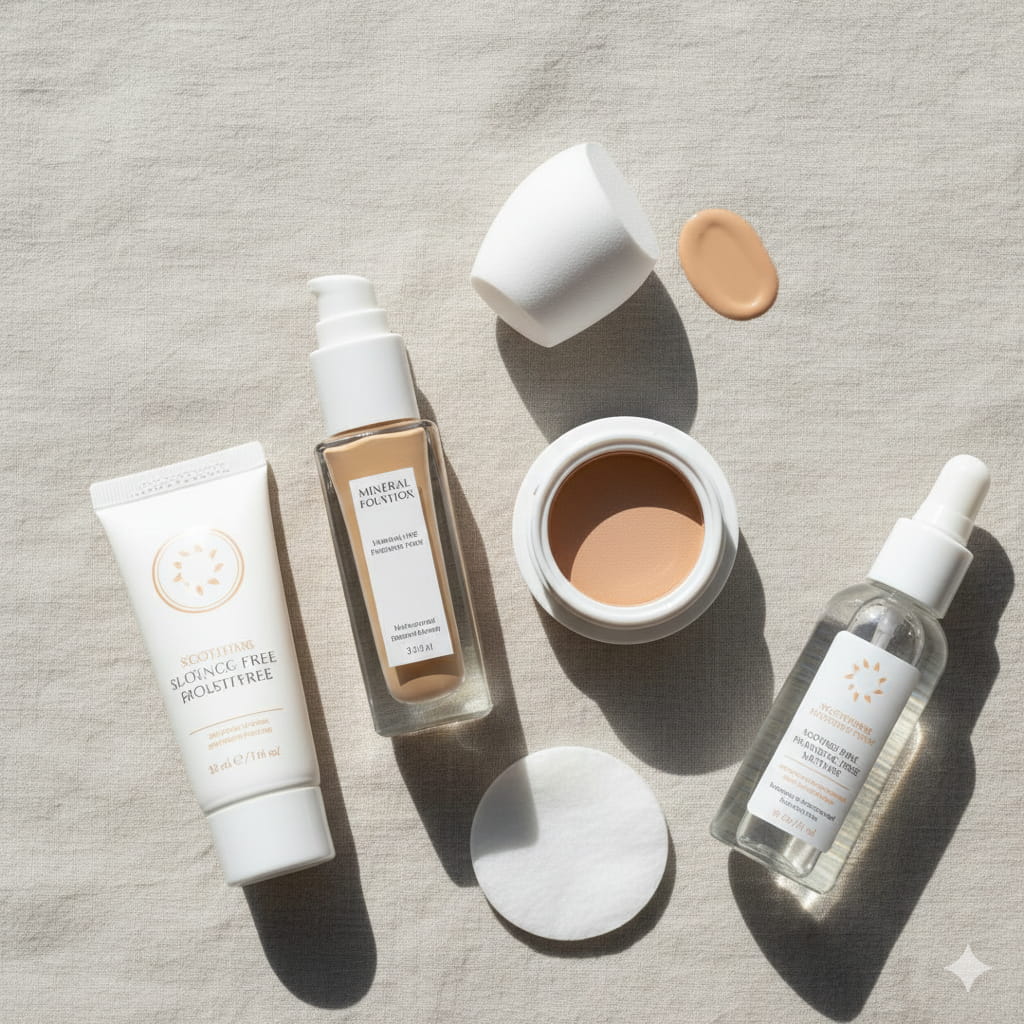
Instead of scrubbing with makeup wipes (which are often full of preservatives and alcohol), try Micellar Water. It acts like a magnet for dirt without you having to tug at your skin. For a deeper dive into safe cleansing habits, the Mayo Clinic has great advice on maintaining a healthy skin balance.
Conclusion
At the end of the day, your skin is unique. What works for a TikTok influencer might not work for you, and that’s okay. The goal of makeup is to make you feel confident, not to cause you pain. By sticking to fragrance-free formulas, leaning towards cream textures, and being gentle with your application, you can enjoy beauty without the “burn.”
Listen to your skin it always tells you what it likes. Treat it with kindness, and it will give you that natural glow back!
Leave a Reply