Category: Skincare

A simple step-by-step skincare routine for beginners to help you understand product order, daily habits, and how to build a safe and effective skincare routine.

  • How Climate and Weather Affect Your Skin and What to Change in Your Routine

    How Climate and Weather Affect Your Skin and What to Change in Your Routine

    Have you ever noticed that your favorite moisturizer, which worked wonders in the summer, suddenly feels “not enough” when winter arrives? Or why your skin becomes an oil slick the moment you step into a humid city?

    It’s not just in your head. Your skin is your body’s largest organ and its primary job is to act as a barrier between you and the environment. When the environment changes whether it’s a sudden cold snap or a tropical heatwave your skin has to work overtime to stay balanced.

    In this guide, we’ll look at how different climates impact your complexion and exactly how you should tweak your routine to stay glowing all year round.

    1. Why Does the Weather Care About Your Skin?

    The air around us has a direct relationship with the moisture in our skin. This is mostly due to humidity.

    • Low Humidity: When the air is dry (like in winter or desert climates), it literally sucks the water out of your skin through a process called Transepidermal Water Loss (TEWL).
    • High Humidity: When the air is wet, your skin’s sweat and oil glands go into overdrive, which can lead to clogged pores and a “greasy” feeling.

    2. Seasonal Skincare Swap: The Cheat Sheet

    To make it easy, here is a quick chart to help you decide which products to “level up” or “lighten up” based on the weather outside:

    Weather ConditionWhat Happens to Your SkinWhat to Change in Your Routine
    Cold & Dry (Winter)Tightness, flaking, redness.Swap gel to cream cleanser; use thick moisturizers with ceramides.
    Hot & Humid (Summer)Excess oil, breakouts, sweat.Use lightweight water-gels; increase exfoliation with Salicylic acid.
    Arid/Desert HeatSevere dehydration, fine lines.Use Hyaluronic acid on damp skin; seal with a face oil.
    High WindChapped lips, windburn.Use occlusive balms (like Petrolatum) to create a physical shield.

    3. Adapting to the Cold: The “Cozy” Routine

    When the temperature drops, the humidity usually goes with it. Plus, indoor heating acts like a giant hair dryer for your face.

    The Fix:

    • Ditch the Foam: Switch to a creamy, non-foaming cleanser. Foaming agents can strip away the few natural oils your skin has left in winter.
    • Layer Your Hydration: Think of your skincare like your clothes. Start with a hydrating toner, add a serum, and finish with a thick cream.
    • Don’t Forget SPF: This is a big one. UV rays are still there in winter, and snow can reflect up to 80% of UV radiation back onto your face! According to the Skin Cancer Foundation, sun damage is a 365-day-a-year threat.

    4. Surviving Humidity: The “Lightweight” Approach

    In tropical or humid weather, your skin can feel heavy and “clogged.” The goal here is to hydrate without suffocating your pores.

    The Fix:

    • Switch to Gels: Replace heavy oil-based creams with water-based gel moisturizers. They provide water to the skin without the extra oil.
    • Salicylic Acid is Your Friend: A gentle BHA (Salicylic acid) toner a few times a week will help keep your pores clear of the sweat and oil buildup that causes summer breakouts.
    • Antioxidants: High heat and sun exposure lead to free radical damage. A Vitamin C serum in the morning acts like an internal shield for your skin cells.
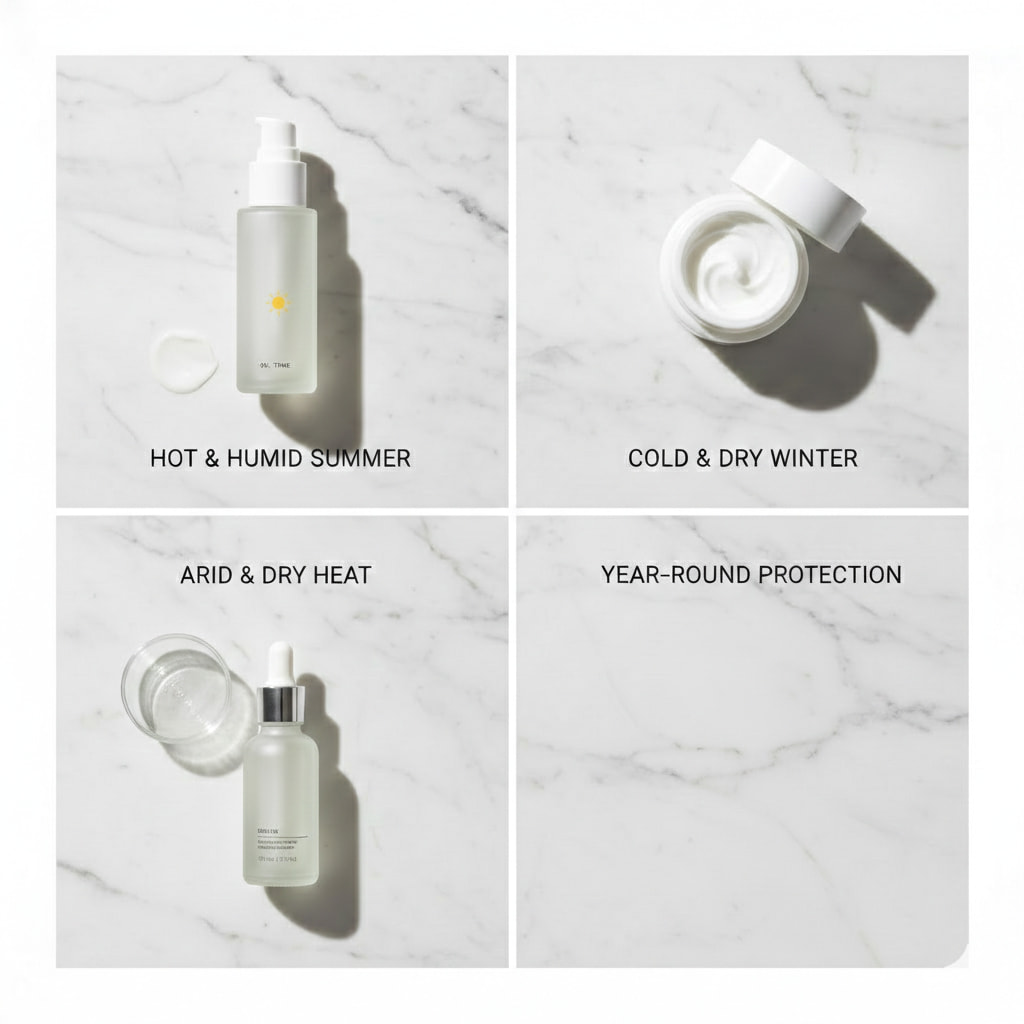
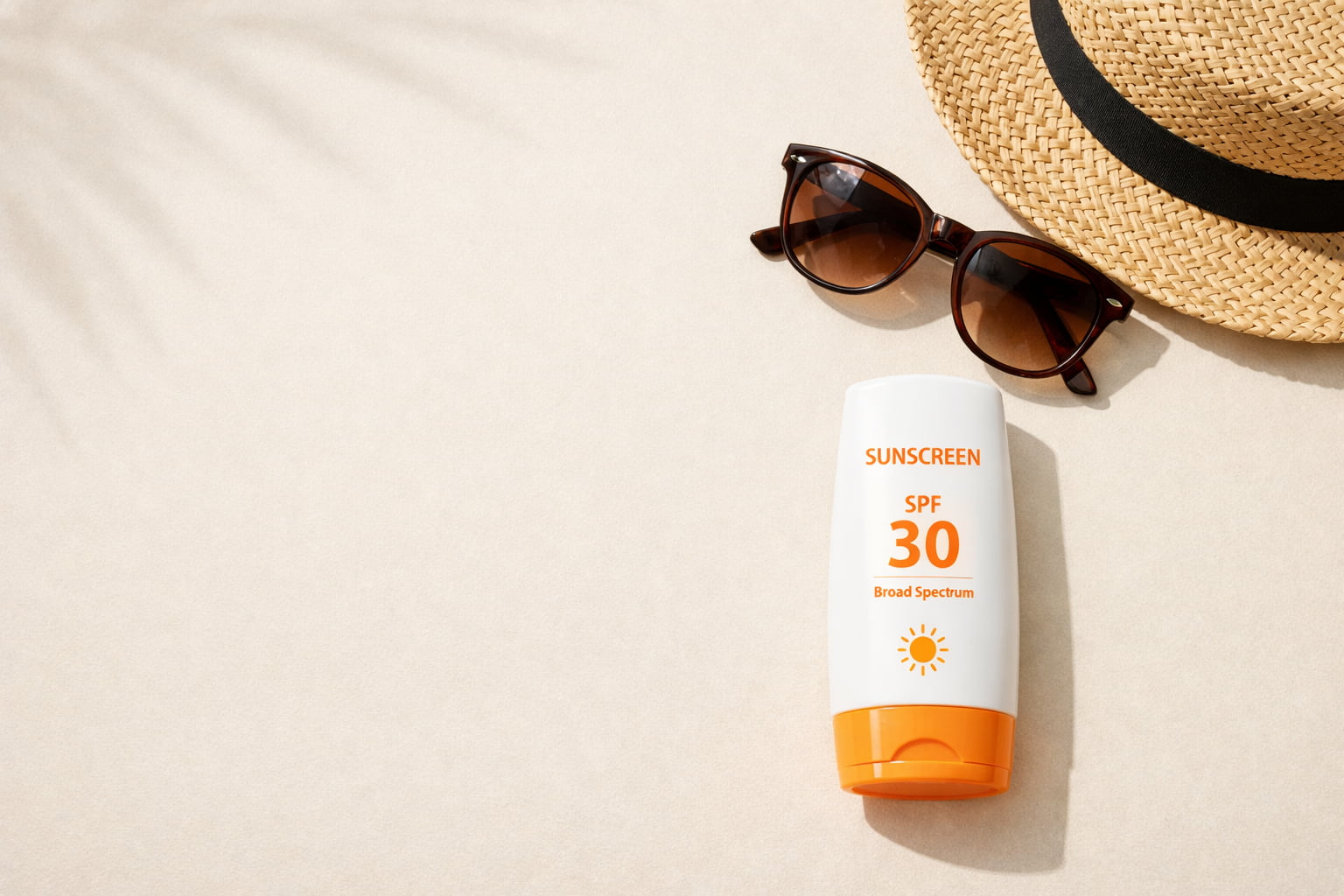
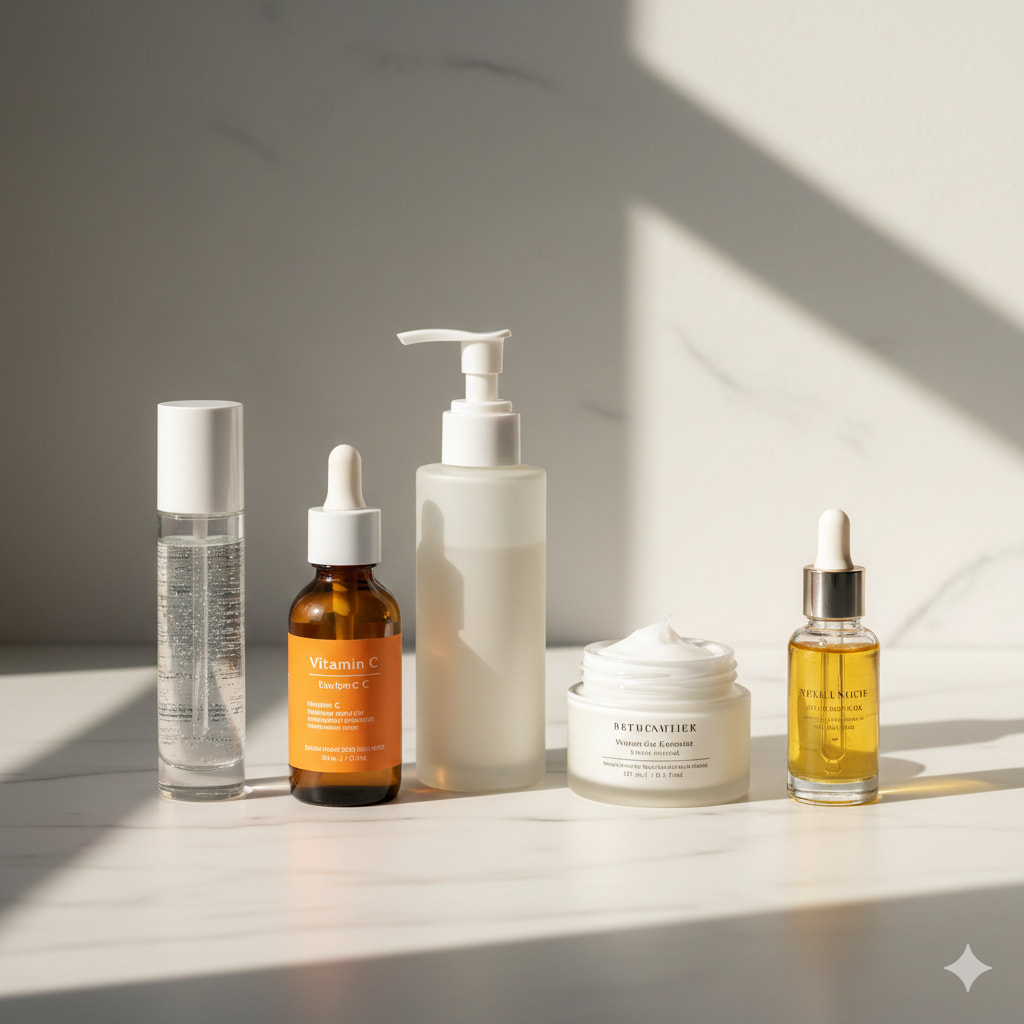
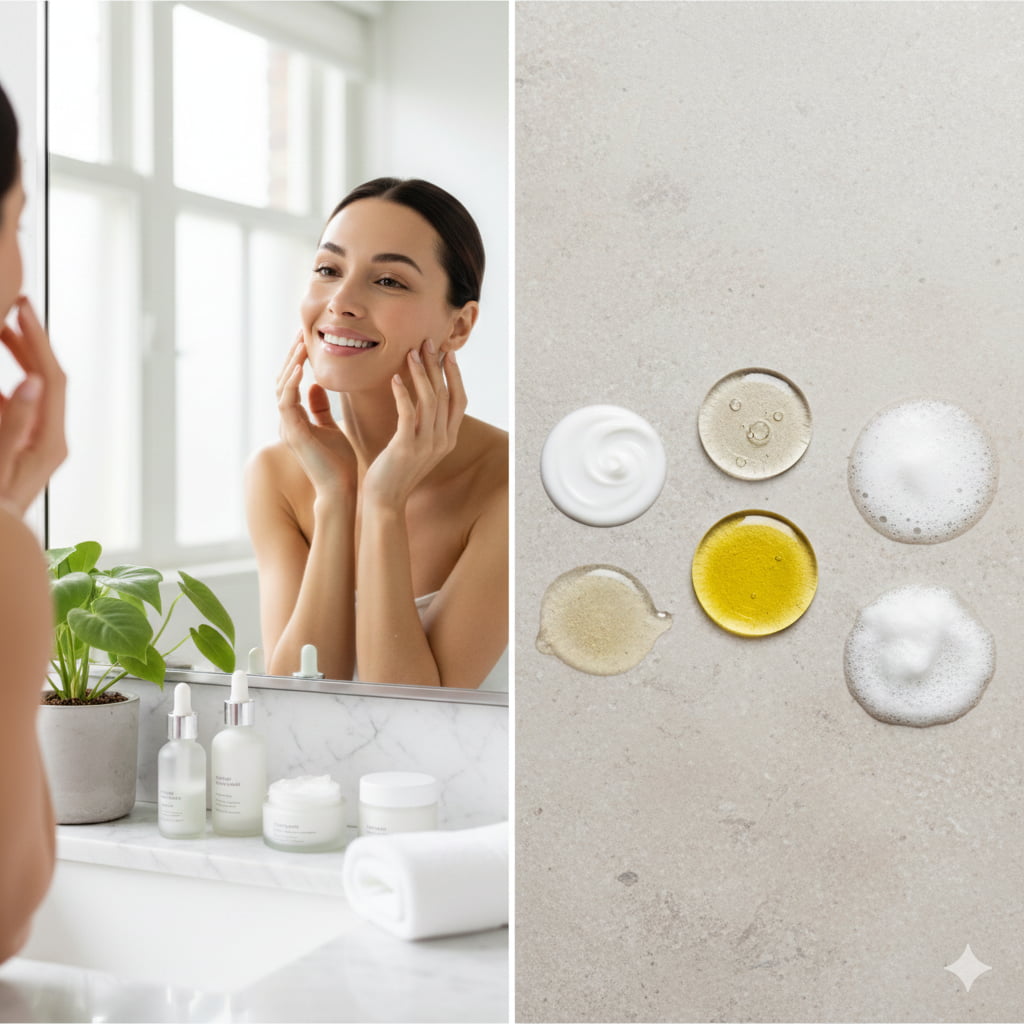
    Professional flat-lay showing specific skincare products for cold dry winter and year-round sun protection on a marble background.
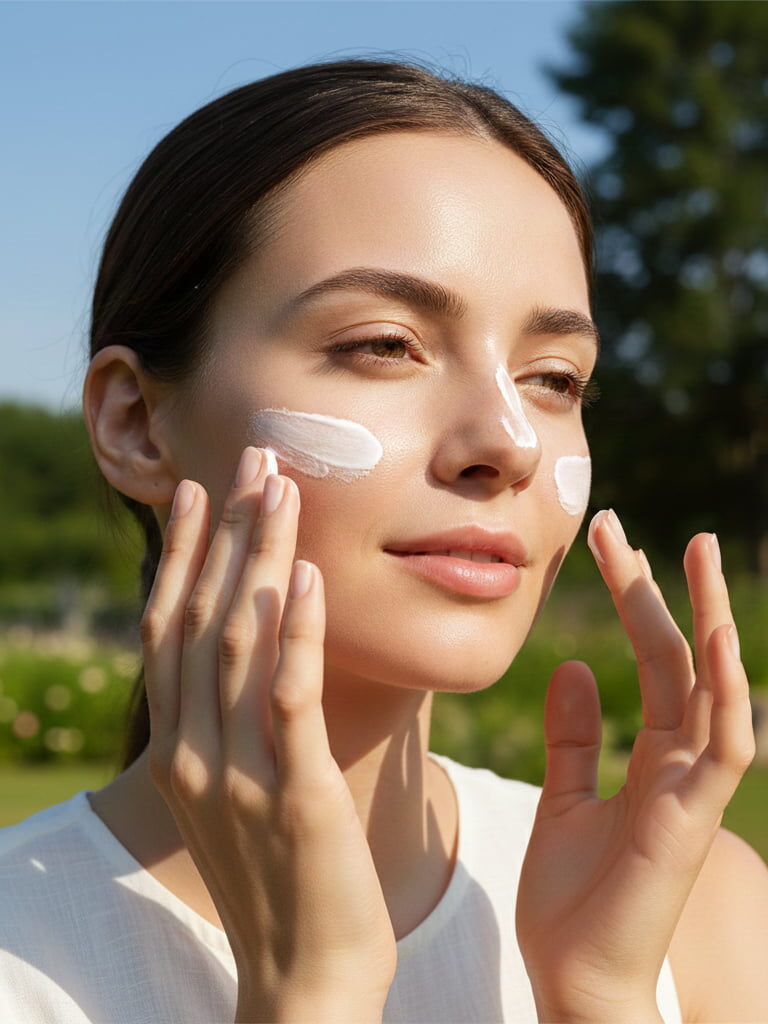
    AI-generated image showcasing a clean, natural beauty and skincare routine that highlights healthy, glowing skin.

    5. Travel and Sudden Climate Shifts

    If you’re traveling from a humid place to a dry one (or vice versa), your skin might “purge” or become extremely sensitive for a few days.

    Pro Tip: Always carry a small bottle of Niacinamide. It’s a versatile ingredient that helps regulate oil in humidity and strengthens the skin barrier in dry air. It’s the ultimate “climate-control” ingredient.

    6. Real Info: The Role of the Skin Barrier

    Regardless of the weather, your main goal should be protecting your skin barrier. If your skin feels stinging or looks constantly red, your barrier might be compromised. When this happens, stop all actives (like Retinol or Vitamin C) and stick to the basics: a gentle cleanser and a ceramide-rich moisturizer until your skin feels “calm” again.

    For more expert advice on maintaining skin health in different environments, the American Academy of Dermatology offers great resources for every season.

    Conclusion

    Your skin is constantly talking to you—you just have to listen. If it feels tight, it’s thirsty for water. If it looks shiny, it’s trying to tell you the humidity is too high. By making small, smart adjustments to your routine as the seasons change, you can maintain a healthy glow whether it’s 100 degrees or below freezing.

    Frequently Asked Questions (FAQs)

    1. Do I really need to change my entire skincare routine every season? Not necessarily. You don’t need a total overhaul. Most people only need to swap one or two “hero” products. For example, switching a lightweight lotion for a richer cream in the winter, or adding a stronger exfoliant in the humid summer months, is usually enough to keep your skin balanced.

    2. Can I skip moisturizer if I live in a very humid climate? Absolutely not! Humidity makes your skin feel oily, but oil is not the same as water. Even in 90% humidity, your skin needs hydration to keep the barrier healthy. The trick is to switch to a water-based gel or a lightweight serum that won’t feel heavy or clog your pores.

    3. Why does my skin break out more when the weather gets hot? Heat and humidity increase sweat and sebum (oil) production. When these mix with dead skin cells and environmental pollution, they create the perfect storm for clogged pores and “maskne” or heat rashes. Increasing your gentle exfoliation during summer can help prevent this.

    4. Is sunscreen necessary on cloudy or rainy days? Yes, 100%. Up to 80% of the sun’s harmful UV rays can pass through clouds. Even if you don’t feel the “heat” of the sun, the UVA rays (which cause aging and skin cancer) are still reaching your skin. Sun protection is a year-round commitment, regardless of the forecast.

    5. How can I protect my skin from “Windburn” in cold climates? Windburn is essentially extreme dryness and irritation caused by the wind stripping your skin’s natural oils. To prevent this, apply an occlusive balm or a product containing petrolatum or dimethicone before heading out. This creates a physical shield that the wind cannot penetrate.
  • How to Build a Skincare Routine for Sensitive and Reactive Skin: A Gentle Guide

    How to Build a Skincare Routine for Sensitive and Reactive Skin: A Gentle Guide

    If you’ve ever applied a new moisturizer only to have your face turn bright red or feel like it’s on fire within minutes, you know the struggle of having sensitive or reactive skin. It’s frustrating, sometimes painful, and honestly, a bit exhausting. You want that “glow,” but instead, you’re just trying to stop the stinging.

    In the world of skincare, “sensitive skin” is a broad term, but for those who live with it, it means your skin’s defense system is on high alert 24/7. Whether it’s due to genetics, environment, or over-using harsh products, the goal is the same: to calm the chaos.

    In this guide, we’re going to build a simple, effective, and 100% gentle routine that actually works without causing a flare-up.

    1. Sensitive vs. Reactive: What’s the Difference?

    Before we dive into the routine, let’s understand what we are dealing with.

    • Sensitive Skin: This is usually a skin type. You are born with it. Your skin is naturally thinner, or your barrier is more permeable, meaning irritants get in more easily.
    • Reactive Skin: This is often a condition. Your skin might be fine one day, but then it “reacts” to a specific trigger—like a new fragrance, a spicy meal, or a cold wind.

    Regardless of the category, the solution is the same: Building a resilient skin barrier. When your barrier is strong, your skin stops overreacting to every little change.

    2. The “Less is More” Philosophy

    The biggest mistake people with sensitive skin make is trying to “fix” the redness with more products. In reality, the more ingredients you put on your face, the higher the chance of one of them being a trigger.

    For sensitive skin, a minimalist routine is your best friend. We aren’t looking for 10 steps; we are looking for 3 or 4 high-quality, soothing steps.

    3. The Step-by-Step Routine

    Step 1: The Non-Stripping Cleanser

    Cleansing is the most “dangerous” part of a sensitive skin routine. Most cleansers use sulfates (like SLS) to create foam, but these also strip away the very lipids your skin needs to stay calm.

    • What to look for: Look for “Soap-free,” “Fragrance-free,” and “Non-foaming” labels. Cream or milk cleansers are ideal.
    • The Secret Tip: If your skin feels tight after washing, your cleanser is too harsh. Switch to something like a micellar water for sensitive skin or a gentle cleansing balm.
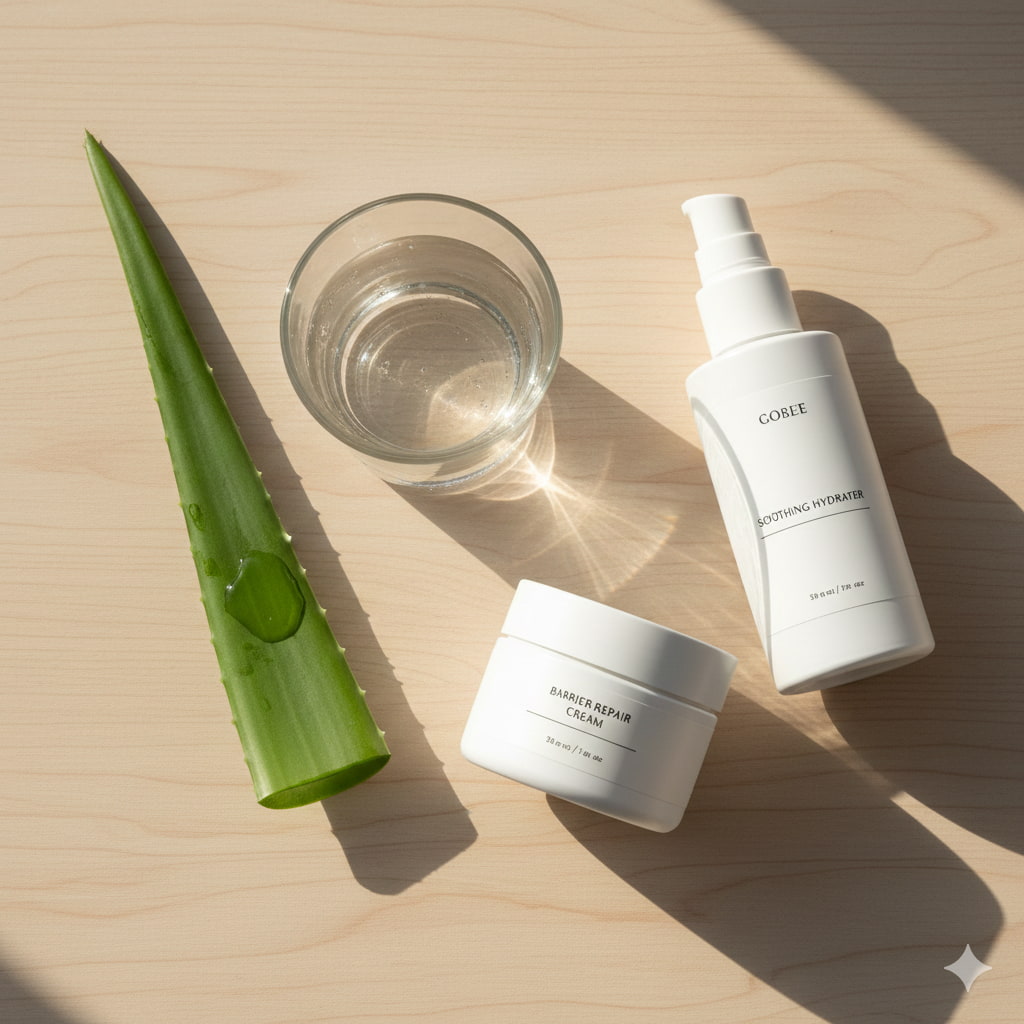
    A flat lay of fragrance-free skincare products, a glass of water, and an aloe vera leaf on a wooden surface representing a soothing skincare routine.
    This AI-generated image serves as a perfect visual example of how a well-blended, natural everyday makeup look should appear in bright, natural lighting.

    Step 2: The Soothing Hydrator (Optional)

    If your skin is extremely dry, a soothing serum can help. However, avoid anything with “actives” like Vitamin C or high-strength Retinol during a flare-up.

    • Ingredients to Love: Centella Asiatica (Cica), Panthenol (Vitamin B5), and Madecassoside. These are like a “hug” for your skin cells.

    Step 3: The Barrier-Repair Moisturizer

    This is the most important step. You need a moisturizer that mimics your skin’s natural oils.

    • The Big Three: Look for Ceramides, Cholesterol, and Fatty Acids. These three work together to “plug the holes” in your skin barrier.
    • Avoid: Stay away from essential oils (like lavender or citrus) as they are common triggers for reactive skin.

    Step 4: The Mineral Shield (SPF)

    Chemical sunscreens work by absorbing UV rays and turning them into heat, which can trigger redness in reactive skin.

    • The Solution: Use Mineral Sunscreens (also called Physical sunscreens). They use Zinc Oxide or Titanium Dioxide to reflect UV rays like a mirror. Zinc is also naturally anti-inflammatory, which helps soothe redness.

    4. Ingredients to Avoid vs. Ingredients to Embrace

    Navigating an ingredient label can feel like reading a foreign language. Use this chart as a quick cheat sheet for your next shopping trip.

    The Sensitive Skin Ingredient Guide

    Avoid These (Triggers)Embrace These (Soothers)
    Fragrance / Parfum (The #1 Irritant)Ceramides (Repair the barrier)
    Alcohol Denat (Drying)Colloidal Oatmeal (Calms itching)
    Physical Scrubs (Causes micro-tears)Allantoin (Heals skin)
    Essential Oils (Potent allergens)Squalane (Weightless hydration)
    Sodium Lauryl Sulfate (SLS)Niacinamide (Anti-inflammatory)

    5. Common Triggers Beyond Skincare

    Sometimes, the culprit isn’t your cream—it’s your environment. For people with US-based lifestyles, common triggers include:

    1. Hard Water: Many cities in the US have high mineral content in water, which can leave a film on the skin and cause irritation. Consider a shower filter.
    2. Central Heating: In winter, indoor heating sucks the moisture out of the air, leading to “winter itch” and sensitivity.
    3. Laundry Detergent: If your pillowcase is washed in heavily scented detergent, it could be causing your facial redness.

    6. How to Safely Introduce New Products

    Never apply a new product to your entire face immediately. Use the “72-Hour Patch Test” method:

    • Apply a small amount to the inside of your wrist or behind your ear.
    • Wait 24 to 48 hours to see if any redness or itching occurs.
    • If clear, apply it to a small patch on your jawline for another 24 hours.
    • Only then should you use it on your full face.

    As noted by the Mayo Clinic, contact dermatitis can sometimes take days to appear, so patience is key.

    7. The Role of Diet and Stress

    There is a strong “Skin-Gut” connection. While skincare helps from the outside, internal factors can trigger “flushing.”

    • Spicy Foods & Alcohol: These are known vasodilators (they open up blood vessels), which can make reactive skin look much redder.
    • Stress: High cortisol levels can weaken your skin barrier. If you’re going through a stressful time at work, your skin is more likely to be sensitive.

    8. Final Thoughts

    Building a routine for sensitive skin is about respecting your skin’s limits. You don’t need to “scrub” it into submission or “burn” it with acids to see results. By choosing fragrance-free, barrier-repairing products and staying consistent, you can move away from “reactive” and towards “resilient.”

    Your skin isn’t “bad” it’s just communicative. Listen to it, and give it the gentle care it’s asking for.

  • Morning vs Night Skincare Routine: How to Structure Your Daily Skincare Properly

    Morning vs Night Skincare Routine: How to Structure Your Daily Skincare Properly

    Have you ever looked at your bathroom shelf and wondered why you have so many bottles? Or better yet, wondered if it actually matters when you apply them? You aren’t alone. One of the most common questions in the beauty world is: “Does the time of day really change how my skincare works?”

    The short answer is: Yes, absolutely.

    Think of your skin like a house. During the day, it needs “shields” to protect it from the sun and pollution. At night, it needs “tools” to repair the damage and rebuild. If you mix up these roles, you might not just be wasting money you could be irritating your skin.

    In this guide, we’re going to break down exactly how to structure your morning and night routines so you can get the best results without the confusion.


    The Morning Philosophy: Protection is Key

    When you wake up, your skin is about to head into a “battle.” It’s going to face UV rays, dirt, and blue light from your screens. Your morning routine should be all about defense.

    1. Gentle Cleansing

    You don’t need a harsh scrub in the morning. Since you only slept on your pillow, a gentle water-based cleanser or even just a splash of lukewarm water is enough to refresh your face without stripping its natural oils.

    2. Antioxidants (Vitamin C)

    This is where you apply your “shield.” Vitamin C is the gold standard for morning skincare. It helps neutralize free radicals caused by the sun. If you want to prevent dark spots and keep your skin bright, this is a must-have step.

    3. Lightweight Hydration

    Daytime moisturizers should be light. You want something that sinks in quickly so it doesn’t feel greasy under your makeup or throughout a busy day. Look for ingredients like Hyaluronic Acid.

    4. The Non-Negotiable: SPF

    If you skip every other step, do not skip this one. According to the Skin Cancer Foundation, daily use of SPF 15 or higher reduces the risk of skin aging by 24%. In the US, dermatologists recommend at least SPF 30 for daily wear.

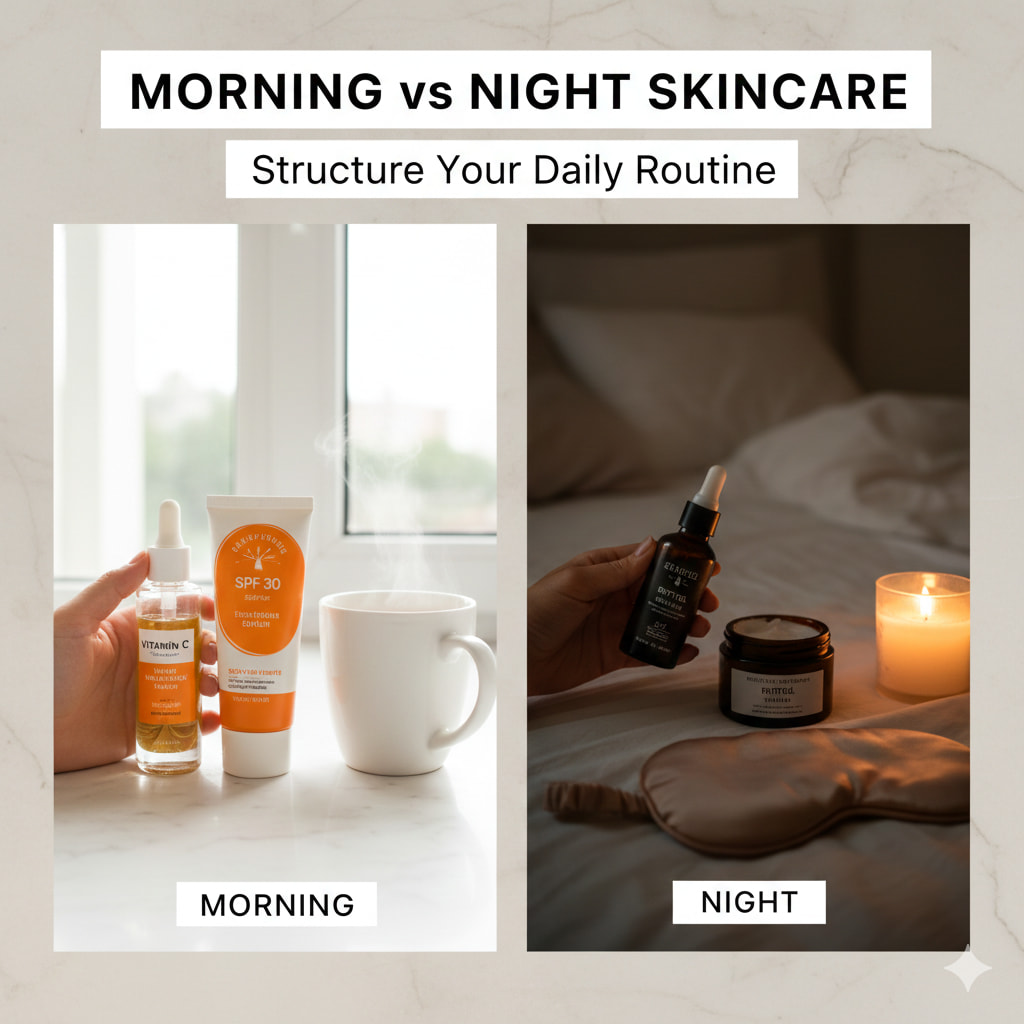
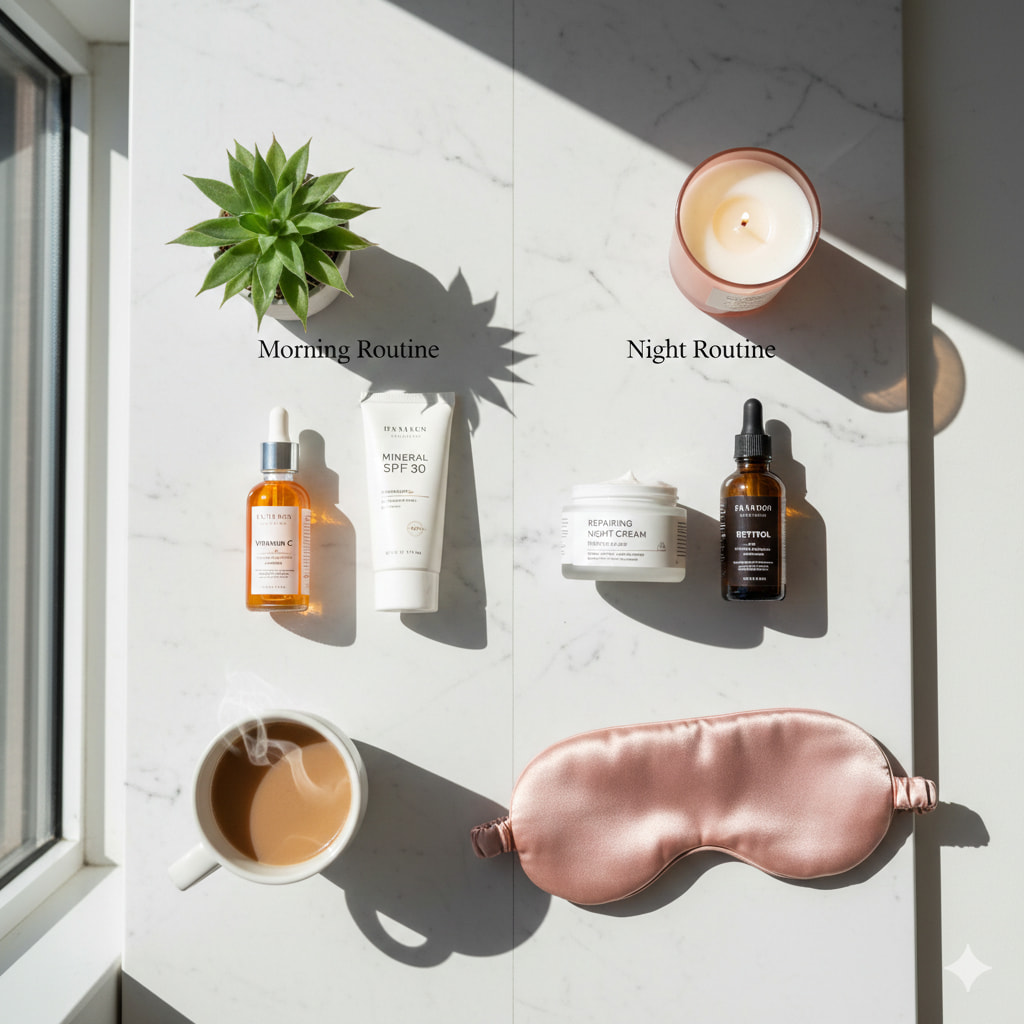
    A high-quality flatlay of skincare bottles, a cup of coffee, and a scented candle on a white marble surface, labeled Morning and Night Routine.

    The Night Philosophy: Repair and Rebuild

    While you sleep, your skin’s blood flow increases, and it works hard to fix the damage from the day. This is the time to use your “heavy hitters”—the ingredients that are too strong or sensitive for daylight.

    1. The Double Cleanse

    By the end of the day, your face is covered in sweat, makeup, and layers of sunscreen. A single wash often isn’t enough. Use an oil-based cleanser first to melt away the gunk, followed by your regular cleanser to actually clean the skin.

    2. Treatment (The Actives)

    Nighttime is the best time for Retinol or chemical exfoliants (like Glycolic Acid). Retinol is a powerhouse for anti-aging and acne, but it breaks down in sunlight and makes your skin sensitive. Using it at night allows it to work its magic while you rest.

    3. Repairing Barriers

    Night creams are usually thicker and richer than day creams. Look for Ceramides or Fatty Acids. These ingredients help repair your skin’s natural barrier so you wake up with soft, bouncy skin.

    4. Eye Cream

    The skin around your eyes is the thinnest on your body. A nourishing eye cream at night can help with hydration and prevent fine lines over time.+1


    Morning vs. Night: At a Glance

    StepMorning (Protection)Night (Repair)
    CleanserGentle / Water-basedDouble Cleanse (Oil + Water)
    SerumVitamin C / AntioxidantsRetinol / Exfoliants
    MoisturizerLightweight / BreathableRich / Nourishing
    SpecialtySunscreen (SPF 30+)Eye Cream / Face Oils

    Common Mistakes to Avoid

    Using Retinol in the Sun

    Using Retinol in the morning is a big no-no for beginners. It loses its power in the sun and can cause your skin to burn much faster. Keep the “strong stuff” for your bedtime ritual.

    Skipping Moisturizer Because of Oily Skin

    If you skip moisturizer, your skin might actually produce more oil to compensate for the dryness. Whether it’s 8 AM or 10 PM, hydration is always necessary.

    Over-Exfoliating

    You don’t need to exfoliate every night. Twice a week is usually plenty for most skin types. If your skin feels stinging or looks red, you’re likely overdoing it.


    How to Stay Consistent

    The best routine is the one you actually do. If 10 steps feel like too much, start with three:

    1. Cleanse
    2. Treat (Vitamin C in AM / Retinol in PM)
    3. Moisturize/Protect

    As you get comfortable, you can add more targeted products. But remember, healthy skin is a marathon, not a sprint. Give your products at least 4 to 6 weeks to show real results.

    Final Thoughts

    Structuring your skincare properly doesn’t have to be a headache. Just remember: Protect in the morning, Repair at night. By following this simple logic, you ensure your skin gets exactly what it needs, exactly when it needs it. Your future, glowing self will thank you!

  • A Practical Guide to Sunscreen: How to Use It Correctly for Daily Skin Protection

    A Practical Guide to Sunscreen: How to Use It Correctly for Daily Skin Protection

    If you want healthier skin in the long term, sunscreen is not optional. It is one of the most important steps in any skincare routine. Many people buy sunscreen, but very few actually use it the right way. The truth is simple: if you do not apply enough, skip reapplication, or only wear it on sunny days, you are not getting full protection.

    This practical guide explains how to use sunscreen correctly for daily skin protection in a simple and clear way. Whether you live in a sunny state like Florida or a colder state with snowy winters, daily sun protection matters.

    Why Daily Sunscreen Use Is So Important

    Sunlight contains ultraviolet (UV) radiation that affects your skin in two major ways:

    • UVA rays cause premature aging, wrinkles, and dark spots.
    • UVB rays cause sunburn and increase the risk of skin cancer.

    Both types damage the skin over time. Even small amounts of daily exposure walking to your car, sitting near windows, or running errands add up.

    According to the American Academy of Dermatology, sunscreen helps protect against skin cancer and early signs of aging when used properly. You can review their sun safety guidance here:

    Daily skin protection is not just about preventing burns. It is about preventing long-term damage that may not be visible right away.

    Understanding SPF: What the Numbers Really Mean

    SPF stands for Sun Protection Factor. It measures protection against UVB rays.

    Many people think SPF 100 gives double the protection of SPF 50. That is not true. The difference is very small.

    Here is a simple chart to understand SPF levels:

    SPF LevelUVB ProtectionWho Should Use It
    SPF 15Blocks 93%Minimal outdoor time
    SPF 30Blocks 97%Daily use for most people
    SPF 50Blocks 98%Extended outdoor activity
    SPF 100Blocks 99%Very intense sun exposure

    For daily skin protection, dermatologists usually recommend SPF 30 or higher with broad-spectrum protection.

    Broad-spectrum means it protects against both UVA and UVB rays. Always check the label.

    How Much Sunscreen Should You Apply?

    Using too little sunscreen is one of the most common mistakes.

    For full body coverage, adults need about one ounce, which is roughly the size of a shot glass.

    For the face alone:

    • Use about half a teaspoon
    • Or apply two full finger lengths of product

    If you apply less than this amount, you reduce the actual SPF protection. For example, using half the recommended amount of SPF 30 may only give you protection closer to SPF 15.


    When to Apply Sunscreen

    Timing matters.

    • Apply sunscreen 15 minutes before going outside.
    • Reapply every two hours.
    • Reapply immediately after swimming or sweating.

    Even water-resistant formulas lose effectiveness after time. No sunscreen lasts all day without reapplication.

    If you work indoors near windows, remember that UVA rays can pass through glass. Daily use is still necessary.

    Correct Order in Your Skincare Routine

    If you are unsure where sunscreen fits, follow this simple order:

    1. Cleanser
    2. Moisturizer
    3. Sunscreen
    4. Makeup

    Sunscreen should be the last step of skincare and the first step before makeup.

    If you wear foundation with SPF, do not rely on it alone. Most people do not apply enough makeup to reach full SPF protection.

    Mineral vs Chemical Sunscreen

    There are two main types of sunscreen. Both are safe and effective when used properly.

    Mineral (Physical) Sunscreen

    • Contains zinc oxide or titanium dioxide
    • Sits on top of the skin and reflects UV rays
    • Often better for sensitive or acne-prone skin

    Chemical Sunscreen

    • Absorbs UV rays and converts them into heat
    • Usually lighter and easier to blend
    • Leaves less white cast on darker skin tones

    The best sunscreen is the one you will use consistently. Texture and comfort matter because daily use is the goal.

    Common Mistakes That Reduce Protection

    Many people believe they are protected when they are not. Here are common errors:

    • Applying sunscreen only on sunny days
    • Skipping it during winter
    • Forgetting ears, neck, and hands
    • Not reapplying
    • Using expired sunscreen

    Yes, sunscreen expires. Old formulas may not protect properly. Always check the expiration date.

    Sunscreen for Different Skin Types

    Choosing the right formula makes daily use easier.

    • Oily skin: Look for oil-free or gel-based sunscreen.
    • Dry skin: Choose hydrating formulas with added moisturizers.
    • Sensitive skin: Mineral sunscreen is often gentler.
    • Acne-prone skin: Choose non-comedogenic products.

    If sunscreen feels heavy or causes breakouts, try another formula instead of skipping it completely.

    Sunscreen in Different US Climates

    UV exposure varies across the United States, but no state is risk-free.

    • Southern states like Florida, Texas, and Arizona have strong sun year-round.
    • Coastal states like California experience high UV levels.
    • Northern states still have significant exposure, especially in summer.
    • Snow reflects up to 80% of UV rays, increasing winter exposure.

    No matter where you live, daily skin protection should be part of your routine.

    Final Thoughts

    Learning how to use sunscreen correctly is one of the simplest ways to protect your skin’s future. It helps prevent wrinkles, sunspots, uneven tone, and skin cancer.

    You do not need an expensive product. You need the right amount, applied the right way, every single day.

    Choose a broad-spectrum SPF 30 or higher. Apply enough. Reapply regularly. Make it a habit, not an afterthought.

    Your skin does not need perfect care. It needs consistent protection.

  • How to Choose the Right Moisturizer for Your Skin Type: A Simple, Practical Guide

    How to Choose the Right Moisturizer for Your Skin Type: A Simple, Practical Guide

    If you have ever stood in the skincare aisle of a store like Target or Sephora, you know the feeling of pure confusion. There are rows upon rows of jars, bottles, and tubes, all promising to give you “the best skin of your life.” Some cost $10, others cost $100. Some are thick like butter, while others are clear like water.

    How do you even begin to choose?

    Choosing the right moisturizer is arguably the most important decision in your skincare journey. It is the product that stays on your skin the longest and does the heavy lifting of protecting your skin barrier. But if you pick the wrong one, you might end up with clogged pores or skin that still feels as dry as a desert.

    In this guide, we’re going to cut through the marketing fluff and help you find exactly what your skin needs.


    Step 1: Get to Know Your Skin (The “Wash and Wait” Test)

    Before you can choose a product, you have to understand the “canvas” you are working with. Your skin type isn’t just a label; it’s a roadmap.

    The easiest way to find your skin type is the Wash and Wait method. Simply wash your face with a basic, gentle cleanser and pat it dry. Don’t apply any serums or creams. Wait for about 45 minutes and then look in the mirror:

    • Dry Skin: Does your face feel tight when you smile? Do you see any flaky patches? If yes, your skin lacks oil.
    • Oily Skin: Does your forehead, nose, and chin look shiny? Does it feel greasy to the touch? Your skin produces excess sebum.
    • Combination Skin: Is your nose shiny but your cheeks feel tight or dry? This is the most common skin type.
    • Sensitive Skin: Does your skin look red or feel itchy after washing? You likely have a reactive skin barrier.
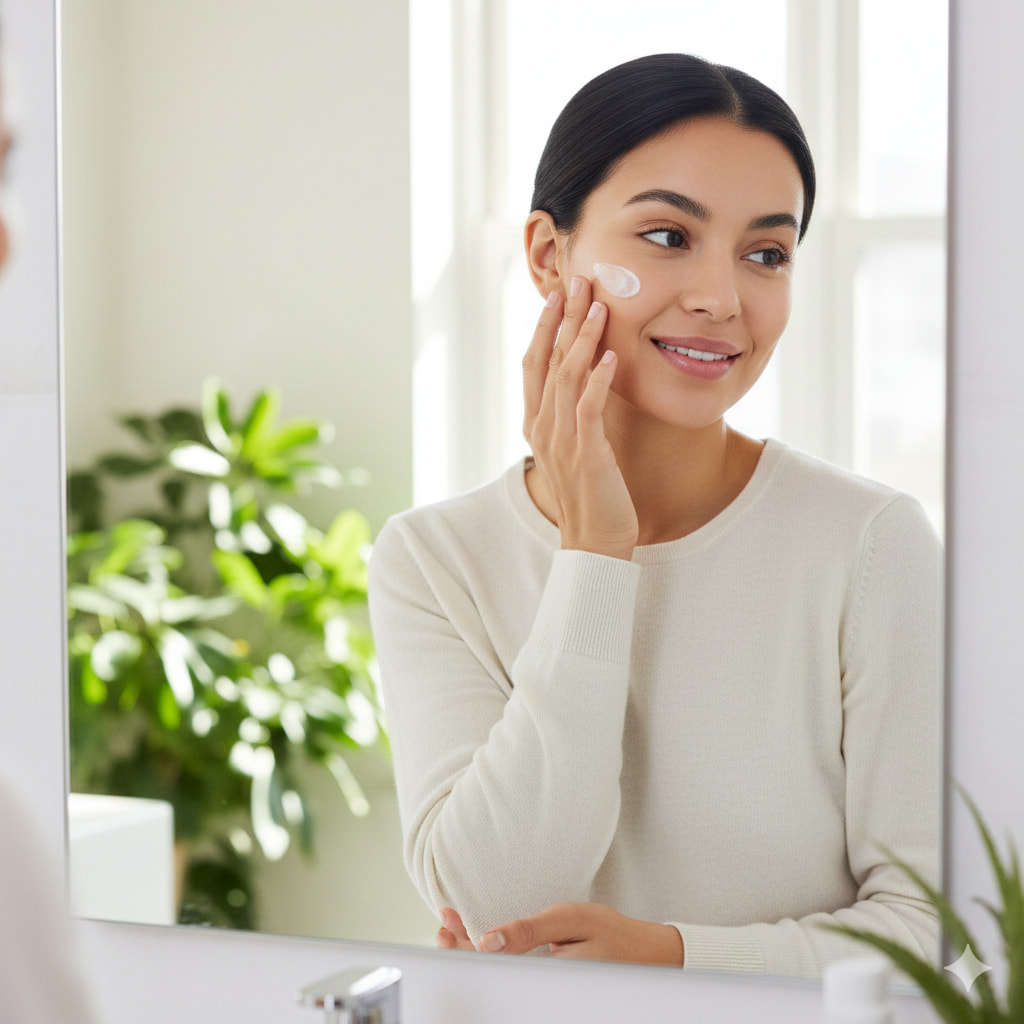
    A smiling woman in a modest white sweater applying face cream in front of a mirror with natural lighting
    This AI-generated image serves as a perfect visual example of how a well-blended, natural everyday makeup look should appear in bright, natural lighting.

    Step 2: Understanding the Three Main Types of Moisturizers

    Not all moisturizers are created equal. They generally fall into three categories based on how they interact with your skin.

    1. Humectants (The Water-Seekers)

    These are lightweight ingredients that act like tiny magnets. They pull moisture from the air and into the top layer of your skin.

    • Best for: Everyone, especially oily and dehydrated skin.
    • Ingredients to look for: Hyaluronic Acid, Glycerin, Aloe Vera.

    2. Emollients (The Smoothers)

    These fill in the tiny cracks and gaps in your skin cells, making your face feel soft and smooth to the touch.

    • Best for: Dry and aging skin.
    • Ingredients to look for: Squalane, Jojoba Oil, Ceramides.

    3. Occlusives (The Sealants)

    These are heavy hitters. They create a physical barrier on top of your skin to stop water from evaporating.

    • Best for: Very dry skin or cold US winters.
    • Ingredients to look for: Shea Butter, Petrolatum, Beeswax.

    Skincare Quick-Reference Chart

    Skin TypeBest TextureKey IngredientsAvoid These
    DryRich CreamCeramides, Shea ButterHigh Alcohol content
    OilyWater-based GelNiacinamide, Hyaluronic AcidCocoa Butter, Coconut Oil
    CombinationLightweight LotionSqualane, GlycerinHeavy waxes on oily areas
    SensitiveFragrance-free CreamColloidal Oatmeal, CentellaFragrance, Parabens, Dyes

    Step 3: Matching the Product to Your Lifestyle

    In the US, weather plays a huge role in how your skin behaves. A moisturizer that works perfectly in the humid summers of Florida might fail you in a freezing New York winter.

    • For Daytime: Look for a “Day Cream” that is lightweight and wears well under makeup. Most importantly, it should ideally have SPF 30. According to the Mayo Clinic, a moisturizer with sun protection is the best way to prevent premature aging and skin damage.
    • For Nighttime: Your skin does its heavy repair work while you sleep. This is the time to use “Night Creams” that are a bit richer and contain “actives” like Peptides or Retinol.
    • The Climate Factor: If you live in a dry climate, you need more occlusives to keep moisture in. If you live in a humid area, humectants will be your best friend.

    Step 4: Decoding the Label (What Really Matters)

    Don’t let the fancy gold packaging fool you. The most effective moisturizers are often the simplest ones. Dermatologists in the US frequently recommend brands like CeraVe, La Roche-Posay, or Neutrogena because they focus on barrier-health rather than luxury scents.

    A note on Fragrance: Even if you love the smell of roses or citrus, try to keep it away from your face. Fragrance is the #1 cause of skin irritation and contact dermatitis. If you have sensitive skin, always look for the word “Fragrance-Free” not just “Unscented” (which can still contain masking scents).

    Step 5: The Correct Way to Apply

    Believe it or not, how you apply your moisturizer is just as important as what you apply.

    The best time to moisturize is when your skin is still slightly damp. After your shower or face wash, gently pat your face with a towel so it’s not dripping, then apply your cream immediately. This traps the water on your skin surface and pushes it deeper into the pores.


    Frequently Asked Questions (FAQs)

    Q1: Can I use the same moisturizer for my face and body?

    A: No. The skin on your face is much thinner and has more oil glands than the skin on your body. Body lotions are often too thick and can cause “Milia” (tiny white bumps) or acne on the face.

    Q2: How often should I change my moisturizer?

    A: You should re-evaluate your skincare every season. Generally, you need a heavier cream in the winter and a lighter gel or lotion in the summer.

    Q3: My skin is oily; do I really need a moisturizer?

    A: Yes! If you skip moisturizer, your skin thinks it is dry and starts producing even more oil to compensate. Using a light gel can actually help balance oil production over time.

    Q4: Is “Natural” always better?

    A: Not necessarily. Some “natural” ingredients like essential oils or lemon juice can be very irritating. Lab-tested, synthetic ingredients like Hyaluronic Acid are often much safer and more effective.

    Q5: What is a “Non-Comedogenic” product?

    A: This is a fancy way of saying the product is formulated specifically not to clog your pores. If you are prone to blackheads or acne, always look for this label.


    Final Thoughts

    Choosing the right moisturizer doesn’t have to be a stressful or expensive experience. Once you know your skin type and understand a few basic ingredients, you can find a product that makes you feel confident and glowing. Start with the basics, listen to your skin, and remember—consistency is much more important than a high price tag.

  • Common Skincare Mistakes That Can Weaken Your Skin Barrier: How to Fix Them

    Common Skincare Mistakes That Can Weaken Your Skin Barrier: How to Fix Them

    Have you ever experienced that frustrating moment when your skin suddenly feels like it’s on fire, even though you’re using “top rated” products? Or maybe you’ve noticed patches of dryness that refuse to go away, no matter how much cream you apply. If this sounds familiar, you aren’t alone. In the pursuit of flawless, “glass” skin, many of us are actually doing too much.

    The truth is, your skin is a highly sophisticated organ with its own built-in security system: the Skin Barrier. When this barrier is strong, your skin looks plump, hydrated, and clear. When it’s weak? You’re left with redness, irritation, and breakouts.

    For our readers in the US and beyond, navigating the endless world of beauty can be tricky. Let’s break down the most common skincare mistakes that are quietly sabotaging your skin barrier and how you can fix them for good.


    1. The Over-Exfoliation Obsession

    Exfoliation is great it removes dead skin cells and reveals a brighter complexion. But in the skincare world, you can definitely have too much of a good thing.

    The Mistake: Using physical scrubs and high-percentage chemical acids (like Glycolic or Salicylic acid) every single day.

    The Fix: Think of exfoliation as a “special treatment,” not a daily necessity. For most skin types, 2 times a week is plenty. If your skin looks shiny but feels tight and dry, that “glow” is actually a sign that you’ve stripped away your protective oils. Give your skin a week-long “exfoliation holiday” to let it recover.

    2. Using Harsh, High-pH Cleansers

    We’ve been conditioned to think that if our skin doesn’t feel “squeaky clean,” it’s still dirty. This is perhaps one of the most damaging myths in beauty.

    The Mistake: Using harsh foaming cleansers or traditional bar soaps that have a high pH level.

    The Fix: Your skin is naturally slightly acidic (around pH 5.5). Using a basic (high pH) cleanser disrupts this “acid mantle.” This leads to dryness and allows bacteria to grow. According to the American Academy of Dermatology, switching to a gentle, soap-free cleanser is the best way to preserve your skin’s natural moisture.

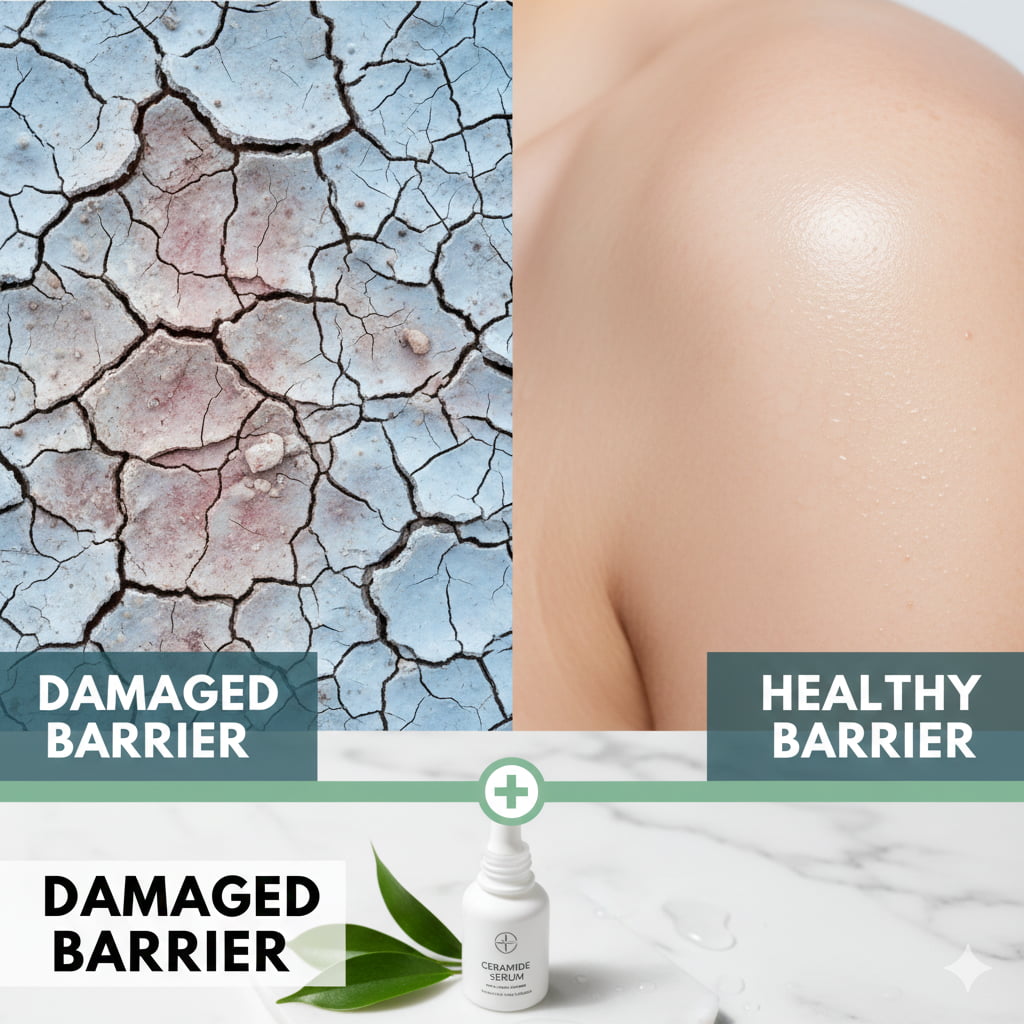
    Quick Guide: Healthy vs. Damaged Skin Barrier

    FeatureHealthy BarrierDamaged Barrier
    TextureSmooth and softRough, flaky, or peeling
    FeelComfortable and resilientTight, itchy, or stinging
    AppearanceEven tone, natural glowRedness and inflammation
    SensitivityLow sensitivity to productsStings even with plain water
    HydrationRetains moisture wellSuffers from “Trans-Epidermal Water Loss”

    3. Skipping Moisturizer When You Have Oily Skin

    This is a classic mistake. Many people with oily or acne-prone skin avoid moisturizer because they think it will make them greasier or cause more pimples.

    The Mistake: Neglecting hydration because of excess sebum.

    The Fix: When your skin is dehydrated, it actually sends a signal to your oil glands to produce more oil to compensate for the lack of water. This creates a vicious cycle of oily yet dehydrated skin. The solution? A lightweight, oil-free, water-based moisturizer. Look for ingredients like Hyaluronic Acid and Glycerin which pull water into the skin without clogging pores.

    4. “Active Ingredient” Overload

    We live in the era of “skincare cocktails.” With so many affordable serums available, it’s tempting to use Vitamin C, Retinol, Niacinamide, and AHAs all in one go.

    The Mistake: Mixing too many potent actives in a single routine.

    The Fix: Your skin can only handle so much. Using Retinol and Vitamin C together, for example, can cause massive irritation for beginners. Try “Skin Cycling” use your active ingredient one night, and focus purely on recovery and hydration the next two nights. This allows your barrier to stay intact while still getting the benefits of the treatment.

    5. Washing with Hot Water

    There is nothing more relaxing than a steaming hot shower, but your face hates it.

    The Mistake: Using hot water to rinse your face.

    The Fix: Hot water strips away the natural lipids (fats) that act as the “glue” holding your skin cells together. Once these fats are gone, moisture escapes easily. Always use lukewarm water. It’s just as effective at cleaning but much kinder to your barrier.

    6. Ignoring the Importance of Sunscreen

    You might think sunscreen is just for preventing sunburn, but it’s actually a vital part of barrier health.

    The Mistake: Only wearing SPF when it’s sunny or when going to the beach.

    The Fix: UV rays are present all year round, even through clouds and windows. UV damage weakens the proteins in your skin and makes the barrier more permeable to irritants. Apply a broad-spectrum SPF 30 every single morning as the final step of your skincare.

    7. Over-Washing Your Face

    Washing your face too often even with a gentle cleanser can be a problem.

    The Mistake: Washing 3 or more times a day.

    The Fix: For most people, twice a day (morning and night) is the limit. If you have very dry skin, you might even find that just rinsing with water in the morning and using a cleanser at night is enough.


    Frequently Asked Questions (FAQs)

    Q1: How long does it take to repair a damaged skin barrier?

    A: It usually takes about 28 days, which is the time it takes for a new cycle of skin cells to regenerate. However, you will start feeling relief within 3-7 days of starting a “barrier-repair” routine.

    Q2: Should I stop all my skincare if my barrier is stinging?

    A: Not all of it, but definitely stop the “actives.” Stick to a simple “Cleanser – Moisturizer – SPF” routine until the stinging stops.

    Q3: Are “natural” products better for the skin barrier?

    A: Not necessarily. Some natural ingredients, like lemon juice or essential oils (lavender, peppermint), can be very irritating and actually damage the barrier further. “Fragrance-free” is usually a safer bet.

    Q4: Can diet affect my skin barrier?

    A: Yes. Healthy fats like Omega-3s (found in salmon, walnuts, and flaxseeds) help your body produce the lipids that keep your skin barrier strong.

    Q5: What is the best ingredient for a quick barrier fix?

    A: Ceramides are the gold standard. They make up about 50% of your skin barrier. Applying a ceramide-rich cream is like giving your skin the exact building blocks it needs to heal.


    Conclusion

    Your skin barrier is your best friend it protects you from the environment, keeps you looking young, and ensures your skin stays hydrated. By avoiding these common skincare mistakes, you are giving your skin the space it needs to thrive. Remember, skincare is a marathon, not a sprint. Be gentle, be consistent, and listen to what your skin is telling you.

  • How to Layer Skincare Products Correctly for Better Skin Results

    How to Layer Skincare Products Correctly for Better Skin Results

    We’ve all been there standing in front of the mirror with three different serums, a moisturizer, and an eye cream, wondering, “Which one goes first?” It’s a common struggle. You’ve spent your hard-earned money on high-quality products, but if you apply them in the wrong order, you might be blocking them from ever reaching your skin.

    Think of your skincare like a recipe. If you put the frosting on the cake before it’s even baked, you’re going to have a mess. Similarly, layering skincare is all about the Thinnest to Thickest rule.

    In this guide, we’re going to simplify the science of layering so you can get the glowing results you actually paid for.


    The Golden Rule: Thin to Thick

    If you remember nothing else from this article, remember this: apply your products from the most watery consistency to the richest cream. Why? Because thick creams and oils create a seal on your skin. If you apply a thin, watery serum over a heavy oil, the serum can’t penetrate that seal. It just sits on top, doing absolutely nothing for your skin cells.


    Step 1: Cleanse (The Fresh Start)

    You can’t build a house on a muddy foundation. Before layering, you must remove the dirt, oil, and pollution from your pores.

    • Pro Tip: If it’s nighttime, consider a “Double Cleanse.” Use an oil-based cleanser first to melt makeup, then a gentle water-based wash to clean the skin itself.

    Step 2: Toner (The Prep)

    Toners aren’t the alcohol-heavy stingy liquids they used to be in the 90s. Today, they are designed to balance your skin’s pH and act like a “damp sponge.” A damp sponge absorbs water better than a bone-dry one, and your skin is exactly the same.

    Step 3: Serums (The Heavy Hitters)

    Serums are the most potent part of your routine. They are packed with active ingredients like Vitamin C, Hyaluronic Acid, or Niacinamide.

    • Note: If you use multiple serums, apply the thinnest one first. For example, a watery Hyaluronic Acid should go before a slightly thicker Vitamin C gel.
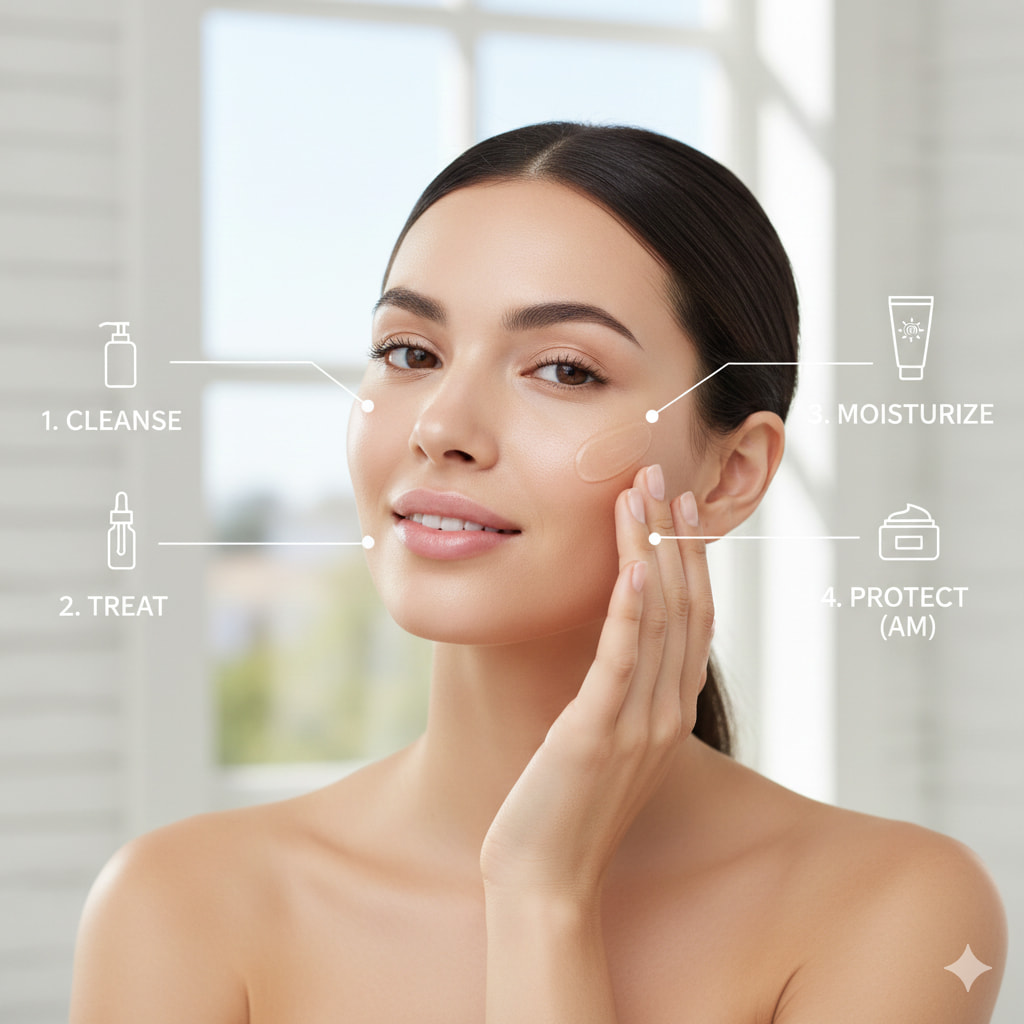
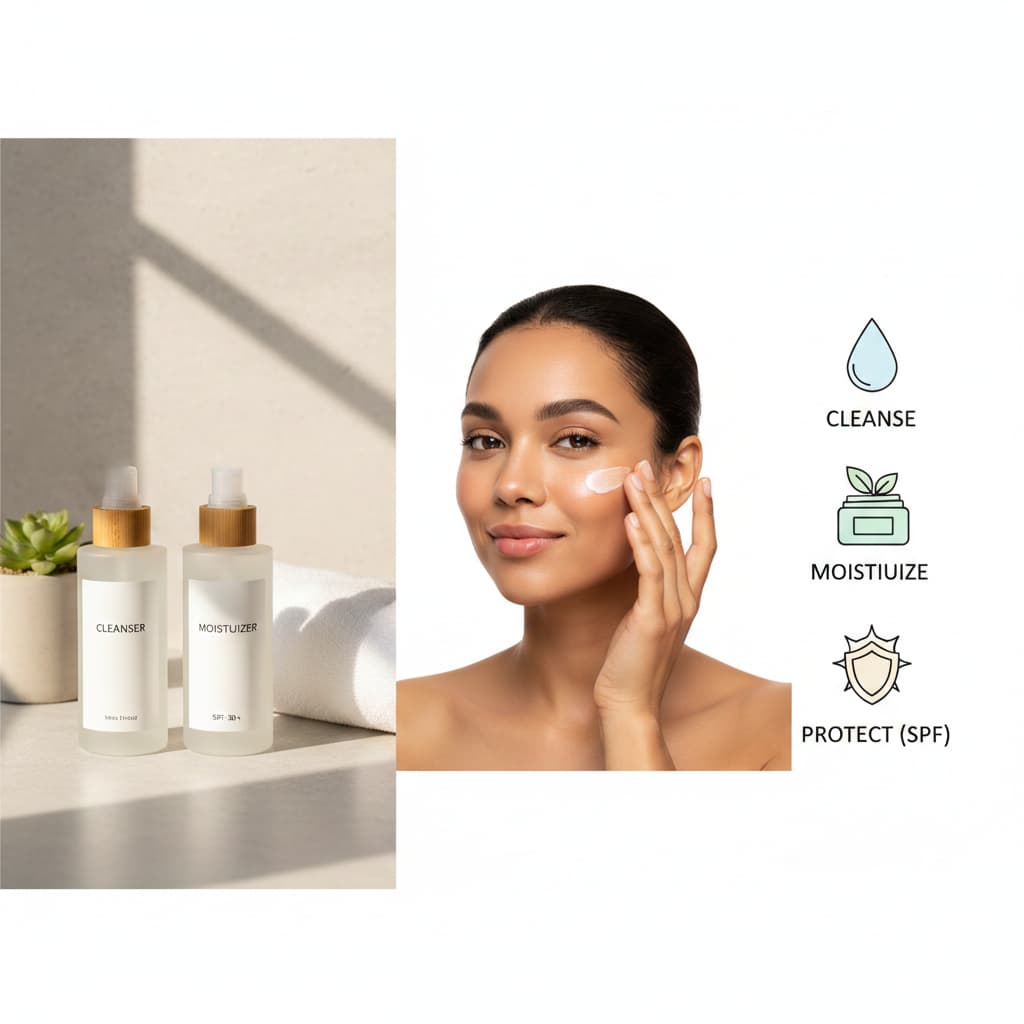
    A beautiful woman applying skincare with graphic icons showing 4 main steps: Cleanse, Treat, Moisturize, and Protect.

    Step 4: Eye Cream (The Delicate Area)

    The skin around your eyes is thinner and more sensitive than the rest of your face. According to Healthline’s skincare experts, applying eye cream before your heavier moisturizers ensures the thin skin absorbs the targeted ingredients first without a thick barrier in the way.


    Step 5: Moisturizer (The Seal)

    Moisturizer is your skin’s protector. Its main job is to hydrate the skin and lock in all the serums you just applied. Even if you have oily skin, don’t skip this. A lightweight, oil-free moisturizer is essential to keep your skin barrier healthy.

    Step 6: Facial Oils (The Final Touch)

    Many people make the mistake of putting oil under their moisturizer. But remember: oil can penetrate cream, but cream cannot penetrate oil. Oils are occlusive, meaning they seal everything in. Always pat your oil on after your moisturizer for that extra glow.

    Step 7: Sunscreen (The Morning Must-Have)

    In the morning, the very last step—always, always, always—is SPF. Sunscreen is your armor against the US sun. If you put anything on top of it (except makeup), you might dilute the formula and lose your protection.


    Why Timing Matters

    It’s not just about the order; it’s about the wait time.

    • Active Ingredients: If you are using something strong like Retinol or an AHA/BHA exfoliant, let it sit for a minute.
    • Sunscreen: Wait at least two minutes for your moisturizer to dry before applying SPF. This prevents “pilling,” which is when your products clump up into little white balls on your face.

    Common Layering Mistakes to Avoid

    1. Mixing Vitamin C and Retinol: These are both “alpha” ingredients. Using them together can cause major irritation. Use Vitamin C in the morning and Retinol at night.
    2. Using Too Many Actives: More is not always better. If you use too many acids at once, you might damage your skin barrier, leading to redness and breakouts.
    3. Rubbing instead of Patting: When applying serums and oils, try patting them into the skin. Rubbing can sometimes pull the skin and disturb the layers underneath.

    Final Thoughts

    Layering skincare doesn’t have to be a math problem. Just follow the “Thin to Thick” rule and always finish with SPF in the morning. By giving each product the space and order it needs to work, you’ll see better results in half the time.

    Be patient, stay consistent, and let your skin breathe!

  • Understanding Skincare Ingredients: What Really Matters for Healthy Skin

    Understanding Skincare Ingredients: What Really Matters for Healthy Skin

    Have you ever stood in the skincare aisle of a store like Sephora or Target, staring at a bottle, and felt like you needed a chemistry degree just to understand what was inside? You aren’t alone. With flashy marketing and complex names like Methylsulfonylmethane or L-Ascorbic Acid, it’s easy to feel overwhelmed.

    But here’s a secret: most of the “magic” promised by high-end brands comes down to a few key active ingredients. You don’t need a 12-step routine to get that healthy, “lit-from-within” glow. You just need to know which ingredients actually do the heavy lifting and which ones are just filler.

    In this guide, we are going to strip away the marketing fluff and look at the science-backed ingredients that truly matter for your skin’s health.


    The “Big Three”: Ingredients Every Routine Needs

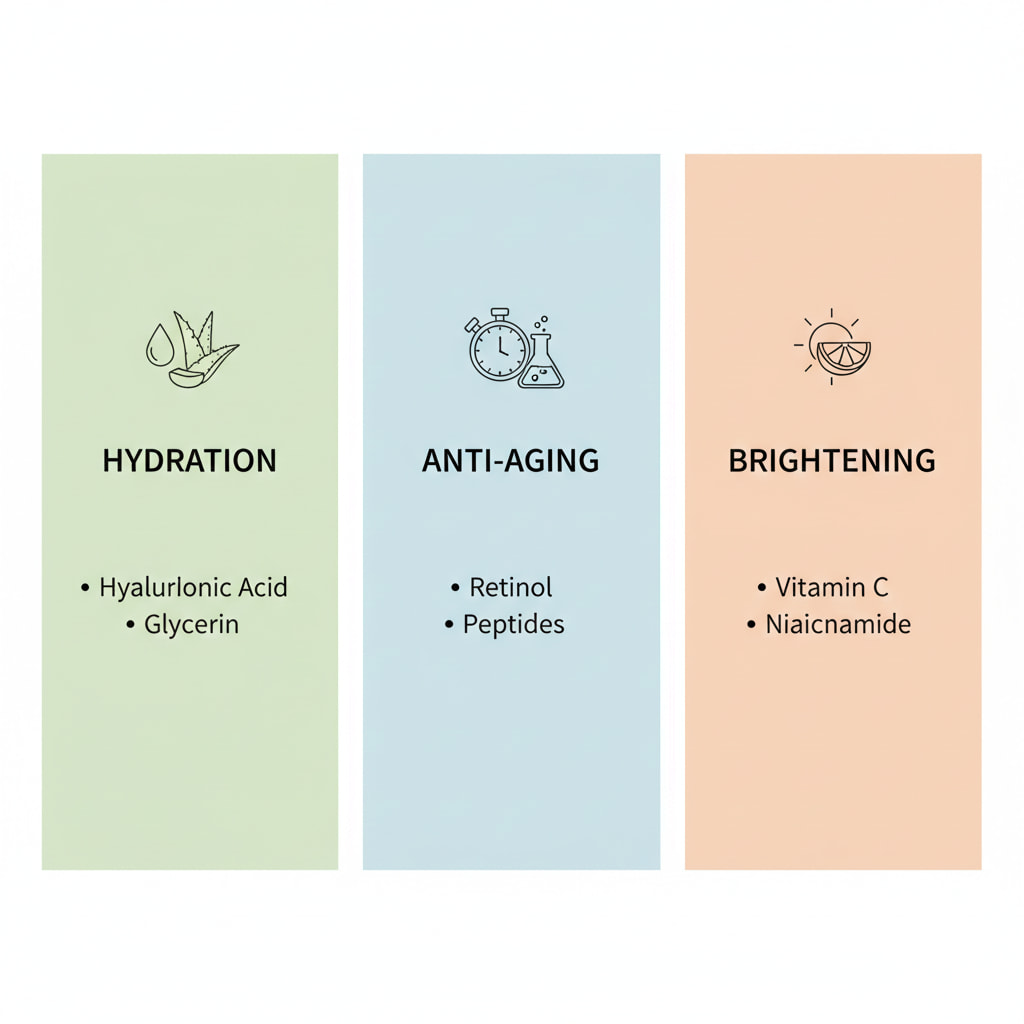
    If you’re looking to build a solid foundation, you don’t need fifty different serums. Most dermatologists agree that a few “gold standard” ingredients can handle 90% of your skin concerns.

    1. The Anti-Aging King: Retinoids (Vitamin A)

    If there was a Hall of Fame for skincare, Retinol would be the first one in. Retinoids work by communicating with your skin cells, telling them to behave like younger, healthier cells.

    • What it does: It speeds up cell turnover, boosts collagen, and clears out pores.
    • Who it’s for: Anyone looking to reduce fine lines, treat adult acne, or fade dark spots.
    • Pro Tip: Start slow. Use it twice a week at night and always—I mean always—wear sunscreen the next day, as retinol makes your skin more sensitive to the sun.

    2. The Brightener: Vitamin C

    Think of Vitamin C as your skin’s personal bodyguard. During the day, your skin is attacked by “free radicals” from pollution and UV rays.

    • What it does: It’s a powerful antioxidant that neutralizes damage, brightens dull skin, and helps fade pigmentation.
    • Look for: “L-Ascorbic Acid” on the label—it’s the most researched and effective form of Vitamin C.

    3. The Protector: Sunscreen (SPF)

    This isn’t technically an “ingredient,” but the filters inside (like Zinc Oxide or Avobenzone) are the most important things you’ll ever put on your face. According to the American Academy of Dermatology, skipping SPF 30 makes all your other expensive serums useless because the sun will destroy any progress you make.


    Hydration vs. Moisture: Knowing the Difference

    Many people use these terms interchangeably, but they are actually different. Understanding this will save you from buying the wrong products.

    The Water-Pullers: Humectants

    Ingredients like Hyaluronic Acid and Glycerin are humectants. They act like tiny sponges, pulling moisture from the air into your skin.

    • The Trick: Apply Hyaluronic Acid to damp skin. If your skin is bone-dry, it might actually pull water out of your deeper skin layers, leaving you drier than before.

    The Sealers: Emollients and Occlusives

    Once you’ve pulled water into your skin, you need to lock it in. Ingredients like Ceramides, Squalane, and Petrolatum create a seal on your skin’s surface.

    • Ceramides: These are lipids that naturally make up your skin barrier. Think of them as the “mortar” between the bricks of your skin cells.

    Solving Specific Problems: The Targeted Actives

    Once you have your basics (Cleanse, Moisturize, Protect), you can add “target” ingredients based on your specific struggles.

    For Oily and Acne-Prone Skin (BHAs)

    Salicylic Acid is the most famous BHA. Unlike AHAs, it is oil-soluble, meaning it can travel deep into your pores to dissolve the “glue” holding dead skin and oil together. It’s a game-changer for blackheads.

    For Dull and Texture Skin (AHAs)

    Glycolic Acid and Lactic Acid work on the surface. They gently unglue the dead skin cells that make your face look “gray” or flaky. Lactic acid is especially great for beginners because it’s a larger molecule and doesn’t irritate the skin as much as glycolic acid.

    For Redness and Large Pores (Niacinamide)

    Niacinamide (Vitamin B3) is the ultimate “team player.” It plays well with almost every other ingredient. It helps regulate oil, calms down redness, and strengthens the skin barrier. If you have “angry” skin, this is your best friend.


    How to Read a Skincare Label Like a Pro

    Don’t get distracted by the fancy claims on the front of the bottle. Turn it around and look at the INCI (International Nomenclature of Cosmetic Ingredients) list.

    1. The First Five: Ingredients are listed in order of concentration. The first five ingredients usually make up about 80% of the product. If your “Vitamin C Serum” has Vitamin C listed at the very bottom, it’s probably not doing much.
    2. Fragrance is Optional: In the US, many people prefer fragrance-free products because synthetic scents are a top cause of skin irritation.
    3. Alcohol Labels: Look out for “Alcohol Denat” or “Isopropyl Alcohol” high up in the list, as these can be very drying. However, “Fatty Alcohols” like Cetyl or Stearyl alcohol are actually good for your skin!

    Final Thoughts: The “Skinimalist” Approach

    You don’t need a bathroom counter full of bottles to have great skin. In fact, using too many actives at once can lead to a “damaged skin barrier,” which looks like redness, peeling, and stinging.

    Start with a gentle cleanser, a good moisturizer, and SPF. Once your skin is happy, introduce one active ingredient (like Retinol or Vitamin C) and wait at least 4 weeks to see how your skin reacts. Consistency will always beat intensity.

  • How to Identify Your Skin Type and Choose the Right Skincare Products

    How to Identify Your Skin Type and Choose the Right Skincare Products

    Let’s be honest for a second skincare can be incredibly overwhelming. You walk into a store like Sephora or Ulta, and you’re met with a wall of shiny bottles, clinical-sounding ingredients, and price tags that make your eyes water. We’ve all been there: buying a $60 “miracle” cream because a TikToker said it changed their life, only to have it sit in our bathroom cabinet three weeks later because it made our face feel like a grease trap.

    The truth is, even the most expensive product in the world won’t do a thing for you if it isn’t meant for your specific skin. Your skin is a living, breathing organ. It’s your body’s first line of defense. But before you can protect it, you have to understand it.

    In this guide, I’m going to help you stop the guessing game. We’ll look at how to identify your skin type from the comfort of your own home and, more importantly, how to pick products that actually deliver on their promises.


    Why “One Size Fits All” Is a Skincare Myth

    I see this all the time: people treating their skin based on what they want it to be, rather than what it actually is. If you have oily skin but you’re obsessed with the “dewy” look, you might be over-applying heavy oils that end up clogging your pores. On the flip side, if you have dry skin and you’re using harsh foaming cleansers to get that “squeaky clean” feeling, you’re likely stripping away the very moisture your skin is desperate to keep.

    Your skin type is mostly determined by genetics, but it’s also influenced by your environment. If you’re living in a high-traffic US city with lots of pollution, or a dry climate like the Southwest, your skin is going to react differently. That’s why knowing your baseline is so important.


    The “Bare-Faced” Home Test: Step-by-Step

    You don’t need a fancy dermatologist appointment or a high-tech skin scanner to figure this out. You can do the “Bare-Faced” test tonight. It’s the easiest way to see how your skin behaves when it’s left to its own devices.

    1. Start with a Blank Canvas

    Wash your face with a basic, gentle, fragrance-free cleanser. You want to get rid of the day’s makeup, oil, and grime without irritating the skin. Avoid anything with “scrub” beads or strong acids for this test.

    2. The Waiting Game (The Hard Part)

    Gently pat your face dry with a clean towel. Now—and this is the most important part—don’t put anything on your face. No toner, no moisturizer, no spot treatments. Just leave it bare for one full hour. Go watch a show, fold some laundry, or scroll through your phone, but stay away from the mirror for 60 minutes.

    3. The Mirror Reveal

    After an hour has passed, find a spot with good natural lighting and take a close look. Here is how to read the results:

    • Normal Skin: Your skin feels comfortable. It’s not tight, it’s not shiny, and it doesn’t feel itchy. You probably don’t even think about your skin most of the time. You’ve hit the genetic jackpot!
    • Oily Skin: You’ll notice a visible shine on your forehead, nose, and cheeks. If you press a clean tissue against your face, it will likely come away with damp spots of oil. Your pores might also look a bit larger than average.
    • Dry Skin: Does your face feel “small”? If you smile or move your face, does the skin feel tight? You might see some dullness or even tiny, flaky patches around your mouth or eyes.
    • Combination Skin: This is the most common type. Usually, your “T-Zone” (forehead, nose, and chin) is shiny and oily, but your cheeks feel tight, dry, or just normal.
    • Sensitive Skin: Your skin might look a little red or blotchy. It might feel hot to the touch or sting slightly. If you find that most “regular” soaps make your face turn red, you’re in the sensitive camp.
    woman-applying-facial-serum-skincare-routine

    Building a Routine That Actually Sticks

    Now that you know your “team,” let’s talk about the game plan. In the US, the trend is shifting away from the 10-step routines of the past and moving toward “Skinimalism”—using fewer products that are high-quality and targeted.

    For the Oily & Breakout-Prone

    If you’re oily, your skin is over-producing sebum. Don’t try to kill the oil with harsh alcohols; that just makes your skin panic and produce more oil.

    • Look for: “Non-comedogenic” (won’t clog pores) and “Oil-free” labels.
    • Key Ingredients: Salicylic Acid (to deep-clean pores) and Niacinamide (to regulate oil).
    • Texture: Gel-based moisturizers and foaming cleansers are your best friends.

    For the Dry & Thirsty

    Your skin’s natural barrier is a bit weak, letting moisture escape. You need to “seal” the hydration in.

    • Look for: Rich, creamy textures that feel luxurious.
    • Key Ingredients: Hyaluronic Acid (to attract water) and Ceramides (to repair the skin’s seal).
    • Texture: Cream-based cleansers and thick balms or ointments.

    For the Combination Balancing Act

    You’re basically managing two different “climates” on one face.

    • The Hack: Use a lightweight, balancing lotion all over, but apply a thicker cream only on your dry cheeks.
    • Key Ingredients: Vitamin C for overall brightness and a gentle pH-balanced cleanser.

    For the Sensitive & Reactive

    Less is always more. If an ingredient list is as long as a grocery receipt, put it back on the shelf.

    • Look for: “Fragrance-free” (not just “unscented”) and “Hypoallergenic.”
    • Key Ingredients: Aloe Vera, Colloidal Oatmeal, and Centella Asiatica (often called “Cica”).
    • Texture: Milky cleansers and simple, soothing lotions.

    The Non-Negotiable: Sunscreen

    I cannot emphasize this enough: if you aren’t wearing sunscreen, the rest of your skincare routine is a waste of money. Whether it’s cloudy in Seattle or sunny in Miami, UV rays are hitting your skin and breaking down collagen.

    According to the American Academy of Dermatology, every single person should be using a broad-spectrum SPF 30 or higher. It’s the best anti-aging product on the market, and it’s much cheaper than Botox later in life!

    Give It Time (The 28-Day Rule)

    One final piece of advice: be patient. Your skin cells take about 28 to 30 days to fully turnover. You can’t try a serum for three days and decide it doesn’t work. Give your new routine at least a month to show you what it can really do.

    Final Thoughts

    Skincare shouldn’t be a chore. It’s a few minutes of “me-time” at the beginning and end of your day. By understanding your skin type, you’re taking the first step toward a healthier, more confident version of yourself. Start simple, stay consistent, and your skin will thank you.

  • A Complete Beginner’s Guide to Building an Effective Skincare Routine

    A Complete Beginner’s Guide to Building an Effective Skincare Routine

    In today’s world, skincare has become more than just a beauty trend; it is a vital part of overall health and self-care. However, for a beginner, the sheer number of serums, acids, and moisturizers available on the shelves can be overwhelming. You might find yourself asking: Do I really need a 10-step routine? Which ingredients actually work?

    The good news is that achieving healthy, radiant skin does not require a complex or expensive regimen. In fact, most dermatologists agree that a simple, consistent routine is far more effective than an inconsistent, complicated one. This guide will walk you through everything you need to know to build a high-quality skincare routine from scratch, specifically tailored for long-term results.


    Step 1: Understanding Your Skin Type

    Before you spend a single dollar on products, you must identify your skin type. Using a product designed for oily skin on a dry complexion can cause irritation, while using heavy creams on oily skin can lead to breakouts.

    The Four Main Skin Types

    1. Oily Skin: If your face looks shiny by midday and you have visible pores, you likely have oily skin. This is caused by overactive oil glands.
    2. Dry Skin: If your skin feels tight, looks flaky, or has a dull appearance, it lacks natural oils. You may notice more fine lines when your skin is not properly hydrated.
    3. Combination Skin: This is the most common type. Your “T-zone” (forehead, nose, and chin) is oily, but your cheeks are dry or normal.
    4. Sensitive Skin: If your skin frequently turns red, stings, or reacts poorly to fragrances and new products, you have sensitive skin.

    The “Bare-Faced” Test: Wash your face with a gentle cleanser, pat it dry, and wait 30 minutes. If it feels tight, you are dry. If it looks shiny on the forehead and nose, you are combination. If it’s shiny all over, you are oily.

    Woman with clear skin applying face cream

    Step 2: The Essential Three-Step Core Routine

    For any routine to work, it must be sustainable. A beginner should start with three fundamental steps: Cleansing, Moisturizing, and Protecting.

    I. Cleanser: The Clean Slate

    Cleansing is the foundation of your routine. Throughout the day, your skin accumulates dirt, oil, bacteria, and pollutants. If you don’t wash these away, they clog your pores and cause dullness.

    • Morning: A quick wash with water or a very gentle cleanser is usually enough to remove any sweat or oils from your pillow.
    • Night: This is the most important time to wash your face. You must remove the day’s buildup. If you wear makeup or heavy sunscreen, consider a “double cleanse”—using a micellar water or oil cleanser first, followed by your regular face wash.

    II. Moisturizer: The Hydration Guard

    A common myth is that oily skin doesn’t need moisturizer. In reality, all skin types need hydration. A moisturizer acts as a barrier, trapping water inside the skin and protecting it from environmental damage.

    • For Oily/Acne-Prone Skin: Look for “non-comedogenic” (won’t clog pores) gel-based moisturizers.
    • For Dry Skin: Look for thicker creams containing ceramides or shea butter to deeply nourish the skin barrier.

    III. Sunscreen: The Ultimate Anti-Aging Tool

    If you only do one thing for your skin, let it be sunscreen. Over 80% of skin aging—including wrinkles and dark spots—is caused by UV rays. According to the American Academy of Dermatology, you should wear a broad-spectrum SPF 30 or higher every single day, even when it is cloudy.


    Step 3: Introducing Targeted Treatments (The “Actives”)

    Once you have mastered the basic three steps, you can add “active” ingredients to target specific concerns like dark spots, acne, or aging.

    Vitamin C (Brightening and Protection)

    Vitamin C is a powerful antioxidant. When applied in the morning, it helps protect your skin from pollution and brightens your complexion by fading dark spots over time.

    Retinol (The Gold Standard for Aging)

    Retinol (Vitamin A) is one of the most researched ingredients in skincare. It speeds up cell turnover, helps clear acne, and builds collagen. However, it can be irritating. Start by using it only twice a week at night and always follow with moisturizer.

    Chemical Exfoliants (Smoothing Texture)

    Forget harsh face scrubs with walnut shells; they can cause micro-tears in your skin. Instead, use liquid exfoliants like AHAs (for dry skin/surface glow) or BHAs (for oily skin/clogged pores) once or twice a week.


    Step 4: Creating a Morning vs. Night Schedule

    To make it easy, here is how your daily schedule should look:

    Morning Routine:

    1. Cleanse: Gently wash with water or cleanser.
    2. Treat: Apply Vitamin C serum (optional).
    3. Moisturize: Apply a lightweight lotion.
    4. Protect: Apply SPF 30 or higher.

    Night Routine:

    1. Cleanse: Thoroughly wash away the day’s dirt and makeup.
    2. Treat: Apply Retinol or an exfoliating acid (not on the same night!).
    3. Moisturize: Apply a slightly heavier cream to help your skin repair while you sleep.

    Step 5: Common Mistakes to Avoid

    Many beginners get excited and end up damaging their skin barrier. Keep these tips in mind:

    • Don’t over-exfoliate: Using acids every day will make your skin red and sensitive. Less is more.
    • Patience is key: It takes about 28 to 40 days for your skin cells to renew. Give a product at least a month before deciding if it works.
    • Don’t skip the neck: Your neck and chest show signs of aging just as much as your face. Apply your products there too!
    • Avoid Fragrance if possible: If you have sensitive skin, synthetic fragrances can cause long-term irritation.

    Conclusion: Skincare is a Journey

    Building an effective skincare routine is an investment in your future self. You don’t need a shelf full of luxury products to see results. By identifying your skin type, sticking to the core steps of cleansing, moisturizing, and sun protection, and being patient, you will achieve the healthy, glowing skin you’ve always wanted.

    Start simple today, and your skin will thank you years from now.