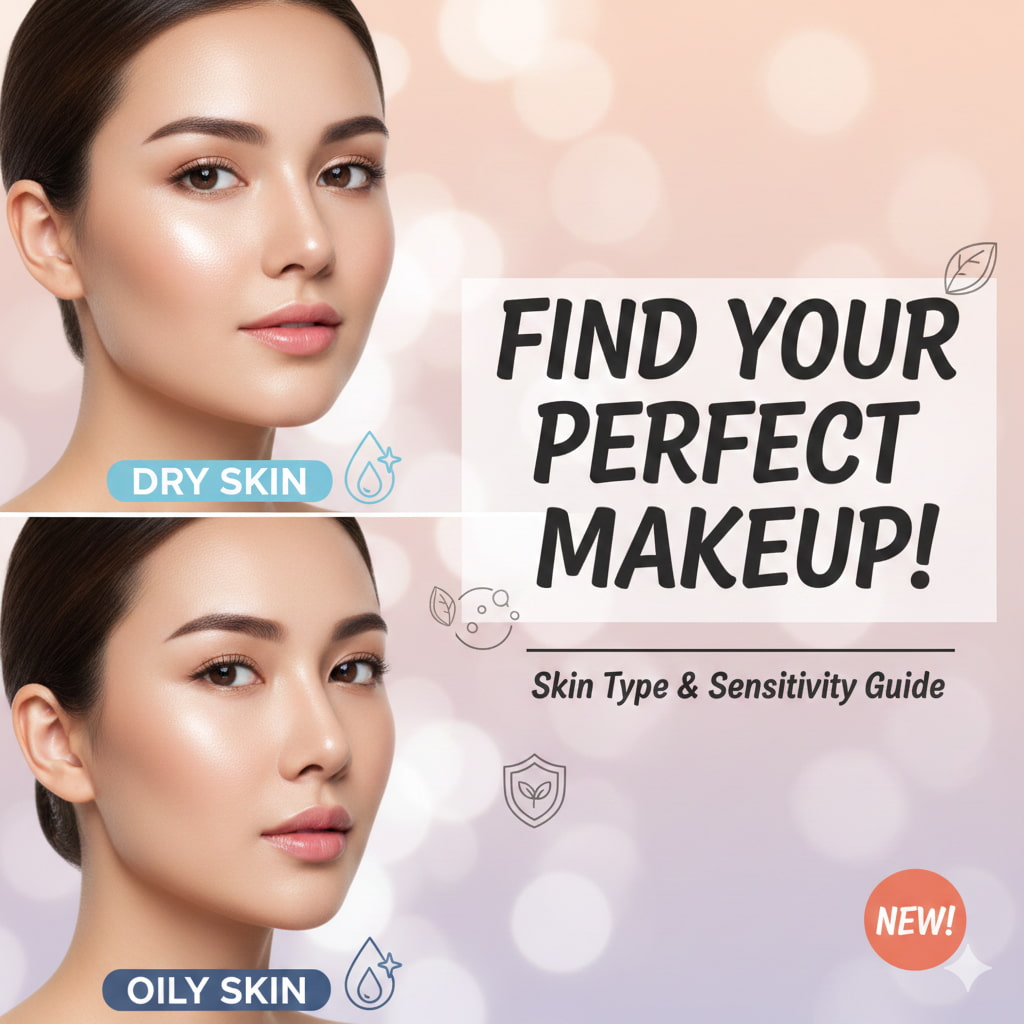
Let’s be real for a second: we’ve all been there. You see a glowing review of a “holy grail” foundation online, you go out and buy it, but the moment it touches your face, things go south. Maybe it makes you look like an oil slick by lunchtime, or worse, it leaves your skin feeling itchy and irritated.
The truth is, makeup isn’t “one size fits all.” Your skin is a living organ with its own unique personality. If you want that flawless, airbrushed finish that lasts all day especially if you’re aiming for that clean US beauty aesthetic you have to stop buying products based on the packaging and start buying for your skin chemistry.
1. First Steps: Deciphering Your Skin’s Language
Before you even look at a bottle of foundation, you need to have a “meeting” with your bare face. Wash your face with a gentle cleanser, pat it dry, and wait 30 minutes.
- The Shine Test: If your forehead and nose are sparkling like a diamond, you have Oily Skin.
- The Tightness Test: If your skin feels a size too small or you see dry patches, you’re in the Dry Skin club.
- The Hybrid: If your T-zone is oily but your cheeks are tight, you have Combination Skin.
- The Red Alert: If your skin stings when you apply most products, you have Sensitive Skin.
2. Oily Skin: The Battle Against the Shine
If you have oily skin, your goal is to find products that stay put. The excess sebum (oil) your skin produces can literally “melt” makeup off your face.
- Formula is King: You need oil-free and water-based formulas. Look for the word “Mattifying” on the label.
- The Primer Trick: Never skip primer. A mattifying primer acts as a bridge between your skin and makeup, soaking up oil before it hits your foundation.
- Powder is Your Bestie: While cream products are trendy, oily skin usually handles powders much better. A finely milled translucent powder will be your lifesaver for mid-day touch-ups.
- Avoid: Stay away from “Luminous” or “Dewy” foundations. On you, they won’t look dewy; they’ll just look greasy.
3. Dry Skin: Thirst Quenching Beauty
Dry skin needs moisture, period. If you use the wrong product, your makeup will settle into every fine line and pore, making you look much older than you are.
- Think Creamy: You want cream foundations, tinted moisturizers, or serum-infused products.
- Key Ingredients: Look for Hyaluronic Acid and Glycerin. These ingredients pull moisture from the air into your skin, keeping you looking fresh.
- Application Secret: Use a damp beauty sponge instead of a brush. A brush can sometimes micro-exfoliate dry skin, causing more flakiness. The sponge “presses” the hydration into the skin.
- External Reference: For a list of top-rated hydrating ingredients approved by dermatologists, check out the American Academy of Dermatology (AAD) for their take on skin barriers.
4. Sensitive Skin: Playing it Safe
Sensitive skin is like a picky eater; it reacts to everything. This is where most people make mistakes by using heavily scented products.
- Hypoallergenic vs. Fragrance-Free: “Unscented” often means they added a chemical to mask the scent. You want “Fragrance-Free”.
- Mineral Makeup is a Game Changer: Mineral foundations (containing Zinc Oxide or Titanium Dioxide) are often recommended because they don’t have the preservatives and dyes that traditional liquids do. Plus, Zinc is naturally soothing for redness.
- Check the Label: Use tools like SkinCarisma to paste the ingredients list. It will tell you exactly which ingredient might cause a breakout or irritation.
5. The Sensitivity Level Test (The Patch Test)
I know you want to wear that new blush tonight, but if you have sensitive skin, don’t do it yet. Apply a tiny bit of the product behind your ear or on your inner jawline. Wait 24 hours. If there’s no redness, no bumps, and no itching, you’ve found a winner. It’s a slow process, but it’s better than a full-face rash!
6. Combination Skin: The Art of Zoning
Most people in the US fall into this category. The trick here is “Zoning.”
- Mix and Match: Use a mattifying primer on your nose and forehead, and a hydrating primer on your cheeks.
- Foundation: A “Satin” finish is usually best—it’s right in the middle of matte and dewy.
7. Don’t Forget the “Non-Comedogenic” Seal
Regardless of your skin type, always look for the word “Non-Comedogenic”. This simply means the product is tested and proven not to clog your pores. This is the gold standard for anyone who wants to avoid “Makeup Acne.”
8. Summary Table for Quick Reference
| Skin Type | Primary Goal | Ingredients to Love | Ingredients to Avoid |
| Oily | Control Shine | Salicylic Acid, Silica | Mineral Oil, Petrolatum |
| Dry | Boost Glow | Hyaluronic Acid, Serums | High Alcohol Content |
| Sensitive | Calm Redness | Zinc, Aloe Vera | Synthetic Fragrance, Parabens |
| Combination | Balance | Satin Formulas | Heavy Silicones on cheeks |
Final Thoughts
At the end of the day, makeup is supposed to be fun! It’s a tool to express yourself. But just like a house needs a solid foundation, your makeup needs a healthy skin base. Listen to what your skin is telling you. If it’s oily, let it breathe. If it’s dry, feed it moisture. Once you master the “why” behind your skin, the “how” of makeup becomes incredibly easy.
Leave a Reply